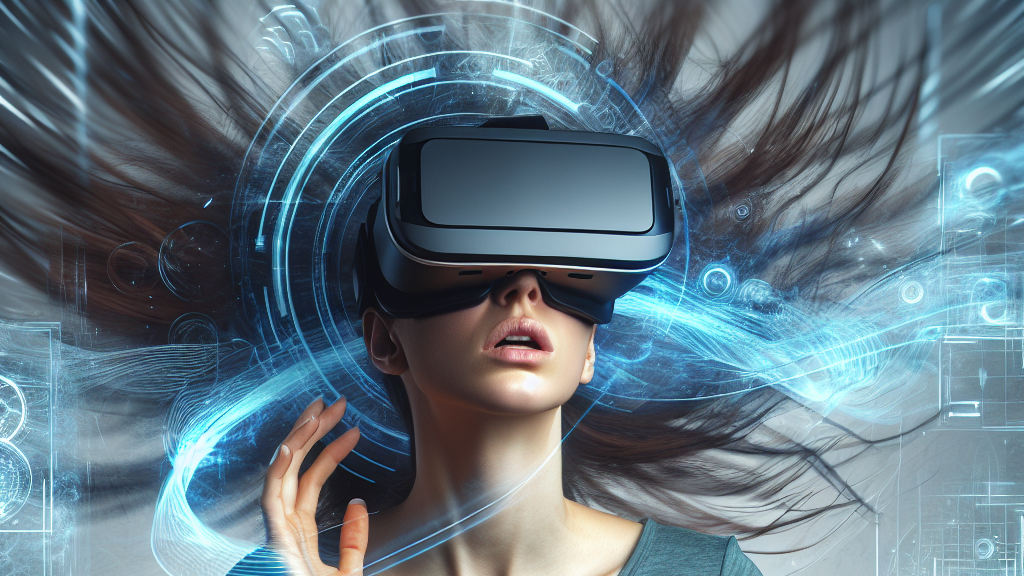
Imagine a world where you can explore virtual landscapes without the dreaded motion sickness that so many people experience. Researchers have developed a technique called peripheral teleportation that might just change the virtual reality game for good. This new method helps keep the VR experience immersive and enjoyable by eliminating the nausea that turns many away from this incredible technology.
Here’s how it works: Instead of blacking out your peripheral view, which usually helps reduce dizzying sensations, peripheral teleportation creates a stable image in your side view by rendering what you would see in the real world. This is done using special cameras that follow your movements and adapt your view accordingly as you move your head. By giving your brain a more familiar visual experience, you’re less likely to feel sick and more likely to enjoy your VR sessions.
Think about how much more fun or productive VR could be if you could use it without feeling queasy. For gamers, that means hours of seamless play. For businesses, it means better-simulated training sessions or meetings without discomfort. This revolutionary technique could make VR accessible and enjoyable for everyone, opening new doors to creative applications we haven’t even imagined yet.
Did you know? Around 20% of people experience cybersickness in VR, making this new technique a game-changer for almost a fifth of potential users.
FAQs
How does peripheral teleportation work to reduce cybersickness in VR?
Peripheral teleportation reduces cybersickness by creating a stable image in your peripheral vision using special cameras. These cameras render a familiar view that matches your physical motion, preventing dizziness and allowing longer, more enjoyable VR sessions.
What are the advantages of peripheral teleportation over traditional VR FOV restrictions?
Unlike traditional methods that black out peripheral vision, which can limit visibility, peripheral teleportation provides a more immersive experience by maintaining visibility and stability in your side view, reducing nausea while keeping you engaged.
Could peripheral teleportation enhance gaming experiences in VR?
Absolutely! Peripheral teleportation can significantly enhance gaming by allowing longer, uninterrupted gameplay without the discomfort of cybersickness, making virtual adventures more enjoyable and accessible to a wider audience.
Why is cybersickness a problem for virtual reality users?
Cybersickness is a problem because it can cause nausea, dizziness, and discomfort, limiting how long and how often people can use virtual reality. This discomfort often dissuades potential users from engaging with VR.
Could peripheral teleportation be used beyond gaming in virtual reality?
Yes! Peripheral teleportation could benefit any application of VR that involves user movements, such as virtual meetings, training sessions, or educational experiences, by making them more comfortable and accessible.
Background
Cybersickness occurs when there’s a mismatch between visual signals and what your inner ear senses, often leading to nausea, similar to motion sickness. To combat this in VR, developers have used techniques like restricting the field of view to stabilize what users see. However, this can limit users’ immersion in the virtual world. Peripheral teleportation offers a fresh approach by maintaining a stable view in the viewer’s peripheral vision, matching their movements and reducing the sensory mismatch that causes discomfort.
History
The issue of motion sickness in virtual reality has been recognized since the early days of VR development. Strategies like reducing field of view and frame rate adjustments have been used to minimize discomfort. More recently, research has focused on integrating more natural visual cues into VR systems to alleviate symptoms. Peripheral teleportation is the latest innovation, building on these earlier methods by offering a more seamless and natural visual experience.
Based on “Peripheral Teleportation: A Rest Frame Design to Mitigate Cybersickness During Virtual Locomotion” by Tongyu Nie, Courtney Hutton Pospick, Ville Cantory, Danhua Zhang, Jasmine Joyce DeGuzman, Victoria Interrante, Isayas Berhe Adhanom, Evan Suma Rosenberg, available on arXiv (arxiv.org/abs/2502.15227), used under CC BY 4.0 (creativecommons.org/licenses/by/4.0/).