Connect with us

Search by keyword

Computers

Can AI Reveal Hidden Human Biases?

Ever wonder how AI might expose human biases we barely notice? Research is now using AI to make our society’s hidden stereotypes and rules visible, sparking a conversation about fairness and transparency in science and beyond.

Can AI Reveal Hidden Human Biases
✨Researched by humans. Explained by robots. Learn more.

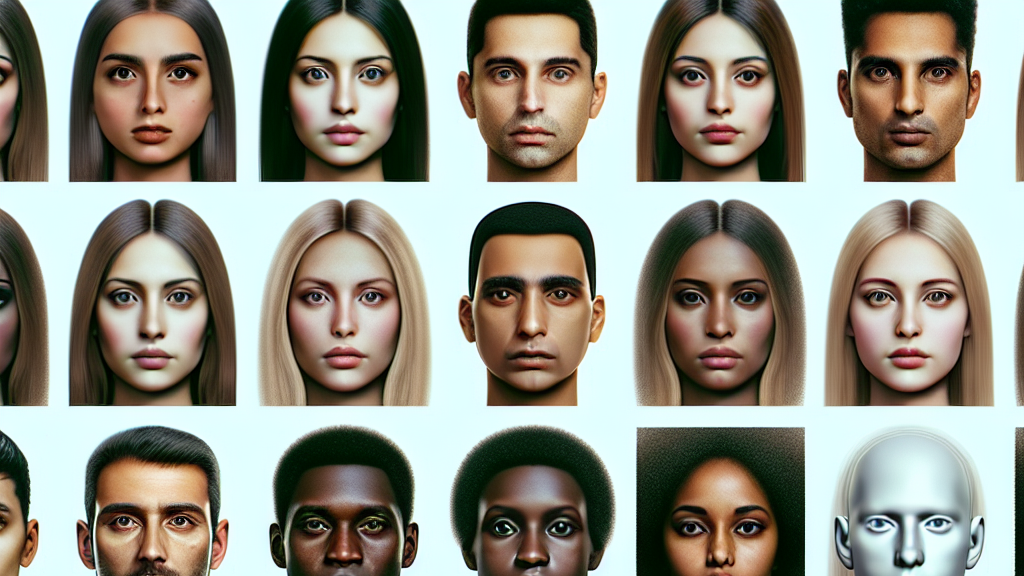
Imagine if there was a way to dig deep into the invisible rules that shape our world. That’s what some researchers are doing by using AI to expose the biases we carry without even realizing it. They’re looking at how big language models, like the ones that power smart assistants, unknowingly pick up human stereotypes and use this information to unveil the ‘unwritten rules’ that guide our society.

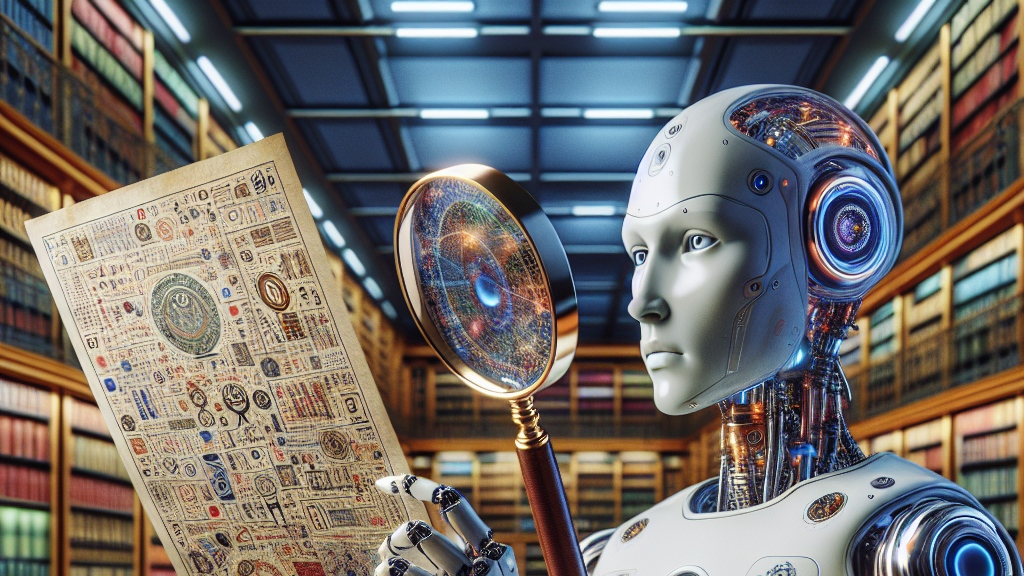
So how does it work? Researchers took a closer look at the peer review process in scientific fields and found that reviewers often have preferences or biases they don’t openly discuss. By using language models to delve into the reasoning behind their scorecards, the study found that AI can recognize these hidden biases, such as what makes one scientific paper seem stronger than another. Surprisingly, the models even highlighted how storytelling and context play roles in assessing scientific work, revealing intricate biases.

Why should you care? Well, it’s all about fairness. If AI can shine a light on the biases that shape important decisions, from publishing research to hiring employees, we could begin to create a more transparent and equal society. Imagine a world where everyone is truly judged by the quality of their ideas, not by hidden rules or stereotypes. This research could make that vision a reality, changing the way we understand excellence and relevance in all fields of life.

Did you know language models can speak over 100 languages? Yet, they might still adopt human biases in every one of them!

FAQs

How does AI uncover human biases in the peer review process?

AI models analyze text patterns and sentiments in reviews, revealing hidden biases that reviewers may have subconsciously, like preferring certain writing styles or focusing on storytelling aspects.

Why is it important for AI to highlight society’s unwritten codes?

Revealing these hidden biases and unwritten rules can lead to more equitable and transparent decision-making processes in various sectors, ensuring fairness and inclusivity.

Can AI change the way we perceive scientific excellence?

By exposing the often-unspoken biases that influence scientific reviews, AI could shift focus towards a broader understanding of what constitutes scientific excellence, beyond traditional metrics.

What are the implications of AI showing biases?

If AI can expose biases, it can help address and minimize them, leading to more just and balanced outcomes in fields like hiring, publishing, and education.

Could this research affect other areas beyond science?

Absolutely. By understanding how AI reveals biases, we can apply similar principles to other domains, potentially transforming how industries operate and make critical decisions.

Background

Large language models are complex algorithms that can process and generate human-like text by learning from vast amounts of data. They often inadvertently absorb human biases, as they are trained on content that reflects societal attitudes. These biases can manifest in the AI’s outputs and decision-making, prompting researchers to use these models as diagnostic tools to bring hidden societal biases to the surface.

History

The journey of understanding AI biases began with the realization that language models could produce outputs reflecting societal stereotypes. Early studies focused on identifying these biases, leading to a field of research dedicated to making AI systems fair and transparent. This study extends that research by using AI not just to recognize bias but to leverage it to illuminate hidden societal rules, particularly within the academic peer review process.

Based on “Language Models Surface the Unwritten Code of Science and Society” by Honglin Bao, Siyang Wu, Jiwoong Choi, Yingrong Mao, James A. Evans, available on arXiv (arxiv.org/abs/2505.18942), used under CC BY 4.0 (creativecommons.org/licenses/by/4.0/).

Trending

Latest

Can AI Save Water Discover How

Computers

AI is transforming the tech world, but it uses lots of water! A new tool, SCARF, helps us measure and reduce AI's water footprint,...

Whats a Forbush Decrease and Why Should We Care Whats a Forbush Decrease and Why Should We Care

Space

Scientists just observed the biggest solar storm event in years, revealing unexpected cosmic ray patterns. Understanding these changes could help us protect our technology...

Can Cars Spot Danger Faster Than Humans Can Cars Spot Danger Faster Than Humans

Computers

Think about how quickly you react when something unexpected happens on the road. This research brings us closer to creating self-driving cars that can...

Can Fear of the Other Stop Social Harmony Can Fear of the Other Stop Social Harmony

Physics

Fear of the unknown might make it harder for people to agree and get along. This study shows that when people have strong xenophobic...

Can AI Revolutionize Breast Cancer Diagnosis Can AI Revolutionize Breast Cancer Diagnosis

Electricity

This research introduces a groundbreaking AI model that can accurately assess HER2-positive breast cancer using widely accessible staining methods, potentially revolutionizing how we diagnose...

Can AI Transform Your Singing into a Choir Can AI Transform Your Singing into a Choir

Computers

Imagine singing solo and having AI turn you into a choir. This research unveils a groundbreaking AI tool that transforms your voice into rich...

You May Also Like

Computers

This research explores how AI models designed to understand both images and words might improve their performance simply by teaching themselves to think better....

Computers

Imagine if playing games could make a computer program better at understanding and creating text! This research suggests that by using creative tasks like...

Computers

Imagine a super-smart AI that can watch your daily life in real-time and remember everything without taking up much space. This research shows how...

Computers

This research explores how artificial intelligence language-powered robots might think they're seeing things that aren't actually there. Investigating this quirk could lead to more...

Computers

AI-created images might look cool, but they can hide a sneaky secret: reinforcing stereotypes about gender, race, and more. This research digs in to...

Computers

AI art is getting incredibly realistic, but it might be unintentionally reinforcing stereotypes and biases we see in society. This research explores these patterns...

Computers

This research delves into how AI-generated images can reinforce societal biases, urging for more inclusive practices to ensure fair and diverse representation. It examines...

Computers

This exciting study reveals that just like us, AI has its own biases that can skew its thinking, especially when solving problems. Understanding and...

Computers

Artificial intelligence systems favor attractive faces, linking them to traits like intelligence, and struggle more to accurately classify less-attractive, non-White female faces. This raises...

Copyright © 2024 8ig8rain.

Disclaimer: The content on 8ig8rain.com consists of AI-generated summaries of scientific abstracts from arXiv. Please note that most arXiv abstracts are preprints and may not have undergone formal peer review. While these summaries aim to convey key ideas and potential applications, they are provided for informational purposes only and should not be interpreted as validated scientific findings or professional advice. The summaries are intended to educate, spark curiosity, and inspire further exploration of science.