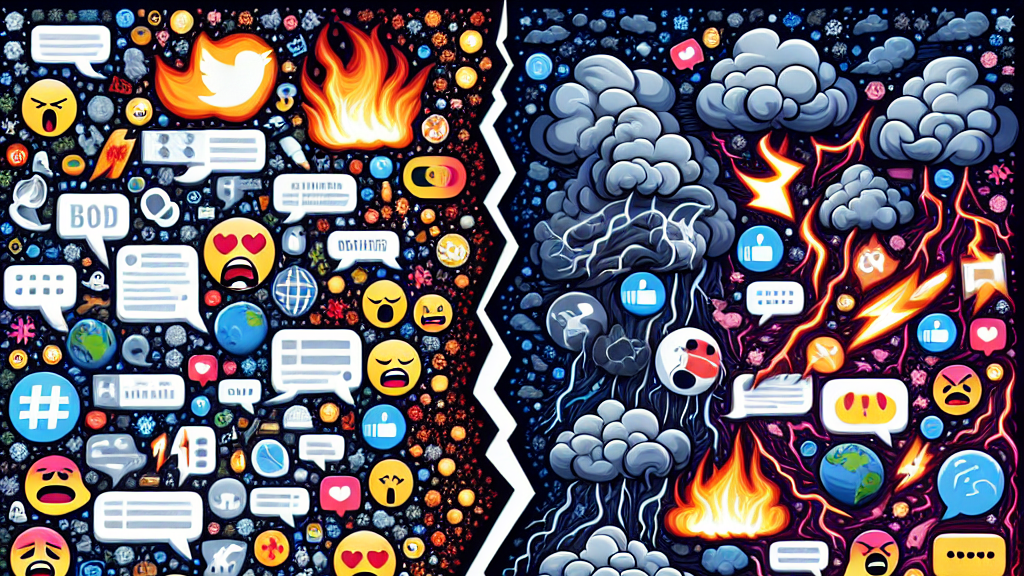
Imagine you’re online, chatting away about the weather or global warming, when suddenly things get heated—not just in the climate sense, but with anger and incivility. It’s not just you. Research has found that the intense emotions and political divides ignited by COVID-19 are bleeding over into other science topics, like climate change, making discussions more contentious and rude.
During the COVID-19 pandemic, people were already on edge, and when they took to social media to discuss climate change, the same heated emotions spilled over. Researchers discovered that the polarizing effects of COVID-19 discussions were influencing climate change debates, leading to increased hostility. It turns out that when people are divided on one issue, like pandemic policies or vaccinations, it can affect their behavior on other topics, spreading rudeness like a virus.
But why should this matter to us? Well, when hostility crosses over from one issue to another, it can make it even harder to have productive conversations about critical subjects like climate change. Imagine trying to talk to a friend about the weather when they’re already angry about pandemic rules—that’s what’s happening on a larger scale. Understanding this helps us recognize the importance of cooling down our discussions so we can meet in the middle on solutions that benefit us all.
Did you know that anger from COVID-19 debates can actually make unrelated topics like climate change more hostile?
FAQs
How does affective polarization during COVID-19 impact climate change discussions?
Affective polarization, where people’s emotions and political divides are intensified, has led to increased incivility in climate change discussions. This happens as the heated emotions from COVID-19 debates carry over into climate change topics.
Why are social media platforms like Twitter and Reddit highlighted in the study?
Social media platforms like Twitter and Reddit are where people often engage in discussions about science-related topics. The study shows how negative emotions and incivility on these platforms, driven by COVID-19, are spilling into climate change conversations.
What is the connection between vaccine hesitancy and climate policy opposition?
The study found that pre-pandemic political beliefs, like anti-internationalist populism, linked people who oppose climate policies to those hesitant about vaccines, showing how cross-domain polarization can manifest.
Is this polarization affecting any other areas besides climate change?
While this study focused on climate issues, the pattern of cross-domain polarization could potentially impact other areas where science and public policy intersect, making it important to explore its wider influence.
Background
Affective polarization occurs when people’s political and emotional responses become intensely divided, leading to hostility. This study examines how these polarized emotions, particularly around COVID-19, affect other important discussions, like those about climate change. Social media provides a platform where these behaviors are observable and can influence public sentiment broadly.
History
Historically, the study of polarization focused on politics, but scientists started noting its impact on societal issues, including climate change. Previously, politics only seemed to affect political discussions. But, as with the COVID-19 pandemic, deepening divides have shown how one polarized topic can impact others, as researchers now observe cross-domain spillovers in contentious topics.
Based on “Incivility and Contentiousness Spillover between COVID-19 and Climate Science Engagement” by Hasti Narimanzadeh, Arash Badie-Modiri, Iuliia Smirnova, Ted Hsuan Yun Chen, available on arXiv (arxiv.org/abs/2502.05255), used under CC BY 4.0 (creativecommons.org/licenses/by/4.0/).