Connect with us

Search by keyword

Materials

Can AI Design New Materials Faster Than Ever?

AI is revolutionizing how we discover new materials by using advanced models to predict their properties faster and more accurately than ever before. This could speed up the creation of everything from stronger smartphones to more efficient solar panels.

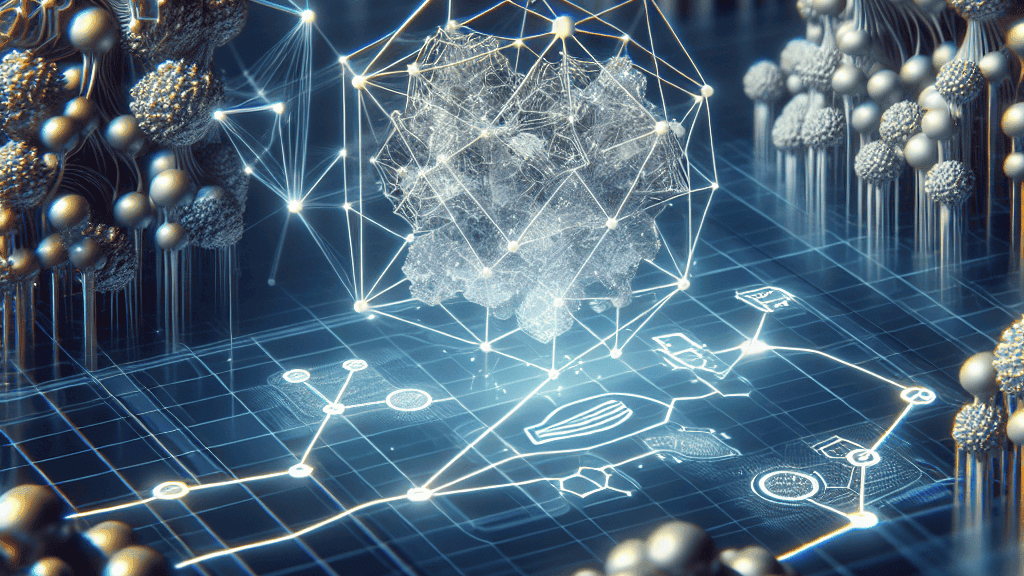
Can AI Design New Materials Faster Than Ever 1024x576

Imagine a world where the special materials inside your phone or car are discovered in just days, instead of years. That’s the kind of future DenseGNN, a new AI-powered model, is steering us towards. By mastering the prediction of material properties, AI can close the once extensive gap between theoretical possibilities and real-world applications.

DenseGNN is like a supercharged version of current tools, using something called Graph Neural Networks to learn about and predict how materials behave. It improves upon existing models by tackling problems such as high costs and adapting to new discoveries. With DenseGNN, scientists can quickly sift through loads of hypothetical materials and find the ones that are worth making in a lab, potentially as accurately as the traditional method of X-ray diffraction.

What does this mean for you? Well, think about solar panels that are more efficient, or a smartphone battery that lasts much longer. The research being done with DenseGNN now can pave the way for these innovations to come to market faster. By making materials discovery more efficient, this AI tool could lead us into a future with better technology more aligned with our everyday needs.

Did you know? AI can now predict material properties with almost the same accuracy as complex lab techniques like X-ray diffraction!

FAQs

What unexpected discovery did scientists make?

AI can predict material properties with accuracy close to traditional lab methods like X-ray diffraction.

How does DenseGNN improve on previous models?

DenseGNN uses enhanced networks to tackle high costs and domain adaptation issues, improving material property predictions.

Why does this research matter for everyday life?

It could speed up the development of new materials for things like stronger, more efficient electronics.

What makes DenseGNN unique?

It combines sophisticated learning networks to optimize predictions and reduce computational costs, enabling deeper exploration of materials.

What are potential applications of this research?

Faster materials discovery could lead to advancements in renewable energy, consumer electronics, and more.

Background

Graph Neural Networks (GNNs) are a kind of machine learning that excels at finding patterns in data arranged like a network, such as atoms in a crystal or neurons in a brain. They can learn relationships and predict outcomes based on those connections. However, traditional GNNs can be expensive to train and sometimes struggle to adapt to new domains or start giving similar predictions as they get more complex. DenseGNN is designed to overcome these issues with innovative improvements.

History

The field of materials science has long relied on experimental and theoretical methods to discover and optimize materials. With the advent of machine learning, models like Graph Neural Networks began to offer a way to analyze large datasets and predict properties more efficiently. DenseGNN builds on this foundation by integrating new techniques to handle the challenges that have limited other models.

Based on “DenseGNN: universal and scalable deeper graph neural networks for high-performance property prediction in crystals and molecules” by Hongwei Du, Jiamin Wang, Jian Hui, Lanting Zhang, Hong Wang, available on arXiv (arxiv.org/abs/2501.03278), used under CC BY 4.0 (creativecommons.org/licenses/by/4.0/).


Trending

Latest

Can AI Save Water Discover How

Computers

AI is transforming the tech world, but it uses lots of water! A new tool, SCARF, helps us measure and reduce AI's water footprint,...

Whats a Forbush Decrease and Why Should We Care Whats a Forbush Decrease and Why Should We Care

Space

Scientists just observed the biggest solar storm event in years, revealing unexpected cosmic ray patterns. Understanding these changes could help us protect our technology...

Can Cars Spot Danger Faster Than Humans Can Cars Spot Danger Faster Than Humans

Computers

Think about how quickly you react when something unexpected happens on the road. This research brings us closer to creating self-driving cars that can...

Can Fear of the Other Stop Social Harmony Can Fear of the Other Stop Social Harmony

Physics

Fear of the unknown might make it harder for people to agree and get along. This study shows that when people have strong xenophobic...

Can AI Revolutionize Breast Cancer Diagnosis Can AI Revolutionize Breast Cancer Diagnosis

Electricity

This research introduces a groundbreaking AI model that can accurately assess HER2-positive breast cancer using widely accessible staining methods, potentially revolutionizing how we diagnose...

Can AI Transform Your Singing into a Choir Can AI Transform Your Singing into a Choir

Computers

Imagine singing solo and having AI turn you into a choir. This research unveils a groundbreaking AI tool that transforms your voice into rich...

You May Also Like

Computers

AI art is getting incredibly realistic, but it might be unintentionally reinforcing stereotypes and biases we see in society. This research explores these patterns...

Statistics

This exciting research pits two powerful data-crunching methods, PGMs and GNNs, against each other to see which best unlocks the secrets hidden in complex...

Computers

Imagine an AI that can identify individual sounds from a noisy environment without any specific training! This breakthrough in sound separation means our devices...

Quantitative Finance

Imagine using artificial intelligence to revolutionize your investment strategies! This research unveils how generative models can shake up finance but also highlights why they're...

Computers

Researchers have found a way to sneakily tweak AI models so they look and act normal but secretly cause chaos in other AI systems....

Electricity

Cancer diagnosis could get a futuristic boost by using tumor images to predict abnormal gene patterns—and it could be faster, more accurate, and accessible...

Materials

Imagine a world where computers think like human experts to create new materials with incredible properties. MatAgent is changing the game by using artificial...

Computers

This research dives into how well AI can be directed to meet specific user goals, revealing that while AI can create fantastic content, it...

Electricity

Generative models used in medical imaging might accidentally remember real patient data, risking privacy breaches. By identifying problematic prompts in AI training, researchers aim...

Copyright © 2024 8ig8rain.

Disclaimer: The content on 8ig8rain.com consists of AI-generated summaries of scientific abstracts from arXiv. Please note that most arXiv abstracts are preprints and may not have undergone formal peer review. While these summaries aim to convey key ideas and potential applications, they are provided for informational purposes only and should not be interpreted as validated scientific findings or professional advice. The summaries are intended to educate, spark curiosity, and inspire further exploration of science.