Connect with us

Search by keyword

Math

Could Graphene Change How We Use Electronics?

Graphene’s unique properties at a magic angle could revolutionize electronics by making devices faster, smaller, and more efficient than ever before. This research uncovers how electrons interact in this material, paving the way for future technological breakthroughs.

Could Graphene Change How We Use Electronics
✨Researched by humans. Explained by robots. Learn more.

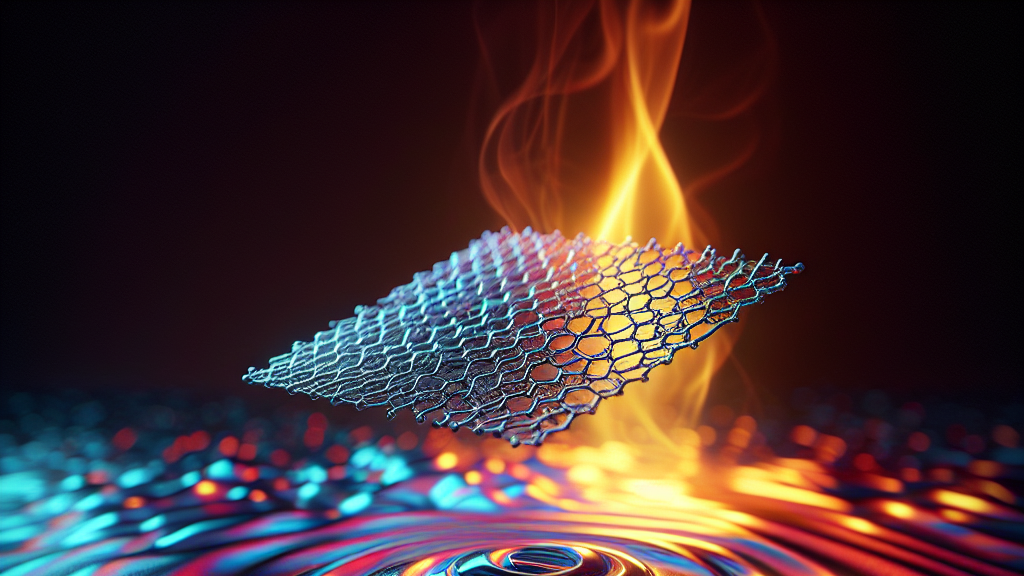
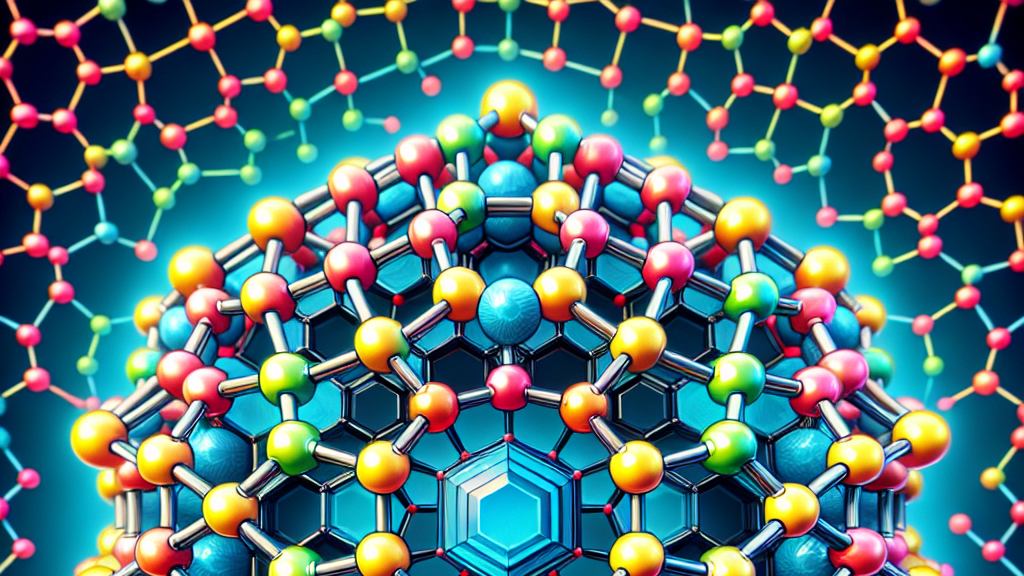
Imagine a world where your smartphone is not just slimmer but exponentially faster and more efficient. This might soon be possible thanks to a phenomenon called the ‘magic angle’ in graphene, a wonder material hailed for its incredible physical properties. Scientists have discovered that when two layers of graphene are twisted at this special angle, it unlocks a new realm of possibilities for how electrons move and interact, like superheroes in a microscopic city.

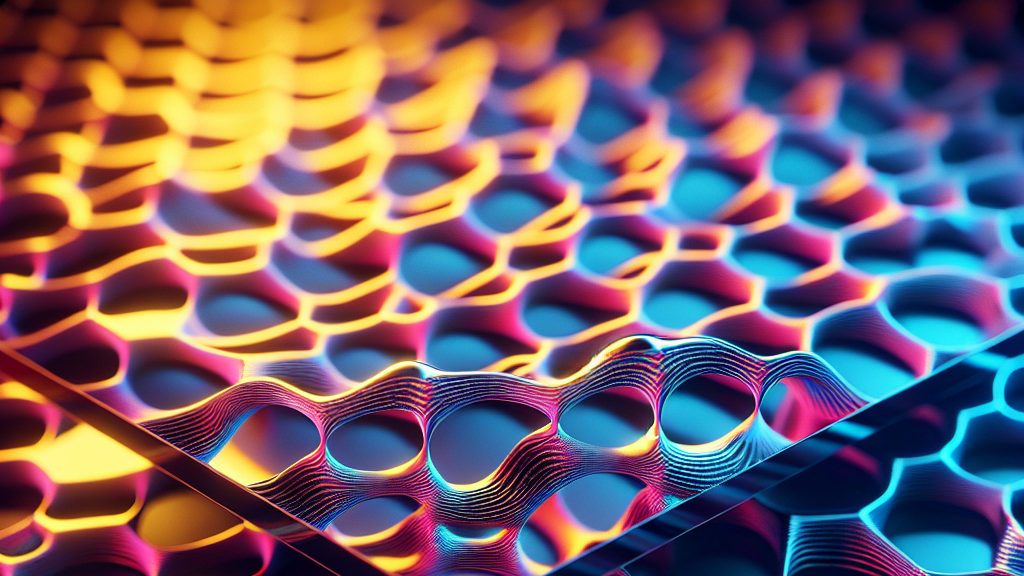
The heart of this research lies in understanding how electrons, the tiny particles that create electricity, behave in this ‘magic’ setting. By twisting two sheets of graphene at just the right angle, researchers have found that the electrons move through the material in a completely unique way, forming what are known as flat bands. These flat bands allow for strong interactions between the electrons, which means they can exhibit remarkable properties like superconductivity and magnetism, typically not seen in standard materials.

The potential applications of this are immense. Picture this: future electronics could be built using these highly efficient materials, leading to devices that consume less power but perform better. This could mean longer-lasting batteries, faster charging times, and new electronics achieving feats we can only dream of today. We’re talking about a future where technology doesn’t just catch up with our needs but anticipates them in revolutionary ways.

Did you know that a single sheet of graphene is only one atom thick, yet it is 200 times stronger than steel?

FAQs

What is magic angle in graphene?

The magic angle in graphene refers to the specific angle at which two layers of graphene are twisted, leading to unique electronic properties. This discovery is revolutionary because it opens the door to new, highly efficient ways for electrons to interact, which could change the way we use electronics.

Why is graphene considered a wonder material?

Graphene is called a wonder material because of its exceptional strength, flexibility, and electrical conductivity, all packed into a sheet that’s just one atom thick. Discovering unique properties like the magic angle only expands its potential uses, especially in electronics.

How could magic angle twisted bilayer graphene impact everyday devices?

Magic angle twisted bilayer graphene could impact everyday devices by making them faster and more efficient. It allows for strong electron interactions, potentially leading to breakthroughs in creating more powerful and less energy-consuming technology.

Background

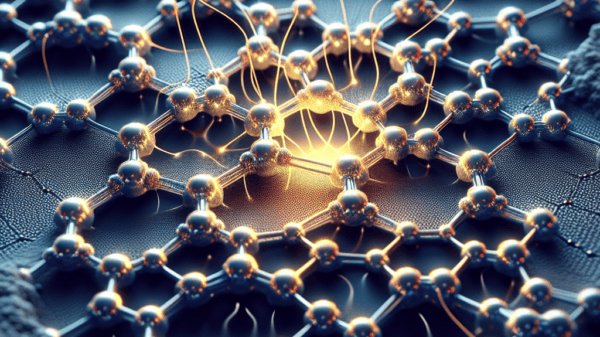
Magic angle twisted bilayer graphene (MATBG) refers to two sheets of graphene twisted at a specific angle. This affects how electrons behave in the material, allowing them to form ‘flat bands’ where they interact strongly. By understanding these interactions, scientists can explore new physical phenomena like superconductivity and magnetism.

History

Graphene itself has been known for its remarkable properties since its isolation in 2004. Over the years, researchers have been exploring its potential in various applications, such as electronics. The discovery of the magic angle in 2018 has accelerated efforts to understand and harness these new properties, marking a significant shift in graphene research.

Based on “The Many-Body Ground State Manifold of Flat Band Interacting Hamiltonian for Magic Angle Twisted Bilayer Graphene” by Kevin D. Stubbs, Michael Ragone, Allan H. MacDonald, Lin Lin, available on arXiv (arxiv.org/abs/2503.20060), used under CC BY 4.0 (creativecommons.org/licenses/by/4.0/).

Trending

Latest

Can AI Save Water Discover How

Computers

AI is transforming the tech world, but it uses lots of water! A new tool, SCARF, helps us measure and reduce AI's water footprint,...

Whats a Forbush Decrease and Why Should We Care Whats a Forbush Decrease and Why Should We Care

Space

Scientists just observed the biggest solar storm event in years, revealing unexpected cosmic ray patterns. Understanding these changes could help us protect our technology...

Can Cars Spot Danger Faster Than Humans Can Cars Spot Danger Faster Than Humans

Computers

Think about how quickly you react when something unexpected happens on the road. This research brings us closer to creating self-driving cars that can...

Can Fear of the Other Stop Social Harmony Can Fear of the Other Stop Social Harmony

Physics

Fear of the unknown might make it harder for people to agree and get along. This study shows that when people have strong xenophobic...

Can AI Revolutionize Breast Cancer Diagnosis Can AI Revolutionize Breast Cancer Diagnosis

Electricity

This research introduces a groundbreaking AI model that can accurately assess HER2-positive breast cancer using widely accessible staining methods, potentially revolutionizing how we diagnose...

Can AI Transform Your Singing into a Choir Can AI Transform Your Singing into a Choir

Computers

Imagine singing solo and having AI turn you into a choir. This research unveils a groundbreaking AI tool that transforms your voice into rich...

You May Also Like

Math

This study explores how graphene, a super-strong material, manages stress, which could advance how we use it in future technologies and daily life.

Space

Scientists are exploring the use of engineered aerosols to warm Mars, potentially making it a place where life could survive. By understanding how particles...

Materials

Discover the mind-bending forces that guide graphene sheets to self-assemble perfectly, opening new doors for tech and materials science.

Materials

Imagine using liquid metals to guide the self-assembly of graphene sheets through forces akin to invisible hands of Casimir-like effects! This research deciphers a...

Materials

Imagine invisible forces helping to stitch together cutting-edge materials—this is the surprising breakthrough that could revolutionize how we build the next generation of super...

Computers

This research introduces a light-powered actuator inspired by nocturnal creatures' eyes, promising faster and more flexible robot mobility. It could revolutionize how robots are...

Materials

Researchers find that switching electrical charge direction in materials might alter their properties affecting energy flow, potentially leading to smarter, longer-lasting electronics.

Materials

Graphene, merely a few layers deep, can change how electrons move, potentially leading to revolutionary tech upgrades. This could mean faster, more efficient devices...

Copyright © 2024 8ig8rain.

Disclaimer: The content on 8ig8rain.com consists of AI-generated summaries of scientific abstracts from arXiv. Please note that most arXiv abstracts are preprints and may not have undergone formal peer review. While these summaries aim to convey key ideas and potential applications, they are provided for informational purposes only and should not be interpreted as validated scientific findings or professional advice. The summaries are intended to educate, spark curiosity, and inspire further exploration of science.