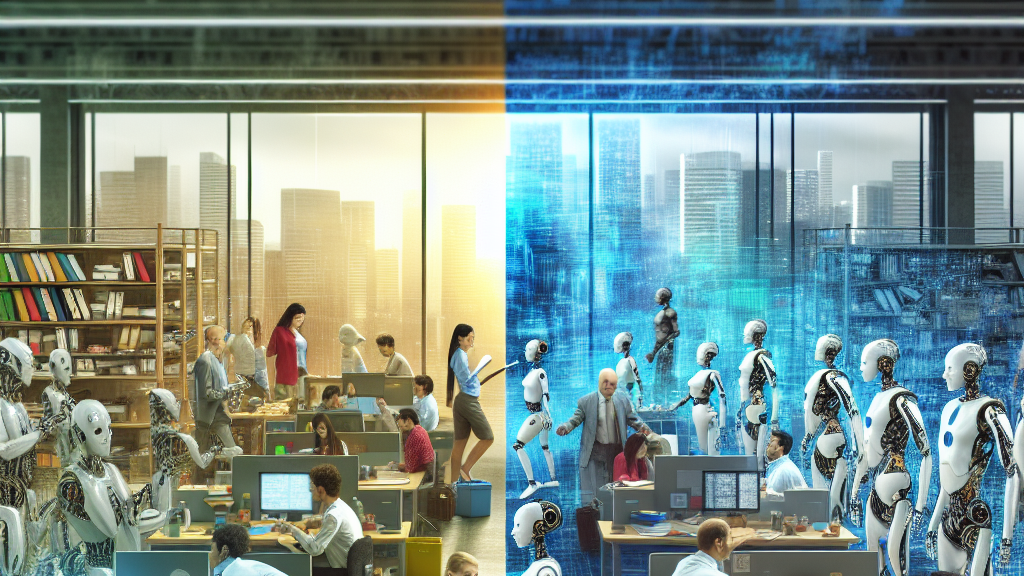
Imagine cutting down the time you spend on emails each week by 25%! That’s the promise of a fascinating new study that explored how generative AI technology is transforming the daily work patterns of knowledge workers. By integrating AI into everyday applications like email and document creation, workers who participated in this study experienced significant savings in time, reducing their email workload by three hours each week.
The research involved a large-scale, six-month experiment with 6,000 workers across various industries. Only half of these workers had access to a generative AI tool integrated into their existing work applications. The results were compelling: those who used the AI tool could independently change their email handling habits, spending less time in their inbox, while also showing a moderate improvement in document creation speed. However, AI didn’t make much difference in the time spent on meetings, suggesting that certain coordinated activities might need human touch.
In the future, these findings could pave the way for more efficient workflows where AI tools help us focus on more meaningful tasks rather than repetitive chores. Imagine a workday where the hours saved on emails could be reinvested in creative problem-solving or learning new skills. That’s the potential impact of this research on our work lives, hinting at a new era where AI not only saves time but also enriches our professional and personal lives.
Generative AI can help people spend 25% less time on emails each week!
FAQs
How does generative AI help in reducing email time?
Generative AI tools streamline email processes by automating responses and organizing tasks, allowing workers to cut down the time spent handling emails by 25%, as shown in the study.
Why didn’t generative AI affect time spent in meetings?
While AI can help with independent tasks, changes in meeting durations often require coordination between multiple people, which AI can’t easily automate or influence yet.
Could this AI tool be useful in other areas of work?
Yes, generative AI shows promise in enhancing productivity across various tasks that can be independently managed, such as document creation or brainstorming, potentially freeing up time for more creative and strategic activities.
What industries were involved in the AI research study?
The study involved workers from various industries, implying that generative AI’s benefits in reducing email workload are widespread and not limited to a single industry.
Could AI tools like these replace human jobs?
While AI can optimize specific tasks, its current role is more about enhancing human productivity rather than replacing jobs, allowing people to focus on more complex and rewarding tasks.
Background
Generative AI refers to artificial intelligence systems capable of creating content or automating processes based on data inputs. In this study, it was embedded into everyday software applications to assist in tasks like writing emails and creating documents. The fundamental idea is that AI can learn from existing patterns and suggest improvements or automate routine tasks, freeing up time for users.
History
Generative AI has evolved over the last decade from simple automation scripts to complex systems capable of understanding context and generating human-like content. Earlier studies focused on AI for specific tasks like language processing, but recent advances have broadened its scope, allowing it to be integrated into general work environments to help manage workflows and increase efficiency.
Based on “Shifting Work Patterns with Generative AI” by Eleanor Wiske Dillon, Sonia Jaffe, Nicole Immorlica, Christopher T. Stanton, available on arXiv (arxiv.org/abs/2504.11436), used under CC BY 4.0 (creativecommons.org/licenses/by/4.0/).