Connect with us

Search by keyword

Economics

Did Shutting Down Power Plants Save Lives?

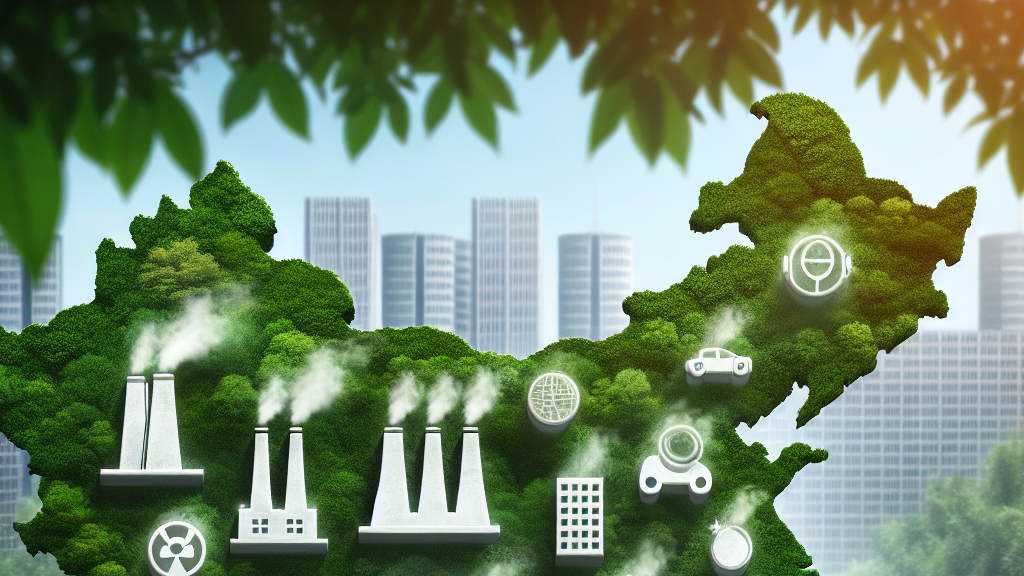
Shutting down small coal power plants in China potentially saved 46,000 children’s lives by reducing air pollution. Understanding the health benefits of cleaner air can inspire policies worldwide to prioritize public health.

Did Shutting Down Power Plants Save Lives
✨Researched by humans. Explained by robots. Learn more.

How often do we consider the invisible, yet powerful impact of industrial policies on our health? Recent research in China tackled this head-on by analyzing how shutting down small coal power plants between 2006 and 2010 may have played a pivotal role in saving thousands of young lives. It’s fascinating to think that a policy aimed at cleaner energy can ripple outwards, potentially leading to a significant reduction in under-5 mortality rates due to improved air quality.

The researchers focused on 2181 coal power plants and gathered detailed data, including local mortality rates, air pollution levels, and socioeconomic factors, to understand this policy’s effect. By using an advanced statistical method named IV-Lasso, which helps isolate the real impact of air pollution from other potential influences, they discovered that closing these plants could have saved around 46,000 children’s lives. This eye-opening finding highlights not just the environmental but also the crucial public health benefits of transitioning away from coal.

Imagine a world where every child breathes cleaner air and grows up healthier because of deliberate environmental policies. This study suggests such a future might be within reach. By illustrating the dramatic health benefits of reducing air pollution, the research provides a powerful argument for policymakers everywhere to consider similar actions. Cleaner air doesn’t just mean a healthier planet; it means healthier, happier lives for us all.

China’s shutdown of small coal power plants potentially saved the lives of about 46,000 children under five years old.

FAQs

How did the shutdown of coal power plants affect child health in China?

The shutdown of small coal power plants in China during the 11th 5-Year Plan period is estimated to have saved around 46,000 children’s lives under five by reducing air pollution.

Why focus on under-5 mortality in this study on air pollution?

Under-5 mortality is a critical indicator of child health; children are particularly vulnerable to air pollution, which can lead to severe respiratory and developmental issues.

What methods did researchers use to determine the impact on mortality?

Researchers used a statistical method called IV-Lasso to isolate the effects of air pollution on mortality, considering various factors like plant locations, pollution levels, and wind patterns.

Is this research relevant only to China?

No, the findings highlight the potential global health benefits of reducing coal power dependence, which can inspire similar policies in other countries to improve air quality and save lives.

Background

Coal power plants emit pollutants like PM2.5 and sulfur dioxide, which are harmful to human health. The study uses the IV-Lasso method, a statistical tool that helps identify the specific impact of air pollution by considering multiple variables, such as geographical distance and wind patterns, to better understand its effects on child mortality in China.

History

Over the years, coal power plants have been a significant source of energy and pollution. Various research has highlighted air pollution’s impact on health, but this study focuses on a specific policy implemented during China’s 11th 5-Year Plan, showing its substantial impact on reducing child mortality by closing small coal plants.

Based on “Air Pollution and Under-5 Child Mortality: Evidence from China’s Coal Power Plant Phase-out Policy” by X. Liu, H. Yu, available on arXiv (arxiv.org/abs/2411.10728), used under CC BY 4.0 (creativecommons.org/licenses/by/4.0/).


Trending

Latest

Can AI Save Water Discover How

Computers

AI is transforming the tech world, but it uses lots of water! A new tool, SCARF, helps us measure and reduce AI's water footprint,...

Whats a Forbush Decrease and Why Should We Care Whats a Forbush Decrease and Why Should We Care

Space

Scientists just observed the biggest solar storm event in years, revealing unexpected cosmic ray patterns. Understanding these changes could help us protect our technology...

Can Cars Spot Danger Faster Than Humans Can Cars Spot Danger Faster Than Humans

Computers

Think about how quickly you react when something unexpected happens on the road. This research brings us closer to creating self-driving cars that can...

Can Fear of the Other Stop Social Harmony Can Fear of the Other Stop Social Harmony

Physics

Fear of the unknown might make it harder for people to agree and get along. This study shows that when people have strong xenophobic...

Can AI Revolutionize Breast Cancer Diagnosis Can AI Revolutionize Breast Cancer Diagnosis

Electricity

This research introduces a groundbreaking AI model that can accurately assess HER2-positive breast cancer using widely accessible staining methods, potentially revolutionizing how we diagnose...

Can AI Transform Your Singing into a Choir Can AI Transform Your Singing into a Choir

Computers

Imagine singing solo and having AI turn you into a choir. This research unveils a groundbreaking AI tool that transforms your voice into rich...

You May Also Like

Physics

This research reveals that the layout of city streets is key to understanding and predicting urban climate changes like heat and pollution. By studying...

Physics

This research explores how surfaces in our cities, like buildings and cars, can actively clean the air we breathe, potentially removing over 1 gigaton...

Math

Imagine a tree that can grow endlessly or stop entirely. Understanding amoebas and their growth could reveal these mysteries and challenge our ideas of...

Physics

This research investigates how tweets from influential users in Delhi can act as sensors to detect air pollution, potentially enhancing awareness and helping us...

Physics

Twitter isn't just about trending topics; it can actually help track air pollution levels! Researchers are using tweets to identify key influencers who raise...

Physics

Discover how Twitter users are becoming virtual air quality sensors, identifying key influencers who raise awareness about air pollution – potentially improving how we...

Physics

Heatwaves are not just getting hotter; they're becoming deadly, especially those with high humidity levels. With climate change, these oppressive heatwaves could multiply, increasing...

Physics

Light and air pollution are making our night skies brighter, hampering both stargazing and scientific data collection. This research reveals how pollution affects our...

Copyright © 2024 8ig8rain.

Disclaimer: The content on 8ig8rain.com consists of AI-generated summaries of scientific abstracts from arXiv. Please note that most arXiv abstracts are preprints and may not have undergone formal peer review. While these summaries aim to convey key ideas and potential applications, they are provided for informational purposes only and should not be interpreted as validated scientific findings or professional advice. The summaries are intended to educate, spark curiosity, and inspire further exploration of science.