Did you ever wonder why some creatures have tiny, streamlined genomes while others boast vast, complex ones? It’s one of life’s exciting mysteries! Recent research might have an answer. Scientists are uncovering how evolutionary pressures play a role in shaping the genomes of different organisms, determining whether they’re small and fast or large and information-rich. It’s like deciding between owning a speedy sports car or a roomie RV with all the luxuries.
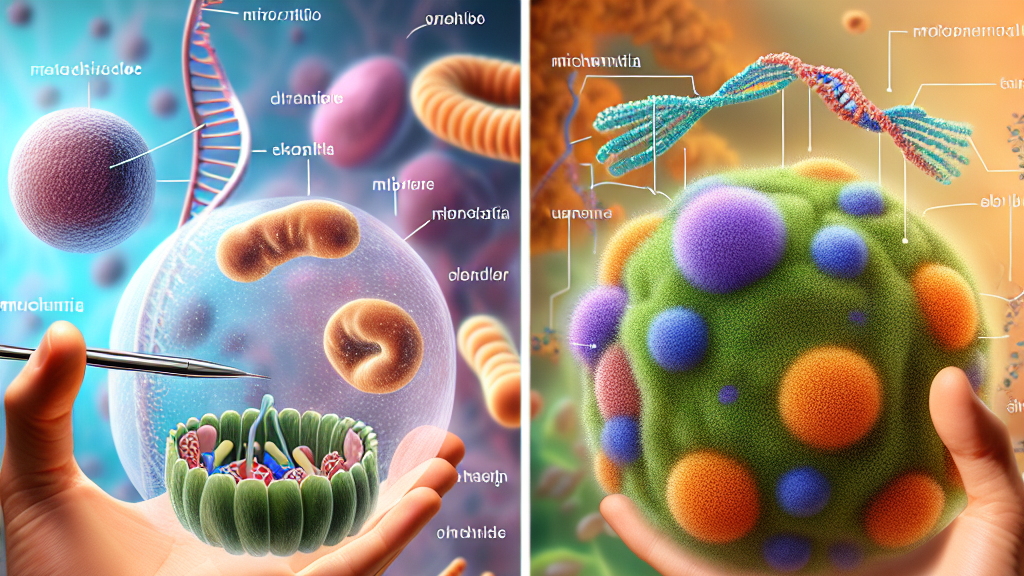
The study reveals that simpler organisms like bacteria slim down their genome, optimizing for quick replication using just one origin point. In contrast, complex creatures like plants and animals have longer DNA strands with multiple starting points, enhancing their ability to store vast amounts of information. What’s more, this research taps into the role of cellular powerhouses—mitochondria and chloroplasts—in regulating genome length, tying the mysterious Eukaryote genome expansion to evolutionary energy strategies.
Imagine a future where we leverage this knowledge to revolutionize fields like gene therapy or biodiversity studies. Understanding why genomes differ so vastly can offer new perspectives on diseases, evolution, and even the adaptation of life to various environments—fascinating, right? This research could someday help scientists manipulate genome length for better crop yields or more resilient species, making our world ever more adaptable and advanced.
Did you know? Mitochondria, the powerhouse of the cell, might hold the key to why some organisms have giant genomes!
FAQs
Why do some organisms have much larger genomes than others?
This research suggests that differences in genome size can be linked to evolutionary strategies. Prokaryotes opt for smaller genomes to replicate quickly with a single replication origin, while eukaryotes expand their genomes using multiple origins to store more information.
How do mitochondria and chloroplasts influence genome length?
Mitochondria and chloroplasts, as endosymbiotic organelles, are theorized to regulate replication origins in eukaryotes, affecting genome length. This connection may explain why these organisms have larger genomes.
What is the C-value paradox, and how does it relate to this study?
The C-value paradox is the observation that genome size does not always correlate with an organism’s complexity. This study suggests that genome length can vary greatly under different selection pressures, explaining why some seemingly simple organisms have vast genomes.
How could understanding genome length evolution impact everyday life?
This research could lead to advancements in gene therapy, agriculture, and biodiversity conservation by revealing how to manipulate genome size for improved traits or adaptations.
What’s the significance of Chagraff’s second parity rule in this context?
Chagraff’s second parity rule, the equalization of certain DNA bases, was unexplained until this study suggested it results from the symmetrization of replichore length, a phenomenon observed across species.
Background
The concept of genome length revolves around the amount of DNA present within an organism’s cells. Prokaryotes, like bacteria, usually have smaller genomes, which helps them replicate faster. Eukaryotes, such as plants and animals, often have larger genomes, allowing for more complex information storage. The study explores how cellular structures like mitochondria and chloroplasts can influence this genome expansion, tying it back to evolutionary strategies that balance replication speed with information capacity.
History
The research on genomic size variation builds upon decades of studies into DNA’s role in evolution and organism complexity. Prior work has shown that genome size doesn’t always align with an organism’s complexity, known as the C-value paradox. This study refines the understanding of genome length evolution by integrating ideas about replication origins and cellular energetics, offering a fresh perspective on why genomes differ so drastically across life forms.
Based on “Eukaryotes evade information storage-replication rate trade-off with endosymbiont assistance leading to larger genomes” by Parthasarathi Sahu, Sashikanta Barik, Koushik Ghosh, Hemachander Subramanian, available on arXiv (arxiv.org/abs/2502.21125), used under CC BY 4.0 (creativecommons.org/licenses/by/4.0/).