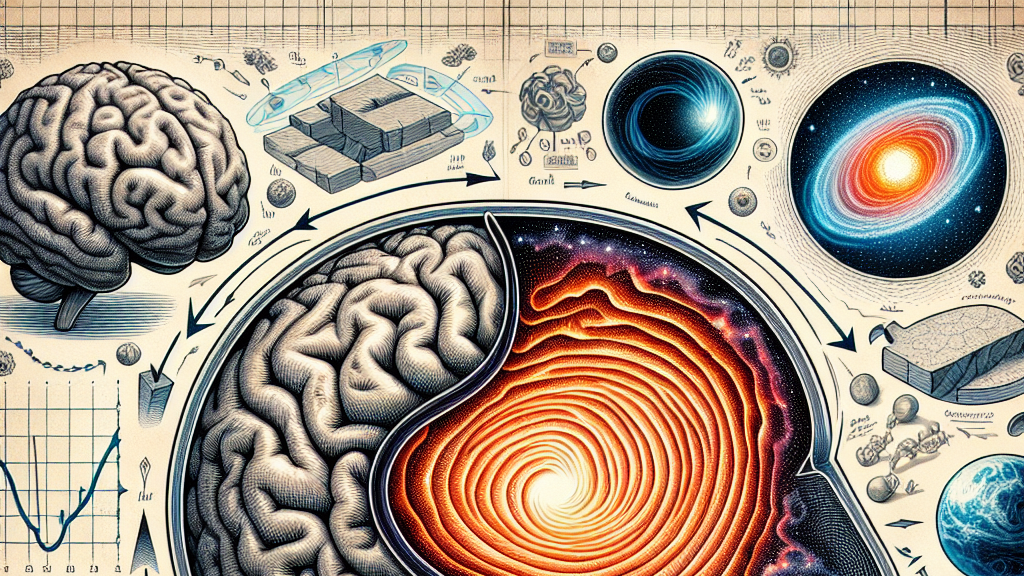
Picture this: somewhere out there in the vastness of space, a star like our Sun is about to be born. It’s happening in something called a ‘pre-stellar core’—a dense, cold clump of gas in space that’s the birthplace of stars. Curious scientists have been on a mission to find more of these stellar nurseries to better understand how stars, and potentially new worlds, come into existence. Their latest discovery might be right in our cosmic backyard.
In a fascinating turn of events, researchers have zoomed in on an unusually dense core named Corona Australis 151. Using special molecular gas probes, they’ve confirmed that this space cloud is not only dense but also quite chilly—a combination that suggests exciting developments are underway. It seems this core is in an advanced stage of evolution, hinting that a star could be emerging from it. This discovery is like finding a hidden nursery in the universe where baby stars are cradled and nurtured.
The real-world implications are monumental! Imagine if, in the near future, technology allows us to observe these cosmic phenomena more closely. We could witness the birth of stars and the beginnings of solar systems, offering deeper insights into how our own Sun and planets may have formed. This knowledge could even influence how we search for life beyond Earth, shedding light on the conditions necessary for life-supporting environments elsewhere in the universe.
The core discovered is so dense that it’s like cramming a million times the amount of matter we have on Earth into a single tiny cloud in space!
FAQs
What exactly is a pre-stellar core and why is it important?
A pre-stellar core is a dense, cold cloud of gas in space, considered the initial stage in the life cycle of a star. Understanding these cores is crucial because they can illustrate how stars, like our Sun, form and evolve over time.
Why is the discovery of Corona Australis 151 significant?
Corona Australis 151 is a rare find due to its high density and advanced evolutionary stage, suggesting it might be on the verge of forming a star. This gives scientists a unique opportunity to study star formation processes more closely and understand fundamental aspects of our universe.
How do researchers study these distant space clouds?
Scientists use telescopes outfitted with special sensors to detect molecular lines in dense gas. By studying these lines, they can infer the density and temperature of the cores, as well as their chemical composition, which provide clues about their stage of evolution.
Could this research influence our understanding of life beyond Earth?
Yes, by understanding how stars and planetary systems form, we get closer to identifying environments that could support life. This could guide future missions in the search for extraterrestrial life, potentially reshaping our ideas about life beyond our planet.
Background
Pre-stellar cores are dense, cold clouds in space that eventually give birth to stars. They are like the wombs of the universe. These cores are crucial because they set the stage for the formation of stars like our Sun. The study of these cores helps scientists understand the early conditions necessary for star and planet formation.
History
The exploration of star formation has a rich history, dating back to early astronomical observations. The Herschel Gould Belt survey has been pivotal in identifying starless cores. The present study advances this work by focusing on exceptionally dense pre-stellar cores, like Corona Australis 151, providing new insights into their evolution and structure.
Based on “Hunting pre-stellar cores with APEX: Corona Australis 151, the densest pre-stellar core or the youngest protostar?” by E. Redaelli, S. Spezzano, P. Caselli, J. Harju, D. Arzoumanian, O. Sipilä, A. Belloche, F. Wyrowski, J. E. Pineda, available on arXiv (arxiv.org/abs/2502.13745), used under CC BY 4.0 (creativecommons.org/licenses/by/4.0/).