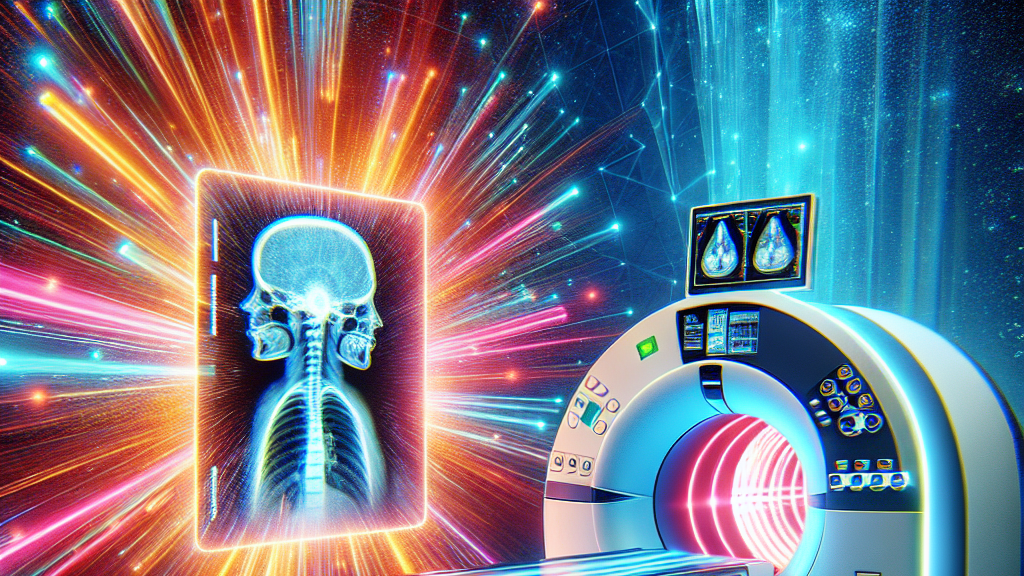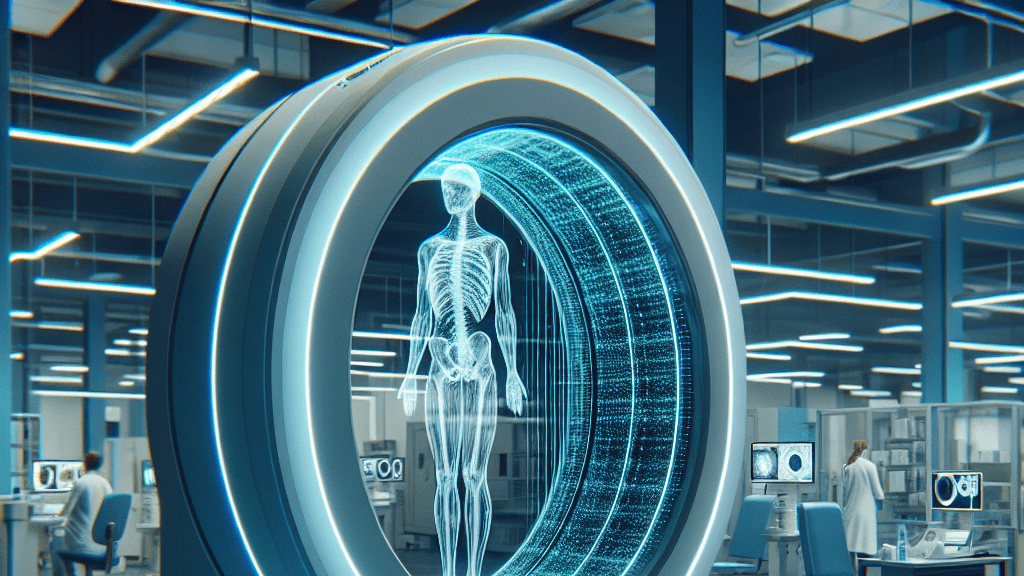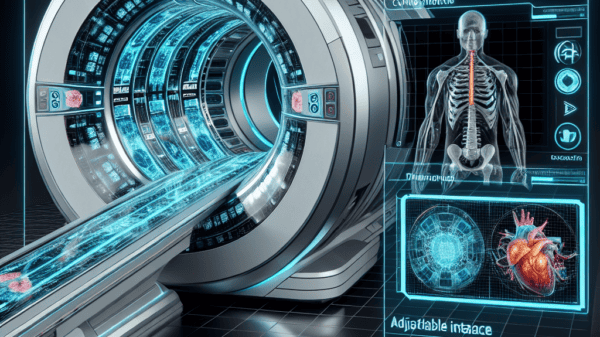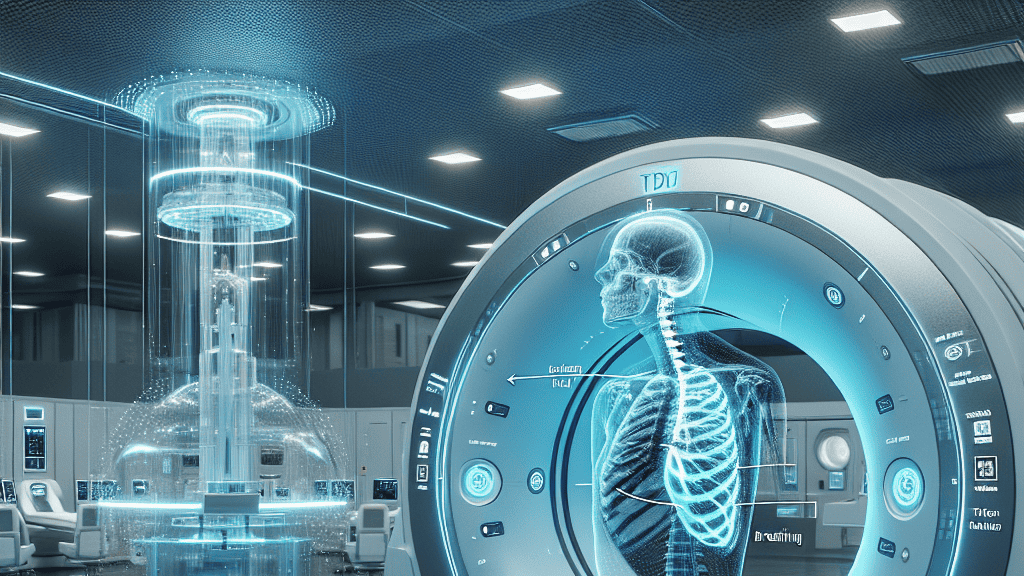
Imagine getting a CT scan and knowing that every little detail of your body is captured perfectly, even if you squirm or breathe deeply. Well, a new technology might soon make that a reality. This incredible advancement promises to transform how doctors capture images inside your body, making them clearer and more precise than ever before, which is crucial when your health is at stake.
The core of this innovation is something called a wavelet diffusion model. Think of it as a smart algorithm that can adapt and change based on your body’s movement, like a dance partner who follows your lead perfectly. This model works by predicting how your body might move and adjusts in real-time to capture clear, stable images without the usual blurry artifacts that can make it hard for doctors to see what’s really going on.
With this cutting-edge approach, we could see huge improvements in medical treatments like radiotherapy, where precision is key. Imagine doctors having the clearest possible images to guide them in pinpointing cancer cells with radiation, reducing the damage to surrounding healthy tissue. It’s a step towards more accurate diagnoses and personalized healthcare, making treatments more effective and potentially saving lives.
Over 80 million CT scans are performed annually just in the United States!
FAQs
How does this new method improve medical imaging like 4DCT?
This innovative approach utilizes a diffusion model and wavelet techniques, allowing more accurate image reconstruction even when a patient moves during scanning, resulting in clearer images with fewer errors.
What makes the wavelet diffusion model special?
The wavelet diffusion model adapts to motion in real-time, using predictive algorithms to adjust the imaging process, capturing sharper and more reliable scans than traditional methods.
Why is precise respiratory motion representation important for 4DCT?
Accurate depiction of respiratory motion helps improve the precision of treatments such as radiotherapy, targeting affected areas more accurately and sparing healthy tissue around them.
Can this technology reduce radiation exposure during scans?
Yes, because it allows high-quality reconstructions even in situations with reduced scan views, potentially lowering the necessary dose of radiation while maintaining image clarity.
How does this research aim to advance healthcare technologies?
By improving 4DCT imaging accuracy, this research aids better diagnoses and treatment plans, ultimately enhancing patient outcomes and advancing personalized medicine.
Background
Four-dimensional computed tomography (4DCT) is a technique used in medical imaging to capture detailed images over time, often essential during procedures like radiotherapy where precision in targeting tissues is critical. However, when patients move, like breathing during the scan, this can introduce artifacts into the images, making them less clear and harder to interpret accurately. The development of advanced models, like the diffusion model, seeks to address these challenges by adapting to and correcting for motion during the imaging process, enhancing the clarity and reliability of the scans.
History
Computed tomography has steadily evolved since its inception, with significant advancements in the 1970s onward. Initial methods focused on static imaging, but as treatments became more sophisticated, the need for dynamic, or four-dimensional, imaging arose, particularly in cancer treatments. Early attempts at handling motion in imaging faced challenges like image blur and artifacts. Newer approaches, such as diffusion models, improve upon these by providing adaptive solutions that account for real-time changes, offering more precise and reliable images, building on decades of innovation.
Based on “Solving Blind Inverse Problems: Adaptive Diffusion Models for Motion-corrected Sparse-view 4DCT” by Antoine De Paepe, Alexandre Bousse, Clémentine Phung-Ngoc, Dimitris Visvikis, available on arXiv (arxiv.org/abs/2501.12249), used under CC BY 4.0 (creativecommons.org/licenses/by/4.0/).