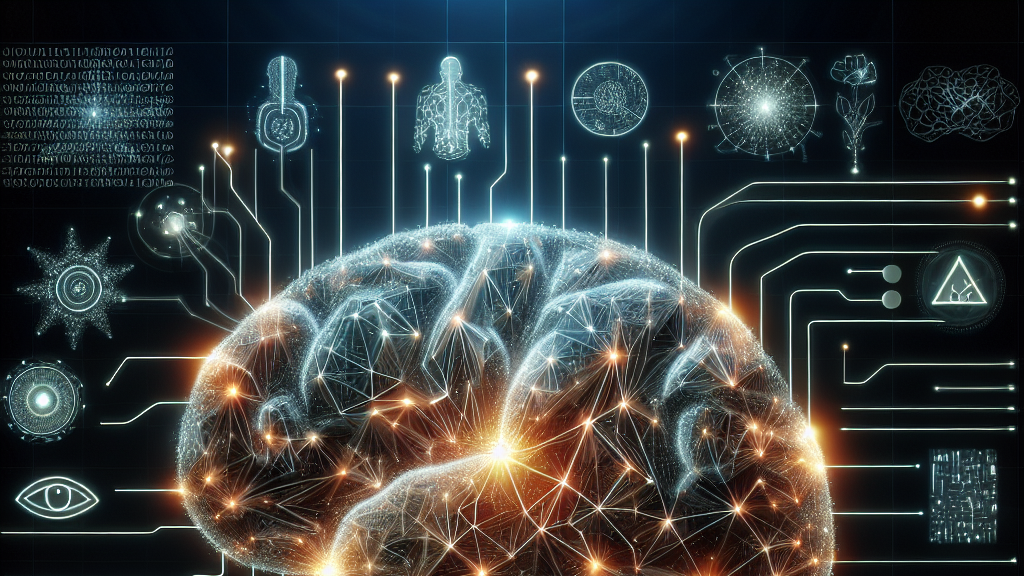
Imagine you wake up one day and discover that your brain isn’t just a miniature computer after all. It turns out, there’s compelling new evidence that says our brains might be operating on a completely different level than the digital devices we carry around in our pockets. This ground-breaking research shows our consciousness could be way too complex to fit into the box of traditional computing models.
Here’s the scoop: scientists have crunched the numbers and calculated that the minimum information required to fully describe a conscious state – like feeling happy or recalling a memory – is far beyond what the physical capacity of our brain can handle if you treated it like a computer. They looked at how our memories and experiences stack up over time, creating what they call
Did you know our consciousness might require more data than any computer can store? It’s like fitting the entire internet on your thumb drive!
FAQs
Background
The study looks into the relationship between how we perceive consciousness and information theory, which is a branch of mathematics that studies the quantification, storage, and communication of information. By applying these principles, scientists can analyze how much data would be needed to capture the essence of human consciousness.
History
Over the years, scientists have compared the brain to various technologies. Early on, it was likened to a telephone switchboard, and later to a computer with the rise of the digital age. This study is part of a newer wave of research seeking to understand consciousness beyond these comparisons, introducing the idea that our brains may not fit traditional digital models.
Based on “Why the Brain Cannot Be a Digital Computer: History-Dependence and the Computational Limits of Consciousness” by Andrew Knight, available on arXiv (arxiv.org/abs/2503.10518), used under CC BY 4.0 (creativecommons.org/licenses/by/4.0/).