Connect with us

Search by keyword

Physics

Is Your Brain More Powerful Than a Computer?

This research explores how the complexity of human consciousness might exceed the capabilities of digital computers, suggesting our brains process information in ways we don’t yet fully understand.

Is Your Brain More Powerful Than a Computer
✨Researched by humans. Explained by robots. Learn more.

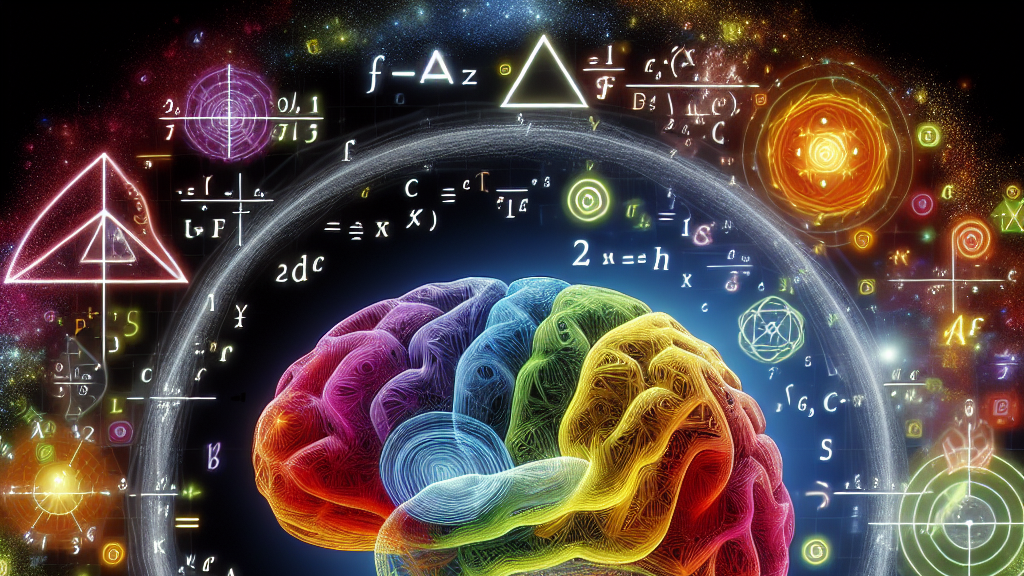
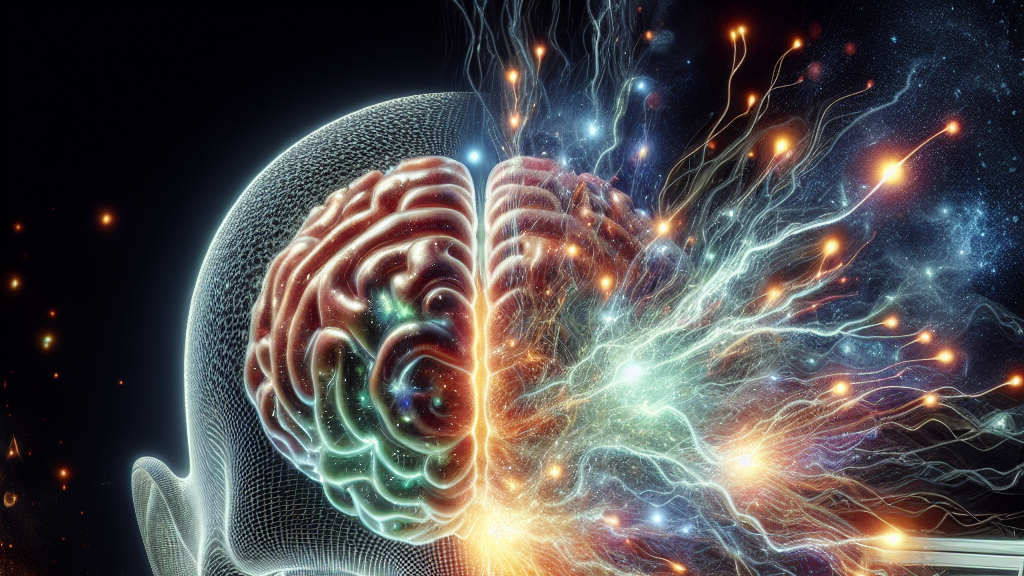
Imagine if your brain was more powerful and mysterious than the most advanced computer. That’s what a new study is suggesting. Researchers have uncovered that the human brain might handle consciousness in such a complex way that it goes beyond what traditional digital computers can manage. It’s like having a supercomputer in your head running on a completely different kind of code.

The study looked at how we experience consciousness and the amount of information needed to describe these experiences. They found that the human brain would need more ‘space’ to store information about every possible conscious state than it has available. This suggests that our brains are doing more than simply running a program – they may be using some other, non-digital method for processing our experiences.

In the future, understanding how our brains manage to do this could lead to breakthroughs in AI, helping computers learn from the brain’s efficiency and complexity. Imagine if your smartphone could ‘think’ like you do, enhancing its computing power and making everyday technology smarter and more adaptable.

Your brain’s power is like having a supercomputer but with its own unique operating system!

FAQs

How does this study change our understanding of the human brain and consciousness?

This study challenges the idea that the human brain functions like a classical digital computer by highlighting the brain’s unique ability to handle complex conscious states, suggesting it uses mechanisms beyond traditional computation.

What implications does this have for artificial intelligence?

If our brains use non-classical methods to process information, mimicking these processes could lead to more advanced, efficient AI systems that better replicate human thought.

Why can’t traditional computers fully model human consciousness?

Traditional computers may fall short because they operate on linear, digital processes, while the human brain appears to employ more complex, multidimensional ways of processing information that are not yet fully understood.

Background

In the study of consciousness and the brain, scientists often compare the brain to a computer. A classical digital computer processes information in a linear, straightforward manner, using binary code (zeros and ones) to perform tasks. This study suggests that the brain’s processing of consciousness might be far more complex, functioning in a way that exceeds these computational methods and capabilities. Consciousness involves awareness and the ability to experience sensations and thoughts, which might involve different dimensions of information processing that aren’t captured by traditional computer models.

History

The comparison between the brain and computers has long been drawn by scientists seeking to understand human cognition and consciousness. Previous studies have focused on creating models that simulate brain functions in digital constructs. This new study builds on that research by analyzing the information requirements of conscious states and proposes that our brain’s processing mechanisms go beyond classical digital models, suggesting a need for alternative approaches to understanding and replicating consciousness.

Based on “Why the Brain Cannot Be a Digital Computer: History-Dependence and the Computational Limits of Consciousness” by Andrew Knight, available on arXiv (arxiv.org/abs/2503.10518), used under CC BY 4.0 (creativecommons.org/licenses/by/4.0/).

Trending

Latest

Can AI Save Water Discover How

Computers

AI is transforming the tech world, but it uses lots of water! A new tool, SCARF, helps us measure and reduce AI's water footprint,...

Whats a Forbush Decrease and Why Should We Care Whats a Forbush Decrease and Why Should We Care

Space

Scientists just observed the biggest solar storm event in years, revealing unexpected cosmic ray patterns. Understanding these changes could help us protect our technology...

Can Cars Spot Danger Faster Than Humans Can Cars Spot Danger Faster Than Humans

Computers

Think about how quickly you react when something unexpected happens on the road. This research brings us closer to creating self-driving cars that can...

Can Fear of the Other Stop Social Harmony Can Fear of the Other Stop Social Harmony

Physics

Fear of the unknown might make it harder for people to agree and get along. This study shows that when people have strong xenophobic...

Can AI Revolutionize Breast Cancer Diagnosis Can AI Revolutionize Breast Cancer Diagnosis

Electricity

This research introduces a groundbreaking AI model that can accurately assess HER2-positive breast cancer using widely accessible staining methods, potentially revolutionizing how we diagnose...

Can AI Transform Your Singing into a Choir Can AI Transform Your Singing into a Choir

Computers

Imagine singing solo and having AI turn you into a choir. This research unveils a groundbreaking AI tool that transforms your voice into rich...

You May Also Like

Quantum Biology

This research dives into the fascinating link between evolution and our feelings, exploring how natural selection might shape not only our minds but also...

Computers

This fascinating study delves into whether AI can perceive colors and angles the way humans do, revealing insights on biases in AI that mirror...

Quantum Biology

Scientists have found universal patterns in brain activity, revealing how our minds may work similarly across different states like being awake, under anesthesia, or...

Quantum Biology

Our brains aren't just complex—they show universal patterns even when we're asleep or distracted. Using EEG, scientists found that our brain dynamics align in...

Physics

This exciting research suggests our brains might work differently than computers, indicating our consciousness can't be fully explained by traditional computing models. It could...

General Relativity and Quantum Cosmology

Gravitational waves may have played a crucial role in shaping human cognition by maintaining Earth's tectonics and magnetic field, ultimately influencing our brain development.

Quantum Biology

Imagine computers that can think and understand themselves. This research shows how machines might become self-aware using a simple three-layer model. It's a leap...

Physics

This research explores how our inner experiences, known as qualia, could emerge from the brain using groundbreaking mathematical ideas. It might help us understand...

Quantum Biology

This research explores how robots and tech systems shape our understanding of consciousness by blending human concepts with machine processes. It's about redefining autonomy...

Copyright © 2024 8ig8rain.

Disclaimer: The content on 8ig8rain.com consists of AI-generated summaries of scientific abstracts from arXiv. Please note that most arXiv abstracts are preprints and may not have undergone formal peer review. While these summaries aim to convey key ideas and potential applications, they are provided for informational purposes only and should not be interpreted as validated scientific findings or professional advice. The summaries are intended to educate, spark curiosity, and inspire further exploration of science.