Connect with us

Search by keyword

Physics

How Entangled Photons Could Change Sensing

This research on entangled photons through Compton scattering could transform how we detect and sense the world around us, revealing hidden quantum effects only seen in their complete form.

How Entangled Photons Could Change Sensing
✨Researched by humans. Explained by robots. Learn more.

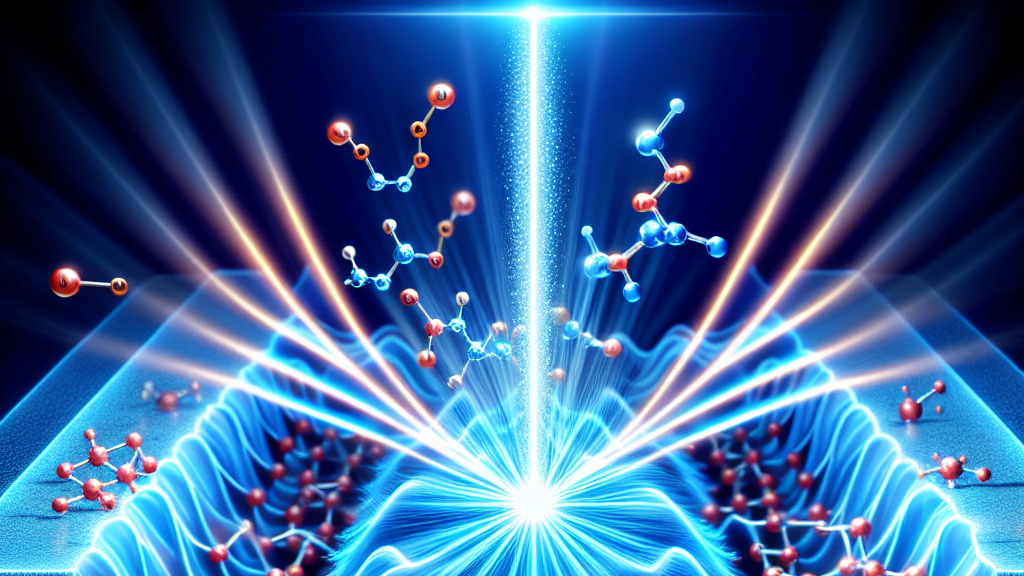
Imagine a world where the unseen becomes visible, where quantum entanglement allows us to detect things we could never spot before. This isn’t science fiction, but a glimpse into the future brought to us by the study of entangled photons. Entangled photons, which are like tiny light particles connected in a mysterious dance across space, have the potential to revolutionize how we sense the world around us.

The research dives into how these photon pairs interact with the environment, specifically through a process called Compton scattering. Quantum electrodynamics, a fancy term for how light and matter interact, helps us understand this profound connection. The crucial finding shows that if we want to notice any unique quantum effects, we must look at the entire entangled pair and not just one photon alone. This insight is powered by the realization that the photon not directly involved in the interaction still holds the key to the quantum mysteries.

Imagine using this technology to uncover hidden worlds, from detecting minute changes in the environment to possibly foreseeing natural events. If you’re imagining a device in your pocket that could see beyond the ordinary, you’re not too far off. With entangled photon technology, our future could include new ways of sensing that make the invisible visible, revolutionizing fields ranging from medicine to environmental science.

Did you know that entangled photons remain mysteriously connected even when separated by vast distances?

FAQs

What is Compton scattering in photon research?

Compton scattering is the process of photons bouncing off particles, and in this research, it’s used to study how entangled photons interact in their environment.

How does quantum electrodynamics relate to sensing with photons?

Quantum electrodynamics helps us understand how light interacts with matter at a quantum level, crucial for developing new sensing technologies using photons.

Why focus on the complete entangled pair of photons in this study?

The full entangled pair allows us to observe quantum effects hidden when examining just one photon, revealing unique sensing capabilities.

What makes entangled photons special for sensing?

Entangled photons can reveal hidden quantum effects and remain connected over distances, offering revolutionary potential for detecting changes in the environment.

How could photon research affect daily life in the future?

Photon research could lead to advanced tools that sense beyond current limits, affecting fields like medicine, environmental monitoring, and technology development.

Background

In quantum physics, entangled photons are pairs of light particles that remain interconnected no matter the distance. This connection means measuring one instantly affects the measurement of the other. Understanding these interactions involves quantum electrodynamics, a theory explaining how light and matter interact at a quantum level. Compton scattering is a process where photons collide with particles, providing insights into photon behavior and correlations.

History

Quantum mechanics has long fascinated researchers, and entangled photons have been central since their prediction by Einstein and colleagues in the early 20th century. Over the decades, experiments confirmed their existence, leading to Nobel Prize-winning work in quantum theory. This study builds on decades of exploration in quantum electrodynamics and entanglement, seeking to navigate the mysteries of photon interactions in practical applications.

Based on “The Quantum Channels of the Compton Scattering of an Entangled Pair of Photons” by Chih-Yu Chen, C. D. Hu, Yeu Chung Lin, available on arXiv (arxiv.org/abs/2504.04077), used under CC BY 4.0 (creativecommons.org/licenses/by/4.0/).


Trending

Latest

Can AI Save Water Discover How

Computers

AI is transforming the tech world, but it uses lots of water! A new tool, SCARF, helps us measure and reduce AI's water footprint,...

Whats a Forbush Decrease and Why Should We Care Whats a Forbush Decrease and Why Should We Care

Space

Scientists just observed the biggest solar storm event in years, revealing unexpected cosmic ray patterns. Understanding these changes could help us protect our technology...

Can Cars Spot Danger Faster Than Humans Can Cars Spot Danger Faster Than Humans

Computers

Think about how quickly you react when something unexpected happens on the road. This research brings us closer to creating self-driving cars that can...

Can Fear of the Other Stop Social Harmony Can Fear of the Other Stop Social Harmony

Physics

Fear of the unknown might make it harder for people to agree and get along. This study shows that when people have strong xenophobic...

Can AI Revolutionize Breast Cancer Diagnosis Can AI Revolutionize Breast Cancer Diagnosis

Electricity

This research introduces a groundbreaking AI model that can accurately assess HER2-positive breast cancer using widely accessible staining methods, potentially revolutionizing how we diagnose...

Can AI Transform Your Singing into a Choir Can AI Transform Your Singing into a Choir

Computers

Imagine singing solo and having AI turn you into a choir. This research unveils a groundbreaking AI tool that transforms your voice into rich...

You May Also Like

Materials

New insights suggest quantum mechanics might influence macroscopic decisions, giving a fresh perspective on how reality is formed during big events.

General Relativity and Quantum Cosmology

Imagine using a tabletop setup to mimic the intense gravitational effects of a black hole! These 'gravity simulators' are pushing the boundaries of what...

General Relativity and Quantum Cosmology

Scientists are bringing the mysteries of black holes into the lab by creating small-scale experiments that simulate their incredible gravitational forces. This means we...

Physics

Ever wondered where the universe decides to play by completely different rules? This research suggests the boundary between classical and quantum physics might not...

Physics

Scientists have found a way to use light to make a material, that normally behaves one way, act like it’s breaking the laws of...

General Relativity and Quantum Cosmology

Ever wondered what happens to information once it falls into a black hole? This thrilling research delves into the discrepancies of quantum theories and...

General Relativity and Quantum Cosmology

Did you know black holes might actually be cosmic time machines? This research reveals two new ways of looking at black holes, hinting they...

Physics

Scientists are diving into the world of particles, using quantum entanglement to possibly unlock secrets of the universe! Imagine if understanding tiny particles can...

Physics

Imagine if every tiny blip in your phone or computer was due to a predictable 'wave' rather than a random 'dot.' By understanding wavefunctions,...

Copyright © 2024 8ig8rain.

Disclaimer: The content on 8ig8rain.com consists of AI-generated summaries of scientific abstracts from arXiv. Please note that most arXiv abstracts are preprints and may not have undergone formal peer review. While these summaries aim to convey key ideas and potential applications, they are provided for informational purposes only and should not be interpreted as validated scientific findings or professional advice. The summaries are intended to educate, spark curiosity, and inspire further exploration of science.