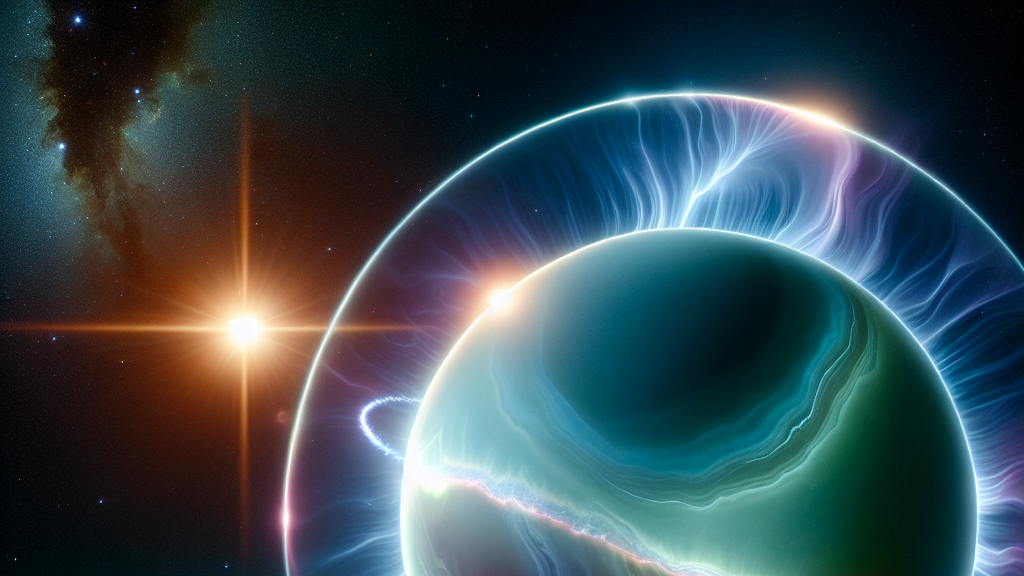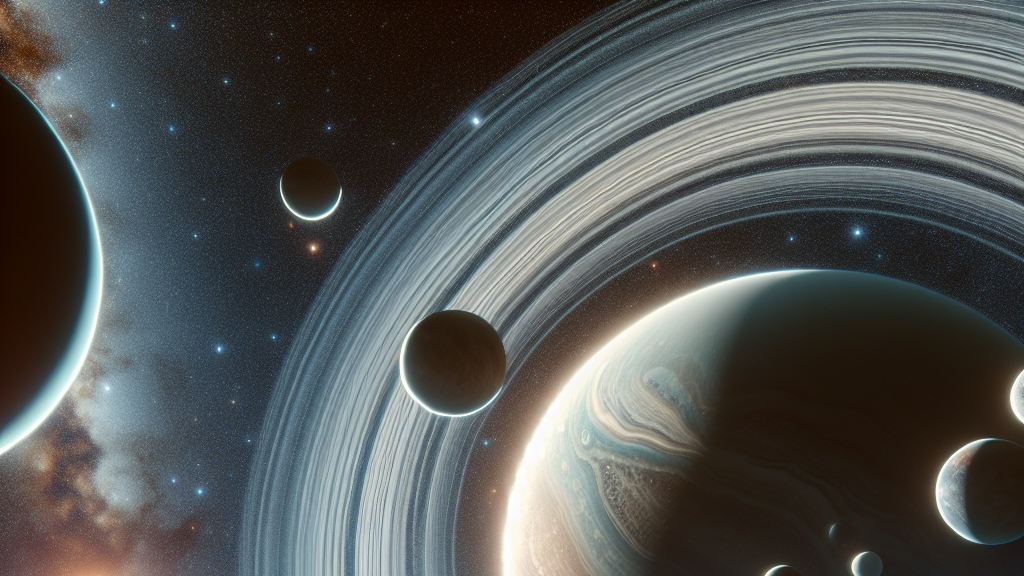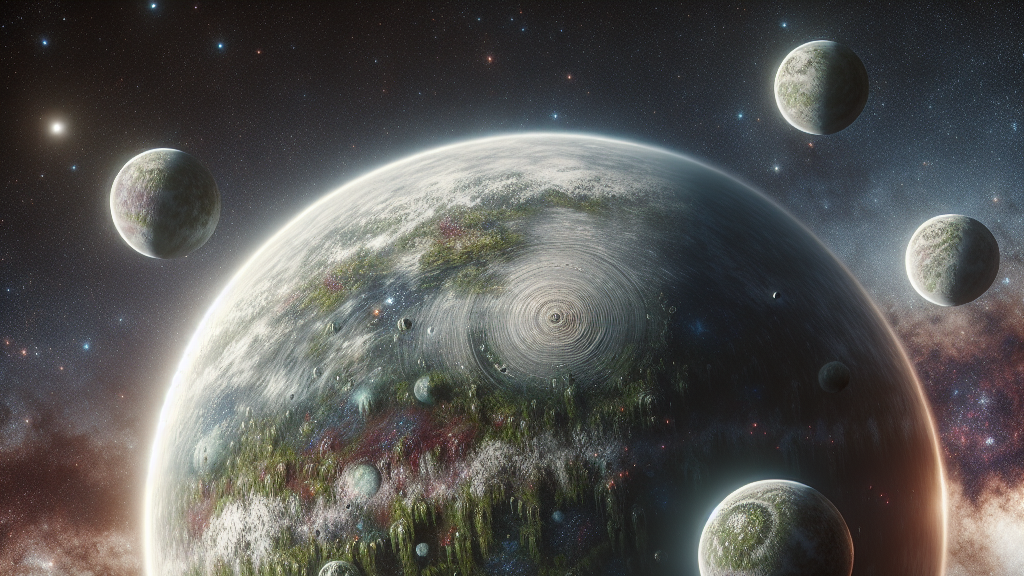
Could the next frontier in our search for life be on moons instead of planets? While we often hear about exoplanets, many of these giants lack the solid ground and water we think necessary for life. But don’t count them out just yet—scientists are shifting their focus to the moons of these vast planets. Imagine if one of these moons could host life!
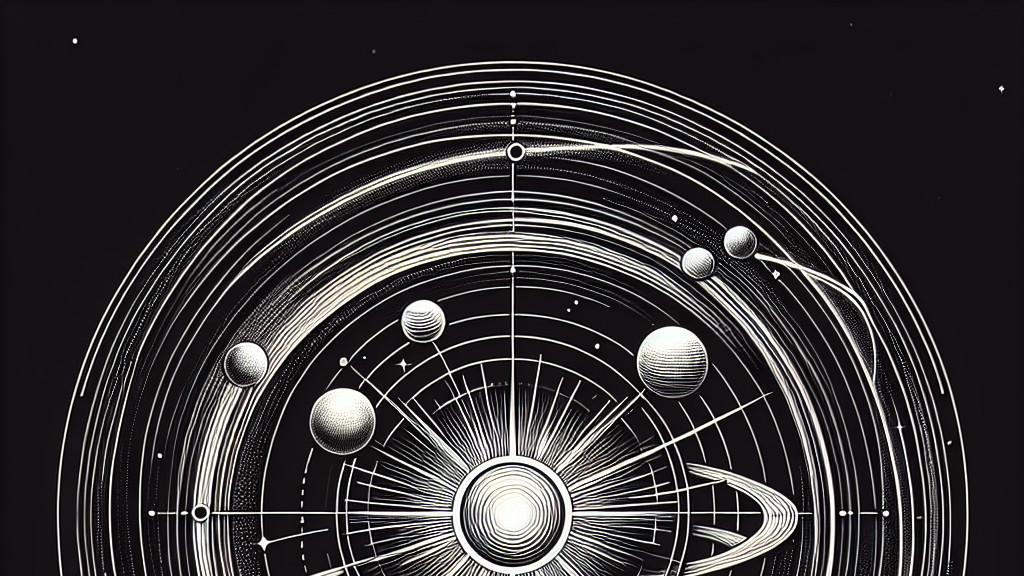
To better understand this possibility, researchers conducted simulations of how moons form around giant planets. They looked at how moon embryos grow, and how their masses change based on their distance from their stars. The fascinating result? About 32% of the synthetic moons they studied could be habitable, especially those closer to their stars where the chances of having the right conditions increase.
So, what does this mean for our search for life beyond Earth? These potential moons are more than mere satellites; they could be life-supporting worlds. One day, in the not-so-distant future, a moon around a distant star might just be where we find signs of extraterrestrial life. Picture a spacecraft landing on a moon with lush landscapes and maybe even water—a new realm of possibilities just waiting to be explored!
Did you know that some moons can be heated not just by their star but also by the gravitational pull of their planet, making them potential hotspots for life?
FAQs
Could moons really support life just like planets?
Yes, moons have the potential to support life, especially if they’re in the habitable zone of their star. This research shows that moons around giant planets can have conditions suitable for life, thanks to factors like tidal heating and stellar irradiation.
What makes these moons potentially habitable?
Moons become habitable due to a combination of the heat they receive from their star and the gravitational effects of their planet, which can produce warming through tidal heating. This can create environments where water might exist in liquid form.
Why is the focus shifting from planets to moons?
Most of the discovered exoplanets are gas giants that lack the solid surfaces needed for life. However, their moons could offer the right conditions, expanding our search for life beyond Earth.
How were these potential habitable moons studied?
Scientists used N-body simulations to explore how moons form around giant planets. They examined how moon embryos grow and calculated the effects of factors like tidal heating and stellar irradiation to determine each moon’s potential for habitability.
What percentage of these moons are considered habitable?
Approximately 32% of the synthetic moons studied were found to have conditions that could support life. This shows that moons could play a significant role in our search for extraterrestrial life.
Background
The concept of a ‘habitable zone’ refers to the area around a star where a planet or moon could have the right conditions to support liquid water on its surface. For moons, especially those orbiting giant planets, additional factors like tidal heating—caused by the gravitational pull between the moon and its planet—can also play a crucial role in maintaining temperatures that could support life.
History
The search for life beyond Earth has traditionally focused on exoplanets within the habitable zone of their stars. However, as more exoplanets were discovered, scientists realized many were gas giants without solid surfaces or atmospheres conducive to life. This realization shifted some focus to the moons of these planets, which might provide the necessary environments for life. This research builds on that shift, using advanced simulations to explore moon formation and habitability.
Based on “Grand Theft Moons. Formation of habitable moons around giant planets” by Zoltan Dencs, Vera Dobos, Zsolt Regaly, available on arXiv (arxiv.org/abs/2505.18144), used under CC BY 4.0 (creativecommons.org/licenses/by/4.0/).