Imagine a world where your phone could warn you about an upcoming seizure, giving you time to prepare and stay safe. That’s what a new AI breakthrough might soon do for people with epilepsy. This cutting-edge method uses smart algorithms to predict seizures before they happen, potentially changing the lives of millions worldwide.
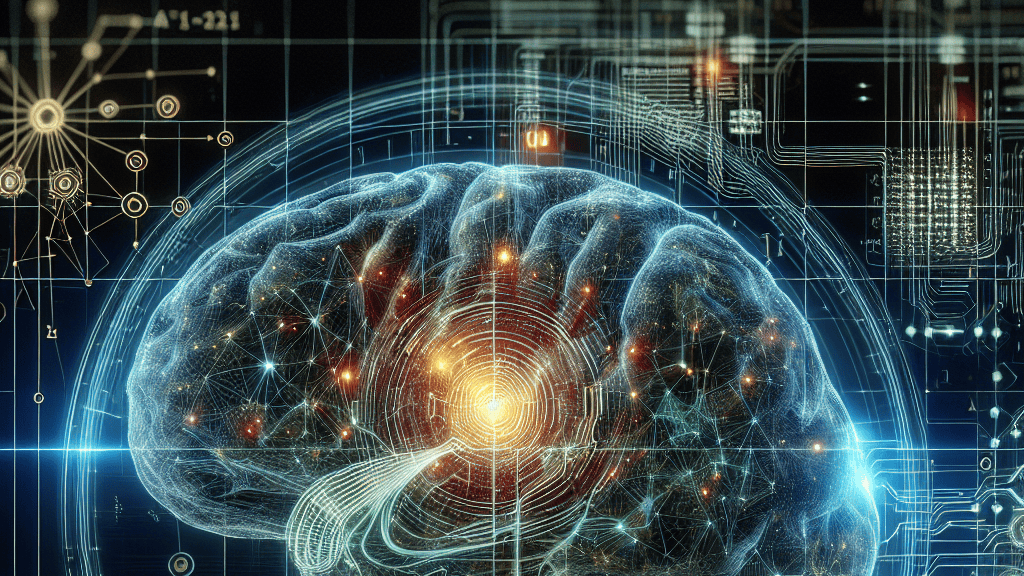
Researchers have developed a new method using Recurrent Neural Networks, specifically LSTM networks, which are designed to understand patterns over time. By analyzing raw EEG data — which records brain activity — the system learns the unique brain patterns of each patient. This adaptability allows for more accurate predictions and fewer false alarms compared to existing systems, which often rely on static thresholds and basic EEG features.
In real-world terms, this means that people with epilepsy could benefit from more reliable alerts about impending seizures, allowing them to take preventative measures. It could be as easy as a notification on their smartphone or smartwatch, helping them manage their condition more effectively day-to-day. The potential for a more personalized and efficient healthcare tool is truly exciting!
In a groundbreaking study, the new AI system achieved a prediction accuracy of over 90% and reduced false alarms significantly!
FAQs
What is seizure prediction using AI?
Seizure prediction using AI involves using advanced algorithms to analyze brain activity data and predict when a seizure is likely to occur, providing early warnings to patients.
How do neural networks improve seizure prediction?
Neural networks, specifically Long Short-Term Memory networks, learn and understand patterns in brain data over time, allowing them to provide more accurate predictions by adapting to individual patients’ EEG patterns.
Why is reduced false alarm rate important in seizure prediction?
Reduced false alarm rate is crucial because it enhances the reliability of seizure predictions, preventing unnecessary stress and allowing patients to trust and rely on the technology for safer and more confident daily living.
How might AI seizure prediction impact daily life for epilepsy patients?
Incorporating AI seizure prediction into daily life could mean timely alerts before seizures, allowing patients to take safety precautions, thereby improving their quality of life and reducing anxiety about the unexpected nature of seizures.
How does this AI technology differ from existing seizure detection methods?
This AI technology uses advanced LSTM networks to dynamically learn and adapt to each patient’s unique EEG patterns, improving prediction accuracy and reducing false alarms compared to traditional static threshold methods.
Background
Epilepsy is a neurological disorder that causes unprovoked, recurrent seizures, which are bursts of electrical activity in the brain. Electroencephalograms (EEGs) are used to track and record brain activity to diagnose and manage epilepsy. The challenge lies in predicting seizures accurately and with minimal false alarms, which has historically been difficult due to the complex nature of brain activity. Recurrent Neural Networks (RNNs), and more specifically Long Short-Term Memory (LSTM) networks, are advanced types of artificial intelligence algorithms that can analyze sequences of data, making them ideal for understanding complex temporal patterns like those in EEG readings.
History
Seizure prediction has been a challenging field for years, building on decades of EEG research and the development of various algorithms. Earlier systems often struggled with high false alarm rates and static prediction capabilities. With the advent of machine learning and neural networks, significant improvements have been made. This study builds on these advancements by using LSTM networks, which are capable of capturing long-term dependencies in data, thus offering a more dynamic and patient-specific approach to seizure prediction.
Based on “RNN-Based Models for Predicting Seizure Onset in Epileptic Patients” by Mathan Kumar Mounagurusamy, Thiyagarajan V S, Abdur Rahman, Shravan Chandak, D. Balaji, Venkateswara Rao Jallepalli, available on arXiv (arxiv.org/abs/2501.16334), used under CC BY 4.0 (creativecommons.org/licenses/by/4.0/).