Connect with us

Search by keyword

Computers

Could Misinformation Change How Diseases Spread?

Researchers have used a new model to show that misinformation on social media can increase disease spread by influencing public behavior. This finding is important because it highlights how false information can lead to more people getting sick, making it crucial for public health strategies to address misinformation effectively.

Could Misinformation Change How Diseases Spread
✨Researched by humans. Explained by robots. Learn more.

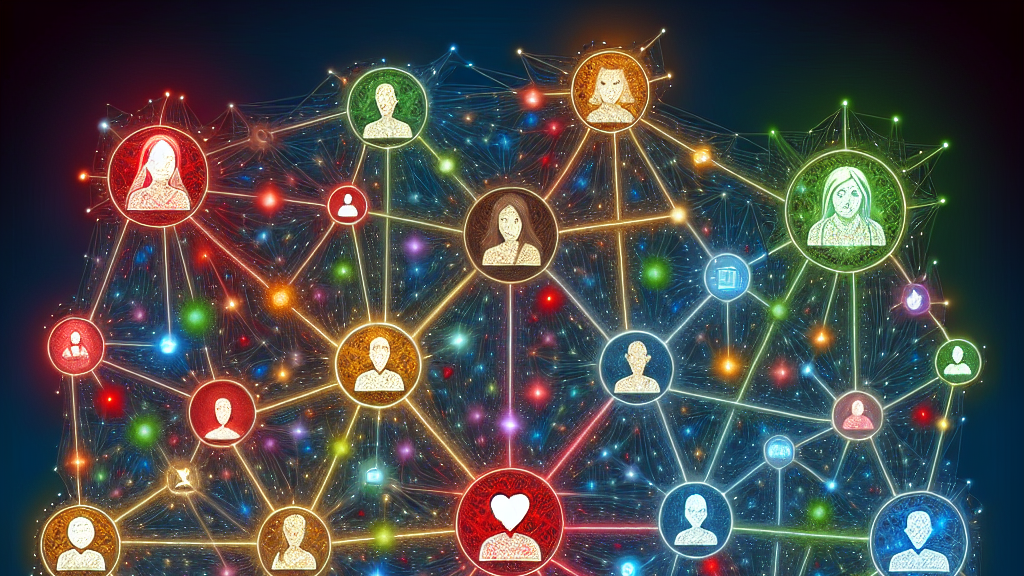
In today’s world, it’s amazing how much of our daily lives are influenced by what we see online. But did you know that misinformation online could actually change how diseases spread? It’s like a ripple effect; a piece of false information can lead to real-world consequences, influencing whether someone decides to get vaccinated or not. And in turn, this decision might affect the health of entire communities.

A team of researchers has developed a fascinating model that helps us see this connection. They looked at how misinformation distributed through social media could change the way a disease, like COVID-19, spreads across a population. By simulating scenarios with different levels of exposure to misinformation, they found that in the worst cases, misinformation could lead to a significant increase in infection rates. This isn’t just about misinformation causing confusion; it’s actually linked to more people getting sick.

Imagine public health officials using this information to better prepare and respond to health crises. By understanding which areas are more susceptible to misinformation, they can target their efforts more effectively, potentially saving lives and resources. This research highlights the importance of combating misinformation, not just as a matter of truth, but as a crucial part of keeping our communities healthy.

Social media platforms can spread misinformation faster than the time it takes for a sneeze’s germs to travel 26 feet!

FAQs

How does misinformation affect disease spread?

Misinformation can influence people’s decisions, like whether to get vaccinated, which can affect how quickly and widely a disease spreads in a community.

Why is understanding misinformation crucial for public health?

Understanding misinformation helps public health officials create strategies to counteract it, reducing the risk of increased disease spread and improving vaccine uptake.

What does the epidemic model in the study show?

The model simulates different scenarios to show how misinformation shared on social media can lead to increased disease spread, offering insights into how such situations can be managed.

How can this research impact real-world health policies?

This research provides policymakers with valuable data on the potential impact of misinformation, allowing them to focus resources effectively to combat its spread and protect public health.

Background

Epidemic models are tools that help scientists understand how diseases spread. They consider various factors, like human movement and contact, to predict how infections grow over time. Misinformation, especially in the context of health, refers to false or misleading information that can influence people’s health decisions. In recent years, platforms like social media have become primary sources of information, which can quickly spread both true information and misinformation. Understanding how these elements interact is key to controlling disease spread.

History

The study of epidemic spread has long relied on mathematical models, but traditionally, these models didn’t account for misinformation’s role. The recent rise of the internet and social media has significantly changed information flow, prompting new research that explores how misinformation can influence health behaviors and outcomes. This study builds on earlier models by integrating social media data to simulate real-world scenarios, marking a step forward in understanding the dual spread of disease and misinformation.

Based on “Modeling the amplification of epidemic spread by individuals exposed to misinformation on social media” by Matthew R. DeVerna, Francesco Pierri, Yong-Yeol Ahn, Santo Fortunato, Alessandro Flammini, Filippo Menczer, available on arXiv (arxiv.org/abs/2402.11351), used under CC BY 4.0 (creativecommons.org/licenses/by/4.0/).

Trending

Latest

Can AI Save Water Discover How

Computers

AI is transforming the tech world, but it uses lots of water! A new tool, SCARF, helps us measure and reduce AI's water footprint,...

Whats a Forbush Decrease and Why Should We Care Whats a Forbush Decrease and Why Should We Care

Space

Scientists just observed the biggest solar storm event in years, revealing unexpected cosmic ray patterns. Understanding these changes could help us protect our technology...

Can Cars Spot Danger Faster Than Humans Can Cars Spot Danger Faster Than Humans

Computers

Think about how quickly you react when something unexpected happens on the road. This research brings us closer to creating self-driving cars that can...

Can Fear of the Other Stop Social Harmony Can Fear of the Other Stop Social Harmony

Physics

Fear of the unknown might make it harder for people to agree and get along. This study shows that when people have strong xenophobic...

Can AI Revolutionize Breast Cancer Diagnosis Can AI Revolutionize Breast Cancer Diagnosis

Electricity

This research introduces a groundbreaking AI model that can accurately assess HER2-positive breast cancer using widely accessible staining methods, potentially revolutionizing how we diagnose...

Can AI Transform Your Singing into a Choir Can AI Transform Your Singing into a Choir

Computers

Imagine singing solo and having AI turn you into a choir. This research unveils a groundbreaking AI tool that transforms your voice into rich...

You May Also Like

Economics

Social media might not always be the villain when it comes to spreading fake news. In regions with strong public engagement, social media can...

Computers

Imagine if AI doctors had to adapt to real-life conversations and the natural variability we see in medical settings. This research explores how AI...

Computers

Did you know that Google might be hiding info from you? This research shows that Google's algorithms can suppress certain online content, like conspiracy...

Computers

Imagine AI systems helping businesses plan and carry out tasks—but they're relying on potentially fake online reviews. Sound risky? This research dives into how...

Computers

This research uncovers how everyday people, not just experts, can help catch fake news online. By understanding what influences our judgments, we can create...

Computers

This research explores how non-experts can help detect online misinformation, showing that their judgments often align with experts. By understanding human biases, we aim...

Computers

This study uncovers how a 'conspiratorial mindset' exists in some social media users before they become part of conspiracy groups. It highlights the need...

Computers

This study introduces a new dataset to better identify violent threats on social media. This can lead to more effective tools to keep online...

Physics

This research unveils how social media can spotlight political divides, showing that including negative interactions helps reveal the most extreme political views and behaviors...

Copyright © 2024 8ig8rain.

Disclaimer: The content on 8ig8rain.com consists of AI-generated summaries of scientific abstracts from arXiv. Please note that most arXiv abstracts are preprints and may not have undergone formal peer review. While these summaries aim to convey key ideas and potential applications, they are provided for informational purposes only and should not be interpreted as validated scientific findings or professional advice. The summaries are intended to educate, spark curiosity, and inspire further exploration of science.