Connect with us

Search by keyword

Materials

How Sand Reveals Hidden Stories

Discover the secret stories hidden in sand with The Sand Atlas! This innovative project transforms tiny grains into mesmerizing 3D models, unlocking a world of new insights for scientists and enthusiasts alike.

How Sand Reveals Hidden Stories
✨Researched by humans. Explained by robots. Learn more.

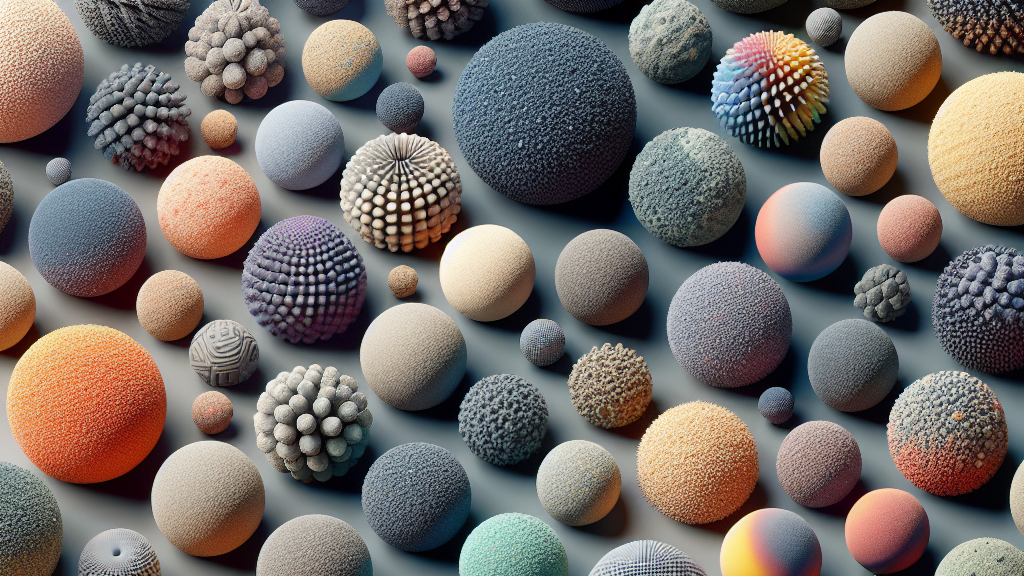
What if we told you that the grains of sand you’ve stepped on at the beach hold stories as old as time itself? The Sand Atlas is taking these tiny particles and turning them into 3D models to reveal their secrets. Think of it as a museum, but for grains of sand, showcasing their diverse shapes, origins, and histories.

This remarkable project is a treasure trove for researchers, educators, and anyone curious about the natural world. By creating high-resolution 3D models of sand from around the globe, The Sand Atlas provides a clear view of each particle’s unique morphology. Whether you’re a science enthusiast or an industry professional, you can deep dive into this rich database and even contribute, making science a shared journey.

Imagine using this innovative resource to create educational tools, analyze environmental changes, or even design new materials! The Sand Atlas offers endless possibilities. Picture engineers developing new composites inspired by the strength and form of sand particles. Or educators crafting interactive lessons that bring the ocean floor right into the classroom. The potential applications in real life are thrilling and boundless.

A single grain of sand can tell scientists where it comes from and even the history of its travels through thousands of years!

FAQs

What is The Sand Atlas?

The Sand Atlas is an online database that features high-resolution 3D models of sand-sized particles. It aims to provide comprehensive insights into the shape, origin, and history of various sand particles, supporting research and education.

How can The Sand Atlas impact educational settings?

In educational settings, The Sand Atlas can serve as an interactive tool for teaching students about geology, mineralogy, and environmental science, providing a tangible link between theoretical concepts and real-world applications.

Why are 3D models of sand particles important?

3D models of sand particles allow researchers and enthusiasts to study the detailed morphology and composition of sand, offering valuable information that can be used in geological studies, materials science, and more.

Can individuals contribute to The Sand Atlas?

Yes, The Sand Atlas encourages community participation, inviting individuals to share their own data, enhancing the collective understanding of sand morphology and its applications.

What industries could benefit from The Sand Atlas?

Industries like construction, materials science, and environmental monitoring could benefit by using detailed sand models to innovate new materials, analyze changes in natural environments, and more.

Background

The Sand Atlas is built on the principles of 3D modeling and the study of morphology. Morphology refers to the study of the form and structure of organisms, in this case, tiny sand particles. By converting volumetric data into surface meshes, scientists can analyze the intricate details of each grain’s surface. This level of detail helps in understanding the geological origins, environmental conditions, and potential applications of sand.

History

The study of sand particles has long been a part of geology and environmental science. Historically, research focused on the mineralogical content and distribution of sands. In recent years, advancements in 3D modeling and data processing have allowed for more detailed analysis. The Sand Atlas builds upon this progress, providing a publicly accessible platform that combines historic interest with modern technology, making it easier than ever to explore and share findings.

Based on “The Sand Atlas” by Ilija Vego, Benjy Marks, available on arXiv (arxiv.org/abs/2502.07235), used under CC BY 4.0 (creativecommons.org/licenses/by/4.0/).

Trending

Latest

Can AI Save Water Discover How

Computers

AI is transforming the tech world, but it uses lots of water! A new tool, SCARF, helps us measure and reduce AI's water footprint,...

Whats a Forbush Decrease and Why Should We Care Whats a Forbush Decrease and Why Should We Care

Space

Scientists just observed the biggest solar storm event in years, revealing unexpected cosmic ray patterns. Understanding these changes could help us protect our technology...

Can Cars Spot Danger Faster Than Humans Can Cars Spot Danger Faster Than Humans

Computers

Think about how quickly you react when something unexpected happens on the road. This research brings us closer to creating self-driving cars that can...

Can Fear of the Other Stop Social Harmony Can Fear of the Other Stop Social Harmony

Physics

Fear of the unknown might make it harder for people to agree and get along. This study shows that when people have strong xenophobic...

Can AI Revolutionize Breast Cancer Diagnosis Can AI Revolutionize Breast Cancer Diagnosis

Electricity

This research introduces a groundbreaking AI model that can accurately assess HER2-positive breast cancer using widely accessible staining methods, potentially revolutionizing how we diagnose...

Can AI Transform Your Singing into a Choir Can AI Transform Your Singing into a Choir

Computers

Imagine singing solo and having AI turn you into a choir. This research unveils a groundbreaking AI tool that transforms your voice into rich...

You May Also Like

Physics

Scientists might be on the brink of discovering new particles that challenge our understanding of the universe. These findings, centered around the Large Hadron...

General Relativity and Quantum Cosmology

Imagine a place in space where particles smash into each other with immense energy, like nature's own supercollider. Black holes might just be the...

Computers

Ever wondered if a computer could design a perfect 3D model for you? With advances in AI, creating detailed digital models is becoming faster...

Computers

Imagine being able to create complex 3D models just by telling a computer what you want. With new AI tools, designers can save time...

Math

Ever wondered how a jumbled mess of particles might actually find order? This study shows that even chaotic systems like Brownian motion can create...

Nuclear Theory

Imagine particles disappearing and reappearing elsewhere—sounds like sci-fi, right? This research uncovers a new teleportation-like phenomenon, potentially changing how we see atomic collisions and...

Physics

Imagine particles popping up in places they shouldn't be able to reach! This research explores how observing particles like electrons affects their behavior, potentially...

Nuclear Theory

Ever thought teleportation was just science fiction? Turns out, scientists have discovered a groundbreaking phenomenon that looks a lot like teleportation. This could completely...

General Relativity and Quantum Cosmology

Ever wondered if tiny particles zooming through space could unravel the mysteries of the universe? Scientists believe neutrinos might hold the key to understanding...

Copyright © 2024 8ig8rain.

Disclaimer: The content on 8ig8rain.com consists of AI-generated summaries of scientific abstracts from arXiv. Please note that most arXiv abstracts are preprints and may not have undergone formal peer review. While these summaries aim to convey key ideas and potential applications, they are provided for informational purposes only and should not be interpreted as validated scientific findings or professional advice. The summaries are intended to educate, spark curiosity, and inspire further exploration of science.