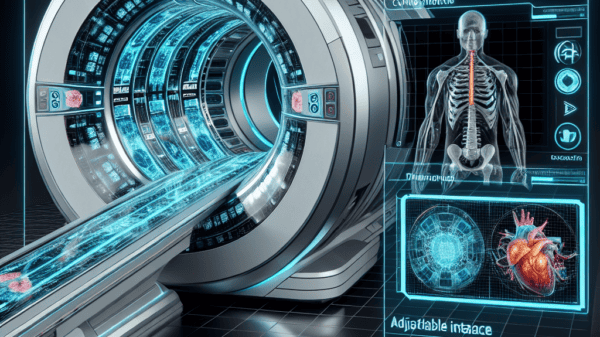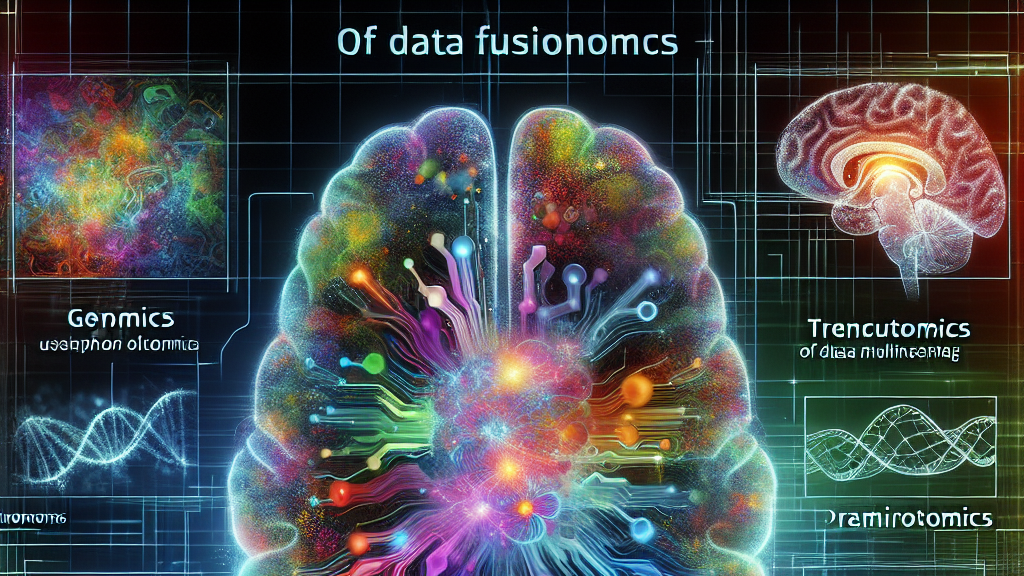
Imagine if doctors could predict cancer’s next move before it even happened. This might sound like a sci-fi storyline, but thanks to some fascinating advancements in medical imaging and data science, we are inching closer to that reality. Scientists have found a way to merge different types of biological data with medical scans, hoping to uncover cancer’s hidden secrets.
The cutting-edge method, known as omics fusion, tackles the tricky problem of combining various data sources that are often as different as apples and oranges. By using a sophisticated technique called multi-kernel late-fusion, researchers can better integrate these diverse data types, even when dealing with complex cases like nasopharyngeal carcinoma. This innovation could lead to a more personalized and accurate diagnosis for patients.
In practical terms, imagine doctors having a more detailed roadmap of how a cancer could progress, allowing them to tailor treatments more precisely to each patient’s unique condition. In the future, this research could influence everything from how we detect cancer to how we decide on the best treatment plan, ultimately improving patient outcomes and even saving lives.
Nasopharyngeal carcinoma is more common in certain parts of Asia and North Africa, making understanding and predicting its behavior especially crucial for these regions.
FAQs
What is omics fusion in medical imaging?
Omics fusion is a method that combines different types of biological data with medical imaging to improve cancer diagnosis and treatment predictions. It helps to reveal hidden patterns that may not be visible through traditional methods.
How does multi-kernel late-fusion work in cancer research?
Multi-kernel late-fusion is a technique used to integrate various data types by mapping them into a high-dimensional space. This approach helps address disparities between data sources, making predictions more accurate.
Why is this research focused on nasopharyngeal carcinoma?
Nasopharyngeal carcinoma is particularly challenging due to its complex datasets and varying characteristics across populations, especially in Asia and North Africa. This research aims to provide better prediction models for metastasis, improving treatment outcomes.
How might omics fusion change cancer treatment decisions?
By providing a detailed map of how cancer may progress, omics fusion can enable more personalized treatment choices, potentially increasing the effectiveness of therapies and improving patient survival rates.
Why is it important to predict distant metastases in cancer patients?
Predicting distant metastases helps doctors understand the potential spread of cancer, allowing them to plan aggressive treatments to manage and potentially curb the progression of the disease.
Background
Omics fusion refers to the process of integrating various biological data types, such as genomics, proteomics, and more, with medical imaging data to provide a more comprehensive understanding of a medical condition. This is particularly useful in cancer research, where different data sources can reveal different aspects of a tumor. The multi-kernel late-fusion method is an advanced strategy that combines these disparate datasets by mapping the inherent features of each in a high-dimensional space, allowing more accurate predictions and diagnoses.
History
Previous research in medical imaging often faced challenges due to the differences in data sources and imaging techniques. Past strategies mainly focused on analyzing single data types, which limited the scope of understanding cancers fully. Multi-kernel late-fusion represents a significant advancement by allowing the integration of multiple data types, building on the foundation laid by earlier studies in multi-omics integration and data science.
Based on “Multi-Omics Fusion with Soft Labeling for Enhanced Prediction of Distant Metastasis in Nasopharyngeal Carcinoma Patients after Radiotherapy” by Jiabao Sheng, SaiKit Lam, Jiang Zhang, Yuanpeng Zhang, Jing Cai, available on arXiv (arxiv.org/abs/2502.09656), used under CC BY 4.0 (creativecommons.org/licenses/by/4.0/).