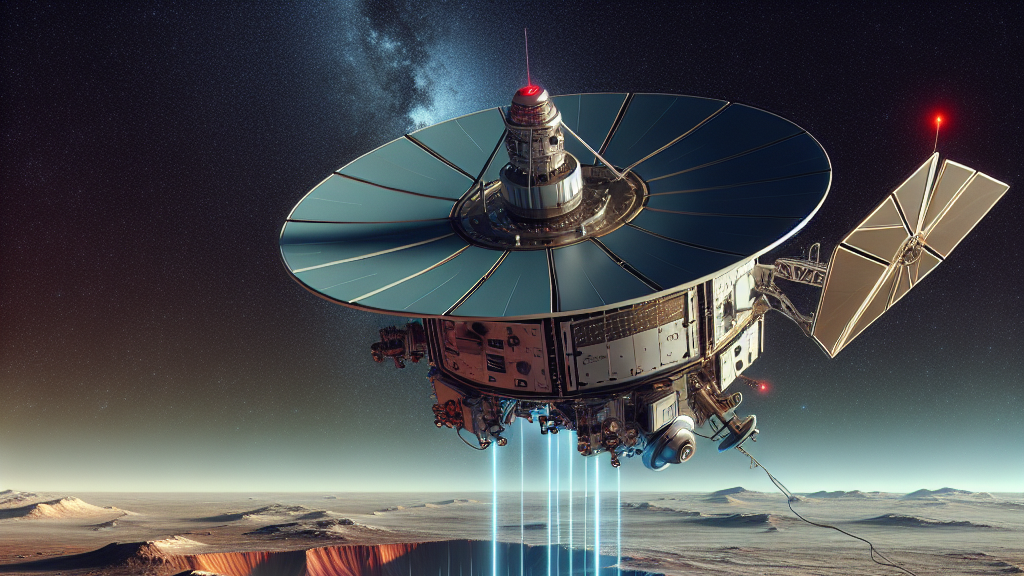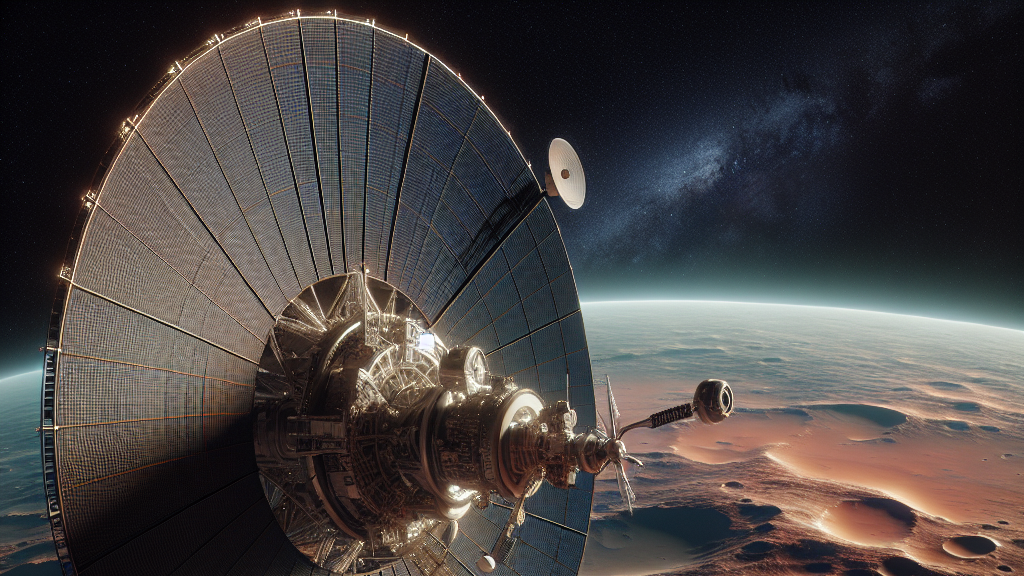
Ever wonder if we could explore neighboring star systems within our lifetime? Lightsails, a cutting-edge concept in spacecraft design, might just make that dream possible. These spacecrafts use light itself to zip through space at speeds that might one day allow us to visit planets orbiting other stars.
So how does this work? The idea is to use sails made out of special materials that capture the energy from light, like sunlight or lasers. Recent advancements in photonics and metamaterials have been game-changers, providing new solutions to power and stabilize these sails. This means they can go incredibly fast, much faster than conventional spacecraft that have to rely on cumbersome fuel.
Imagine a future where a spacecraft could travel to another star system in a few decades! By harnessing the power of light and improving the design of these sails, scientists are paving the way for humans to explore the cosmos like never before. One day, you might hear about travelers heading out to destinations that, until recently, were unreachable.
Lightsails could travel faster than any current spacecraft by catching a ride on a beam of light!
FAQs
What makes lightsail spacecrafts unique?
Lightsail spacecrafts are unique because they use the power of light, captured by special sails, to achieve incredibly fast speeds. This allows them to potentially travel to other star systems within a human lifetime, unlike conventional spacecraft that rely on fuel.
How do photonics and metamaterials improve lightsail technology?
Photonics and metamaterials improve lightsail technology by enhancing the sails’ ability to capture and utilize light energy more effectively. This not only boosts speed but also aids in stabilizing the spacecraft, making lightsail missions more feasible.
Why can’t conventional spacecraft achieve the same speeds as lightsails?
Conventional spacecraft rely on fuel-based propulsion systems which are limited in speed and efficiency. Lightsails, however, harness light as a propulsion method, allowing them to reach near-relativistic speeds that are currently unattainable by fuel-powered crafts.
What are potential destinations for lightsail missions?
Potential destinations for lightsail missions include nearby stellar systems where scientists aim to explore exoplanets, gathering data that could transform our understanding of alien worlds and the universe.
How soon could we see lightsails in action?
While still in the research phase, the rapid advancements in photonics and metamaterials suggest that we might witness the first lightsail missions within the next few decades, revolutionizing space exploration possibilities.
Background
Lightsails, a novel type of spacecraft, utilize large, lightweight sails to capture the pressure of light. This pressure propels the spacecraft without the need for heavy fuel. Photonics, the science of manipulating light, and metamaterials, materials engineered to have properties not found in naturally occurring materials, are crucial in optimizing these sails for higher speeds and stability. Together, they enable lightsails to potentially reach nearby star systems in a fraction of the time conventional crafts would take.
History
The concept of using sails to capture light for propulsion isn’t entirely new—ideas have been around since the early 20th century. However, it wasn’t until recent developments in technology, especially in the fields of photonics and metamaterials, that the idea became more feasible. Past research laid the groundwork, but these innovations have opened up new possibilities for practical applications in space exploration, pushing the boundaries of how far and how fast we can go.
Based on “Photonic Lightsails: Fast and Stable Propulsion for Interstellar Travel” by Jadon Y. Lin, C. Martijn de Sterke, Ognjen Ilic, Boris T. Kuhlmey, available on arXiv (arxiv.org/abs/2502.17828), used under CC BY 4.0 (creativecommons.org/licenses/by/4.0/).