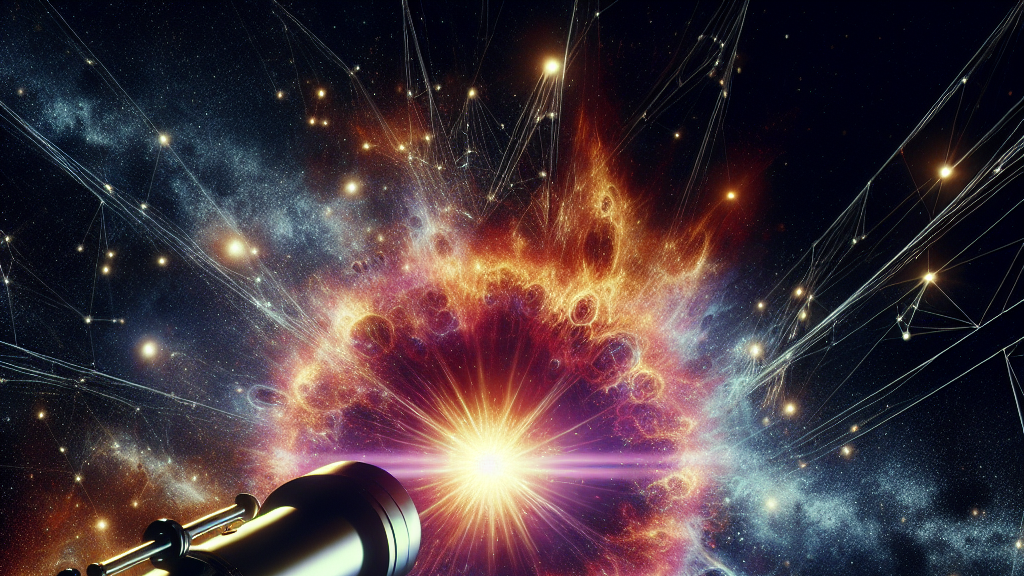
Imagine being able to watch the stunning explosion of a star, also known as a supernova. It’s one of the grandest displays in our universe! Scientists are getting closer to doing just that, but they’re searching for something smaller: tiny particles called axions that might be released during these celestial fireworks. Picture space detectives with their cosmic magnifying glasses, trying to catch a glimpse of these elusive particles to learn what really happens when stars explode.
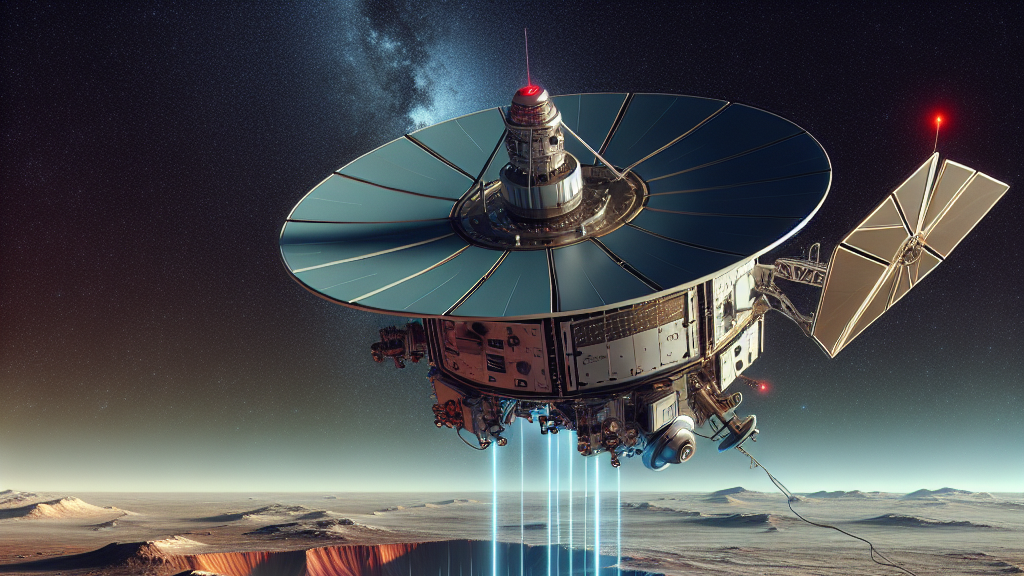
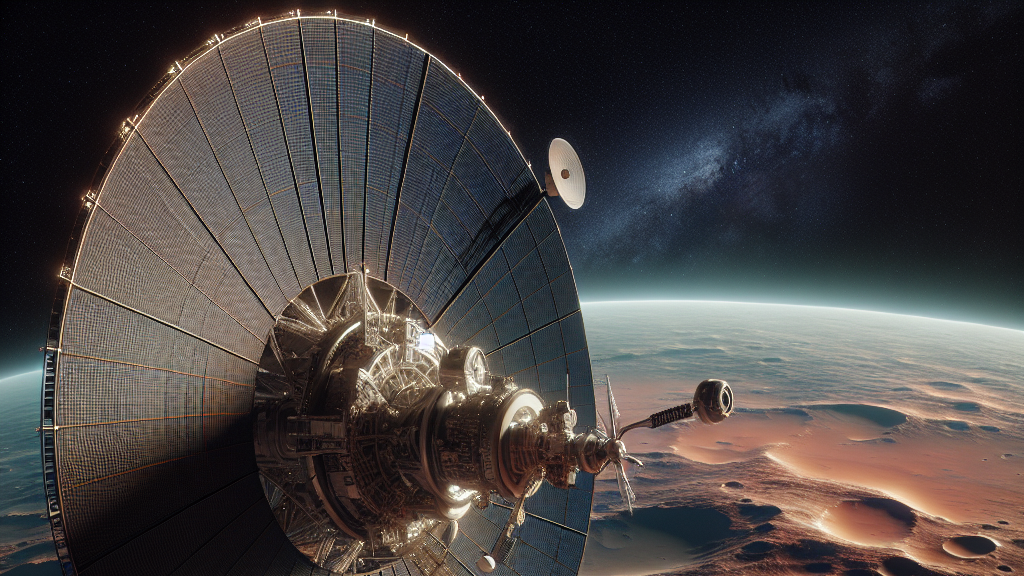
The research focuses on a special telescope known as the International Axion Observatory (IAXO) and its smaller cousin, BabyIAXO. These powerful tools are like super-sensitive space microscopes designed to find axions, especially when a star explodes nearby. Supposing a star within a couple of hundred light-years from Earth goes supernova, and if IAXO’s sensitivity settings are just right, we might finally detect these mysterious particles. This could be a game-changer, as it opens up a world of new possibilities for space exploration!
Now, let’s bring it down to earth. Imagine how knowing more about supernovae could change our understanding of everything from the elements around us (like the gold in your jewelry) to potential new energy sources. Being able to study axions might mean a future where we unlock new parts of physics, just like discovering a new room in a house you thought you knew by heart. This research could pave the way for all sorts of groundbreaking technologies and insights about the universe.
If scientists successfully detect axions, it could help explain how elements heavier than iron are formed during supernova explosions!
FAQs
What are axions and why do they matter in supernovae?
Axions are mysterious particles thought to be released during supernova explosions. Their detection could reveal hidden aspects of the universe, helping us understand star explosions and the creation of heavier elements.
How does IAXO work in detecting axions from supernovae?
The International Axion Observatory is a highly sensitive telescope designed to spot axions by their unique interactions with light. If a supernova occurs close enough, IAXO could detect these particles and offer insights into cosmic events.
How could understanding supernovae impact everyday life?
By studying supernovae, scientists can learn about the processes that create elements we use daily. This knowledge might lead to new technologies or materials, just like the stars that died to form the elements in our world.
Why is the potential detection of axions groundbreaking?
Detecting axions would help solve long-standing mysteries in physics, revealing insights into the cosmos’ structure. This could revolutionize our understanding of both particle physics and astrophysics.
How close does a supernova have to be for IAXO to detect axions?
For IAXO to detect axions, a supernova needs to happen within approximately 100 parsecs, or about 330 light-years, from Earth. Within this range, the observatory’s sensitivity could capture the elusive particles.
Background
The study revolves around axions, which are hypothetical particles that could provide answers to various cosmic mysteries if detected. To spot these particles, scientists use advanced telescopes like IAXO, tailored for extreme sensitivity to faint particles from cosmic events like supernovae, which are massive star explosions.
History
The hunt for axions began as scientists sought to resolve issues like the lack of direct dark matter detection. Over the years, telescopes and experiments were designed to find these elusive particles, with IAXO representing the latest effort to detect axions from events like supernovae, pushing the boundaries of our understanding of the universe.
Based on “Detecting Supernova Axions with IAXO” by P. Carenza, J. A. García Pascual, M. Giannotti, I. G. Irastorza, M. Kaltschmidt, A. Lella, A. Lindner, G. Lucente, A. Mirizzi, M. J. Puyuelo, available on arXiv (arxiv.org/abs/2502.19476), used under CC BY 4.0 (creativecommons.org/licenses/by/4.0/).