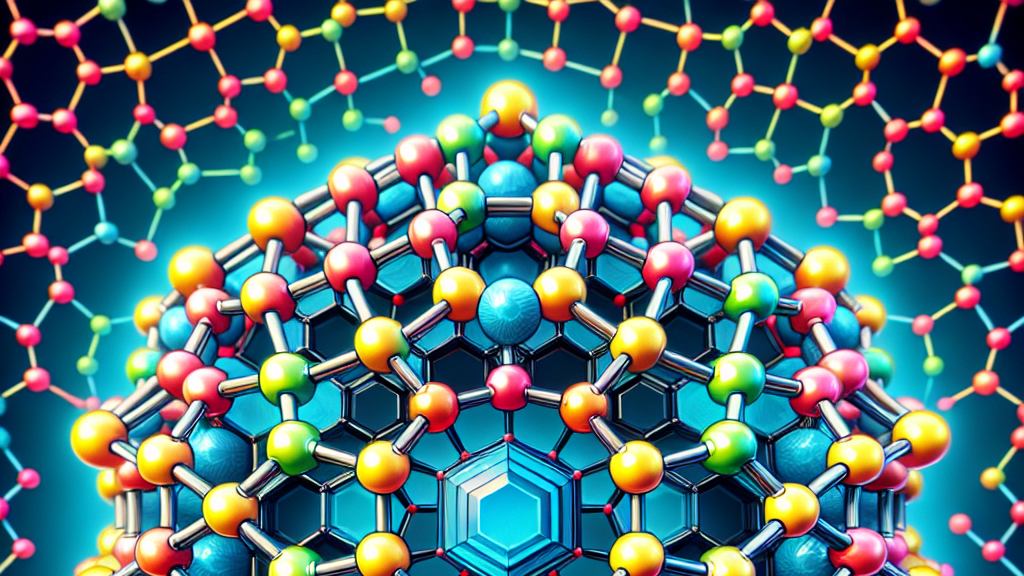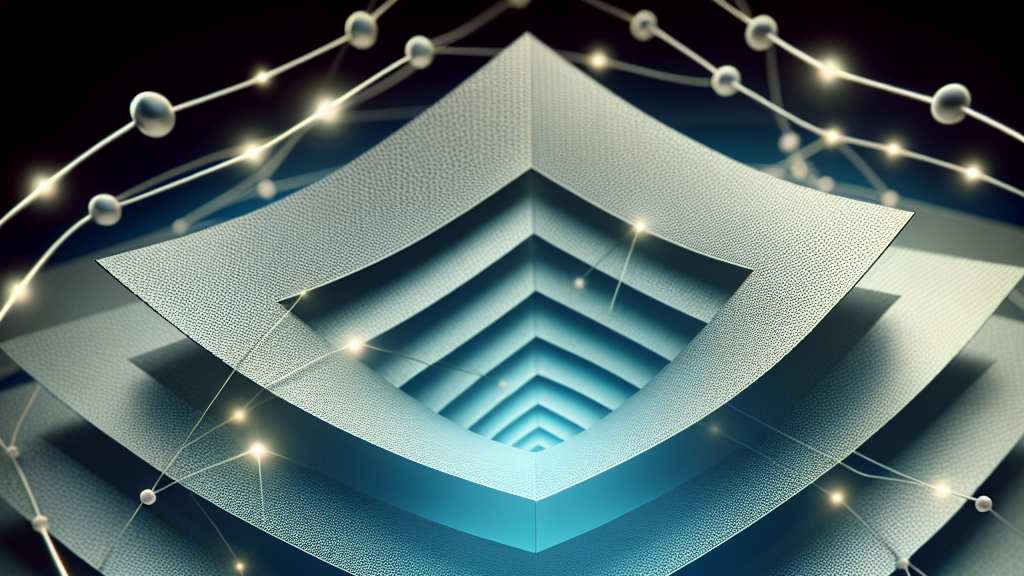
Picture this: the tiniest invisible forces acting like guiding hands, helping delicate sheets of graphene to assemble themselves perfectly. This isn’t science fiction; it’s the cutting-edge science of how molten metals can compassionately drive the formation of graphene through an intriguing phenomenon called the Casimir-like effect. Imagine the possibilities of using these spontaneous movements to construct large, seamless sheets of this wonder material, potentially revolutionizing electronics with more efficient components and faster devices.
At the heart of this breakthrough is the Casimir effect, a force that usually acts between two mirrors due to quantum fluctuations. But here’s the twist: this force also appears when graphene sheets float on liquid metal like gold or copper. By using ultrahigh vacuum microscopy, scientists captured real-time videos showing how these sheets pirouette and glissade on the molten surface, guided by forces that are both delicate and powerful. Using advanced modeling and experimenting with molten interfaces, researchers showed that the same principles behind traditional Casimir effects also drive graphene’s growth.
So why should you care? Well, these findings are more than just cool; they pave the way for more scalable and efficient production of graphene, possibly leading to better batteries, faster circuits, and more robust electronic devices. Imagine a future where your smartphone’s screen is more flexible and durable, or where solar panels convert more sunlight into electricity—all possible with seamless graphene sheets at the core. This research doesn’t just offer a glimpse into the extraordinary world of nanotechnology, but it could also mean tangible improvements in everyday technology!
Did you know? The Casimir effect is so subtle that it’s often described as the force due to ‘invisible hands’ because it arises from quantum fluctuations in a vacuum!
FAQs
What is the Casimir effect and why is it important for graphene growth?
The Casimir effect is a quantum phenomenon where invisible forces arise due to space confinement in a vacuum. It’s important for graphene growth because researchers have found that similar forces help guide the self-assembly of graphene sheets on liquid metals, enabling the creation of large, seamless sheets.
How does liquid metal aid in graphene’s self-assembly?
Liquid metal acts as a dynamic surface for graphene, where the forces exerted—akin to the Casimir effect—help move and position the graphene sheets into an orderly formation. This innovative process allows for the seamless assembly of graphene, crucial for developing advanced materials.
What are the practical applications of this graphene assembly advancement?
This advancement could lead to more efficient production of graphene, impacting industries by enabling the creation of better batteries, faster electronic circuits, and more durable, flexible electronic devices.
Why is graphene considered a ‘wonder material’?
Graphene is incredibly strong, lightweight, and an excellent conductor of electricity and heat. Its remarkable properties make it a versatile material for numerous applications, from electronics to materials science.
How does this research relate to everyday technology?
The ability to produce seamless graphene sheets could significantly enhance the performance and durability of everyday electronics, like smartphones and solar panels, by providing materials that are more efficient and more robust.
Background
The Casimir effect originates from quantum electrodynamics and describes how quantum fluctuations in a vacuum can create an attractive force between two close surfaces. When applied to graphene growth, this effect can influence the behavior of molecular and atomic assemblies. In this study, the focus is on how the Casimir-like effect appears during the growth of graphene on molten metals, which encourages the self-assembly through subtle forces created by the confined fluids and the layered material.
History
The Casimir effect was first described in 1948 by Dutch physicist Hendrik Casimir. Initially, it was an abstract quantum phenomena. However, over the years, scientists have identified its relevance in various domains, from nanotechnology to material science. Recent studies have explored its potential in influencing molecular interactions. This research adds a new dimension by showing how the Casimir effect can drive the growth and alignment of two-dimensional materials like graphene on liquid metal surfaces.
Based on “Casimir-like effect driven self-assembly of graphene on molten metals” by Kristýna Bukvišová, Radek Kalousek, Marek Patočka, Jakub Zlámal, Jakub Planer, Vojtěch Mahel, Daniel Citterberg, Libor Novák, Tomáš Šikola, Suneel Kodambaka, Miroslav Kolíbal, available on arXiv (arxiv.org/abs/2503.04327), used under CC BY 4.0 (creativecommons.org/licenses/by/4.0/).