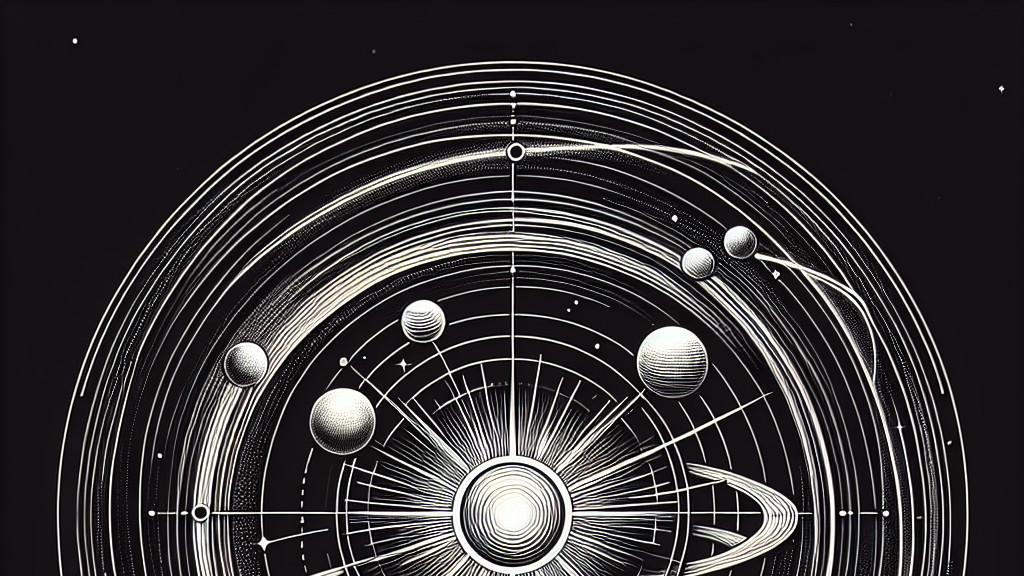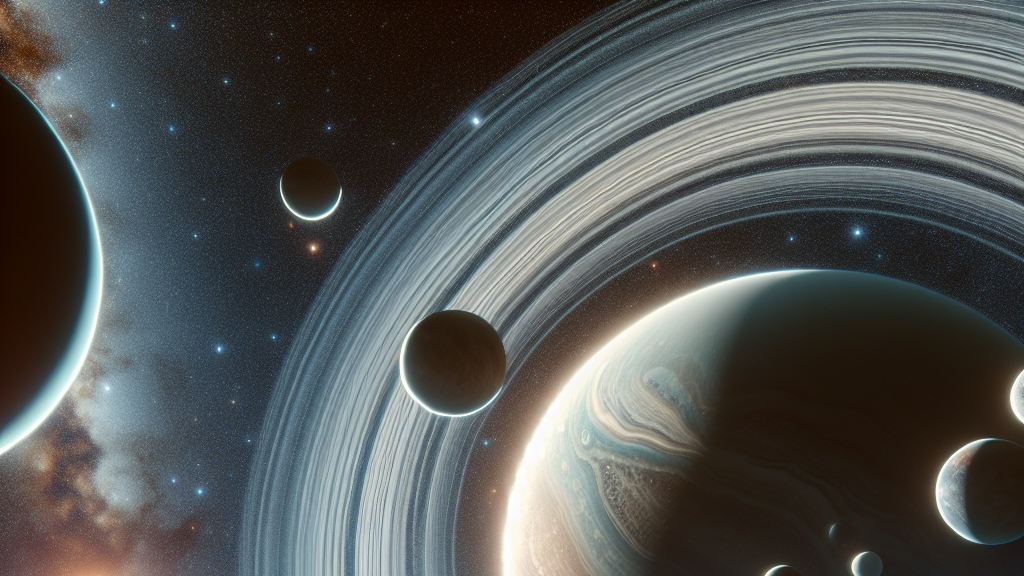
Imagine a planet that doesn’t follow the usual rules of orbiting its sun. That’s what astronomers have just discovered—a planet circling not one, but two suns, and doing so at an unusually steep angle. This isn’t just another space discovery; it’s a whole new way of thinking about how planets can exist, acting like rebels in the cosmic dance.
The researchers found this unusual planet orbiting around a pair of brown dwarf stars. These are cooler, smaller stars that didn’t quite make it to full star status. What’s so fascinating is that the planet orbits in a polar plane—a fancy way of saying it moves perpendicular to how we usually see things orbiting. This discovery was made by examining the movements and gravitational interactions in the star system, which suggested there must be something unusual—a polar planet—influencing the stars’ orbits.
So why should you care? Well, this could change the game in how we search for other planets. If planets can orbit their stars at such strange angles, who knows what other surprises are out there in the galaxy? Understanding these oddballs could also give us better clues about how planets form and behave, and maybe even point us to another Earth-like world hiding somewhere in the universe.
Did you know? A planet can orbit two suns, just like the fictional planet Tatooine in Star Wars!
FAQs
What are circumbinary planets and how are they different from regular planets?
Circumbinary planets orbit two stars instead of just one, like most planets we know. This can create unique gravitational dynamics and unusual orbits.
What makes this newly discovered polar circumbinary planet so special?
This planet orbits at a steep angle, nearly perpendicular to how we commonly see planets orbit. It’s the first strong evidence we’ve found of such a configuration, challenging our understanding of planetary and orbital dynamics.
Why is the discovery of a polar circumbinary planet important?
This discovery opens up new possibilities for how planets can exist in the universe. It suggests there may be more planets with unique orbits, leading to a more diverse understanding of how planetary systems form and operate.
How do scientists find planets that orbit two stars?
Scientists observe the gravitational effects and movements within star systems. Changes or irregularities can indicate the presence of planets, even when they can’t be directly seen.
What are the implications of finding planets at different orbital angles?
It could revolutionize our search strategies for exoplanets, potentially uncovering a variety of new worlds that have been overlooked due to their unconventional orbits around binary stars.
Background
In space, most planets orbit a single star in a flat, circular path. This pattern is based on gravity’s grip and resulting forces as stars and planets form. But when a planet orbits two stars, its path can become more complex. Scientists study these circumbinary planets to understand diverse planetary systems and the limits of celestial mechanics.
History
The study of circumbinary planets began with the discovery of planet-like objects orbiting binary star systems. The breakthrough came with the first confirmed circumbinary exoplanet found by the Kepler Space Telescope. Since then, scientists have been exploring how and why these planets form, building on past theories to explain their unusual characteristics.
Based on “Evidence for a polar circumbinary exoplanet orbiting a pair of eclipsing brown dwarfs” by Thomas A. Baycroft, Lalitha Sairam, Amaury H. M. J Triaud, Alexandre C. M. Correia, available on arXiv (arxiv.org/abs/2504.12209), used under CC BY 4.0 (creativecommons.org/licenses/by/4.0/).