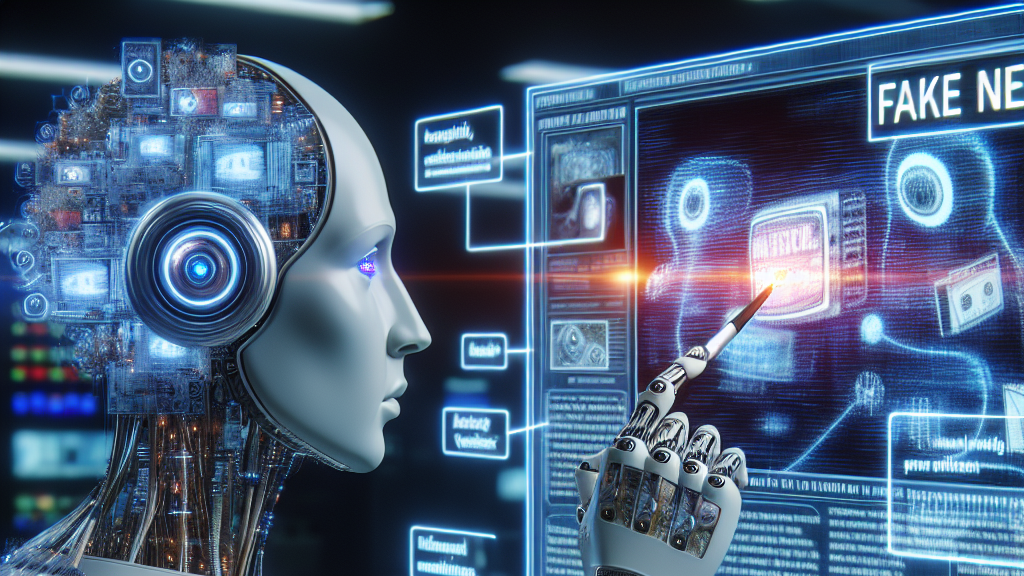
Have you ever felt overwhelmed by the sheer amount of questionable information online? You’re not alone. A recent study proposes an eye-opening framework to tackle ‘information disorder’—a fancy term for how fake news and mixed-up facts swirl around the internet, confusing the heck out of us. This isn’t just about whether something is true or false; it’s about understanding how all these ‘facts’ are created, spread, and affect our democracy.
The study introduces a five-stage framework that unravels the complex life cycle of misinformation. Imagine it like a detective story, where different characters (or agents) use various tricks (or tactics) to spread misleading information. Their aim could be to mislead, sell a product, or sway political opinions. The research suggests that we shouldn’t just patch up these problems with quick fixes. Instead, it calls for a full-on makeover—a system-level approach—to manage this digital chaos.
So, how could this affect your life? Imagine a future where policymakers, armed with this new framework, design smarter strategies to combat fake news. This could mean fewer misleading headlines in your newsfeed and more trust in what you read online. It’s about creating a digital space where truth matters, and everyone has a chance to understand what’s really going on in the world. Now, wouldn’t that be a breath of fresh air in our media-driven lives?
Did you know that misinformation can spread faster than the truth on social media, sometimes reaching thousands of people in just a few hours?
FAQs
What is information disorder and why should we care?
Information disorder refers to the chaotic mix of fake news and misinformation commonly found online. It’s important because it can mislead people and impact democracy by shaping public opinion in deceptive ways.
How does the new framework tackle fake news differently?
This new framework looks at the entire life cycle of misinformation, from creation to impact, considering the factors and agents involved. It’s like understanding the plot of a mystery novel rather than just focusing on the climax.
How could this research improve public policy?
By offering a holistic view of information disorder, this research encourages policymakers to create system-level strategies rather than short-term fixes, improving the reliability of information and strengthening democratic processes.
Why is it described as a socio-material phenomenon?
Information disorder is considered socio-material because it’s shaped by societal behaviors and digital technologies, making it a complex blend of human and machine interactions.
Will this framework change how we consume information online?
Ideally, with more aware policies and strategies, our online experience could become clearer, with less fake news and more trustworthy information making it easier for everyone to make informed decisions.
Background
Information disorder is a term that covers all the misleading, manipulated, or outright false information spread online. It isn’t just about fake news but also includes how information is created and shared, impacting how we perceive reality. This study suggests that rather than treating each piece of misinformation as a standalone issue, we should examine the entire network and process of how misinformation is produced and consumed.
History
Before this research, studies on information disorder largely focused on isolated aspects like misinformation on social media or digital literacy. Communication and information science often looked into fragmented issues without offering a comprehensive model. This study builds on previous research by presenting a systematic approach that connects these fragments into a cohesive picture of how misinformation works as a system.
Based on “A Framework for Information Disorder: Modeling Mechanisms and Implications Based on a Systematic Literature Review” by Julie Ricard, Ivette Yañez, Leticia Hora, available on arXiv (arxiv.org/abs/2504.12537), used under CC BY 4.0 (creativecommons.org/licenses/by/4.0/).