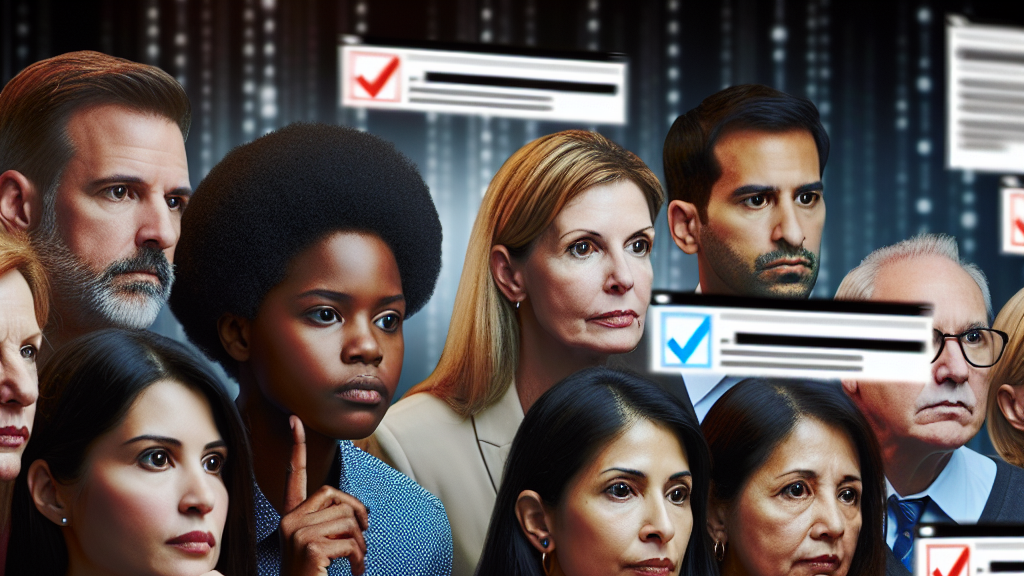
Imagine scrolling through social media and coming across an unbelievable news story. You’re tempted to share it because it makes you look sharp to your friends or matches your beliefs, regardless if it’s true or not. This impulsive sharing might skew the information we see online towards fake news more often than factual news. But why does this happen? This study reveals that our desire to look savvy and align with our worldviews leads us to share information without verifying its truth. This makes fake news more viral because it often aligns better with sensational narratives or our personal beliefs, making it more attractive to share among peers. This behavior affects the overall quality of information circulating on our feeds, influencing our perceptions and decisions in the real world. In the future, understanding these social motives could help develop strategies to improve the accuracy of the information shared on social media, perhaps making our online spaces more reliable.
Did you know that fake news is often 70% more likely to be shared than real news?
FAQs
Why do social image concerns lead to more fake news sharing?
Social image concerns make people more likely to share fake news because they want to appear knowledgeable or align with their personal beliefs, even if it means bypassing the truth.
How do the motives to look talented or signal one’s worldview influence information sharing?
People share based on these motives to either demonstrate their ability to discern news—which ironically can lead them to spread false info—or to reinforce their existing views, leading to selective sharing of information that supports their beliefs.
What are the possible impacts of sharing fake news more frequently than factual news?
Sharing fake news more frequently can distort public perception and decision-making, spreading misinformation quickly and widely, which can impact everything from elections to public health initiatives.
Can understanding these social motives help improve information accuracy online?
Yes, by recognizing the underlying social drivers, platforms can develop better content verification systems or promote critical thinking and fact-checking among users to enhance the reliability of shared information.
Why is verifying news veracity considered costly and type-dependent in the study?
Verifying news can be costly in terms of effort and time, and individuals may have different abilities or motivations to discern information based on their social image concerns and personal beliefs.
Background
At the core of this research is the idea that people care about what others think of them, known as social image concerns. People want to be viewed as smart and capable, and this can lead them to choose what information to share without thoroughly checking if it’s true. Social image can drive two types of behavior: wanting to display knowledge or aligning shared information with one’s worldview. These motives are crucial as they impact both the nature and quality of information disseminated within social networks.
History
This research builds on previous studies that explore how fake news spreads across social media platforms. Notably, studies like Vosoughi et al. (2018) have shown that false information spreads more rapidly than true news. This study adds depth by investigating the psychological drives—such as social image and personal beliefs—that underpin this phenomenon, offering a richer understanding of how news dissemination patterns develop in the digital age.
Based on “Information Sharing with Social Image Concerns and the Spread of Fake News” by Dana Sisak, Philipp Denter, available on arXiv (arxiv.org/abs/2410.19557), used under CC BY 4.0 (creativecommons.org/licenses/by/4.0/).