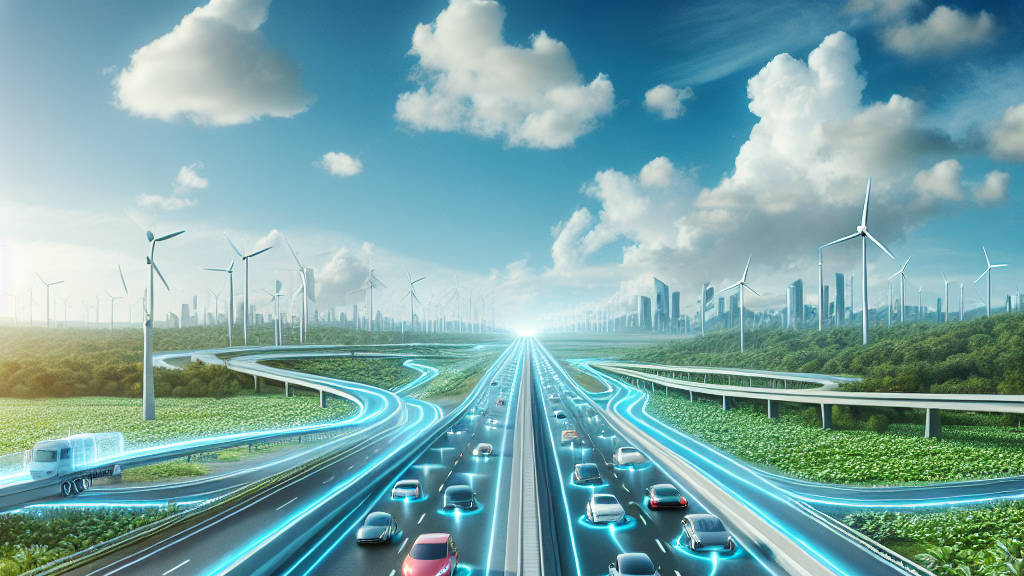
Imagine cruising down the highway in your electric car, and instead of worrying about running low on battery, you’re actually gaining charge as you drive. That’s the vision behind Charging While Driving (CWD) lanes. They promise to eliminate the dreaded ‘range anxiety’ that many prospective electric vehicle (EV) owners face, potentially transforming how we think about travel and emissions. But, there’s more to the story than just a greener future.
Research shows that while CWD lanes can indeed support the wider adoption of EVs by tackling the issue of charging convenience, they might also bring about unexpected traffic congestion. As more electric cars opt for these lanes, the traffic flow gets disrupted. Vehicles darting in and out to access these charging-friendly lanes could cause a ripple effect, slowing down the entire highway, especially if not everyone is on board with the new system. However, the good news is that with more electric cars on the road, emissions could take a nosedive, offering a cleaner, greener atmosphere.
So, why should you care? Well, imagine a future where grabbing a quick charge on your commute is as easy as hitting the road. Yet, it’s not all smooth sailing. Careful planning and thoughtful policies are needed to ensure these lanes work for everyone, not just the EV owners. Think of the possibilities: smoother, cleaner commutes balancing with the reality of managing new traffic patterns. It’s a glimpse into how our transportation systems might evolve, bridging the gap between convenience and sustainability.
Did you know? Using electric vehicles with Charging While Driving lanes could cut pollution by up to 63%!
FAQs
What are Charging While Driving lanes and how do they work?
Charging While Driving lanes are specially designed highway lanes that allow electric vehicles to charge wirelessly as they drive. This removes the need for frequent stops at charging stations, addressing range anxiety for EV owners.
Will Charging While Driving lanes make traffic worse?
While they provide a solution for EV charging, these lanes can disrupt traffic flow as vehicles change lanes to access them. This may lead to new congestion patterns, highlighting the importance of strategic design and policies.
How do CWD lanes affect pollution levels?
CWD lanes encourage more electric vehicle usage, which significantly reduces emissions. The study shows potential pollution reductions of up to 63% with higher rates of EV adoption.
How could Charging While Driving lanes benefit daily commuters?
For daily commuters, these lanes could mean less time spent worrying about charging stops and more time enjoying a continuous, eco-friendly drive, provided traffic management is effectively handled.
What should be considered when designing CWD lanes?
Designing CWD lanes requires careful planning to balance the benefits of increased EV adoption with potential traffic disruptions. Polices must account for traffic dynamics, market penetration rates of EVs, and possible emissions impacts.
Background
Electric vehicles have been transforming the transportation industry by providing an eco-friendly alternative to traditional fuel-powered cars. A significant barrier, though, is range anxiety—the fear of running out of battery before reaching a charging station. Recently, innovative solutions like Charging While Driving lanes have emerged, offering wireless charging technology that recharges cars on the move. This advancement seems promising, but integrating such lanes into existing traffic systems presents challenges, particularly in terms of traffic flow and infrastructure demands.
History
The concept of electric vehicles dates back to the late 19th century, but their widespread adoption has only surged in recent decades due to advancements in battery technology and growing environmental concerns. The charging infrastructure has evolved from simple plug-in stations to wireless options, aiming to address range anxiety. Previous research on wireless charging focused on stationary systems, but the idea of charging on the go has recently gained traction, with innovative solutions being tested worldwide. This study builds on that by analyzing the potential impacts of integrating these cutting-edge technologies into our roads.
Based on “Charging While Driving Lanes: A Boon to Electric Vehicle Owners or a Disruption to Traffic Flow” by Shayan Bafandkar, Alireza Talebpour, available on arXiv (arxiv.org/abs/2504.14360), used under CC BY 4.0 (creativecommons.org/licenses/by/4.0/).