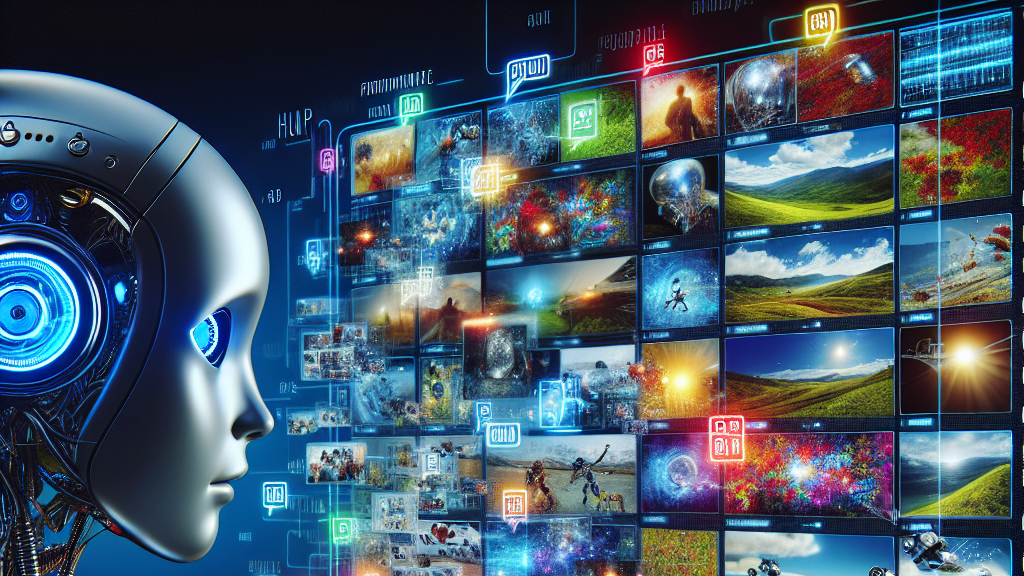
Did you ever think robots could learn just by watching YouTube videos? This isn’t a sci-fi plot; it’s the future of robotics unfolding right now. By training with videos, robots now have a vast library of knowledge at their fingertips—quite literally. Imagine them picking up new skills by observing how-to videos, much like we do when we want to learn something new. It’s a bit like having a robot intern who learns your preferences and habits over time.
The core idea here is about using video generative models in robotics as visual planners or decision-makers. These models get their smarts from pretraining on a massive amount of internet data, including videos and language interlinked together. Then, researchers use small, specific robotic examples to personalize these models to act cohesively within certain environments. This research even goes a step further by developing an approach called Inverse Probabilistic Adaptation. It’s a method that not only helps robots generalize new tasks but also keeps them effective no matter the quality of their training videos.
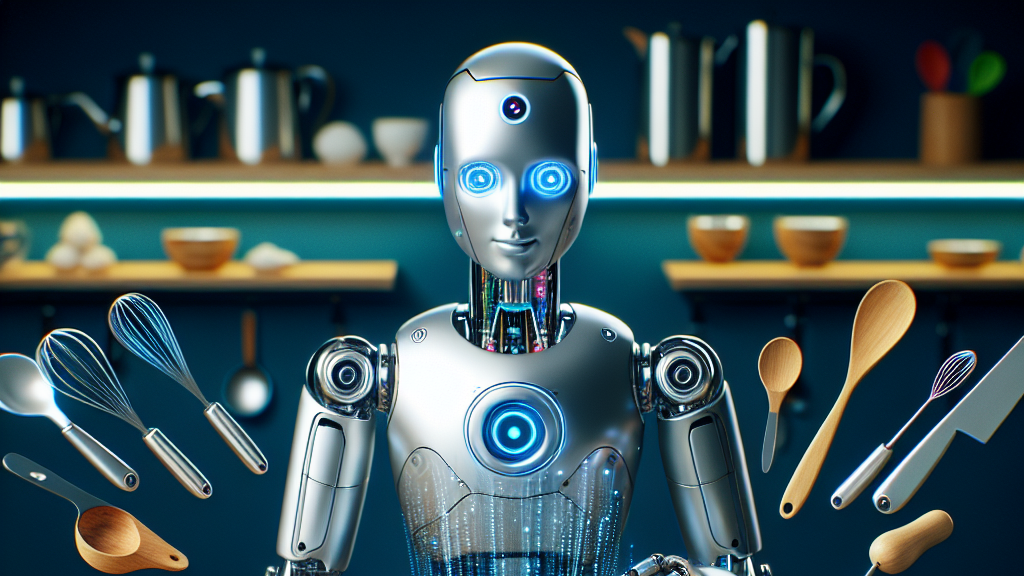
Imagine this: Your household robot learning to cook a new dish by watching a cooking tutorial or picking up after your kids by observing their cleanup routine. This research opens up endless possibilities where robots could adapt more intuitively and perform a range of tasks without needing extensive programming or retraining. It’s a future where our machines aren’t just tools, but smart aides, adapting and evolving to fit into our daily lives seamlessly and efficiently.
Did you know? Robots could soon learn new tasks by watching YouTube videos, just like us!
FAQs
How can robots learn from video models?
Robots can learn from video models by using generative models that are pretrained on large datasets of internet videos. These models help robots understand tasks and generalize them from one environment to another.
What is Inverse Probabilistic Adaptation?
Inverse Probabilistic Adaptation is a novel strategy for adapting video models to new tasks. It ensures that robots can perform tasks effectively even when trained with suboptimal or limited in-domain examples.
Why is text-conditioning important in video generative models for robots?
Text-conditioning allows video generative models to align with natural language commands, which facilitates a robot’s ability to understand and execute diverse tasks described through text, thereby improving their adaptability.
What are the challenges of training video models with in-domain examples?
Training video models with in-domain examples may not always provide enough data to generalize new, unseen tasks, which necessitates innovative adaptation techniques like Inverse Probabilistic Adaptation to bridge the gap.
How can this research change everyday life?
This research could lead to smarter household robots capable of performing broader tasks with less direct programming, making them more useful in everyday life and potentially revolutionizing industries relying on robotics.
Background
Video generative models are AI systems that learn to understand video content by being exposed to large datasets. They function similarly to a human watching countless videos and learning new skills or information from them. When applied to robotics, these models help robots plan and perform tasks by observing how actions unfold in videos. Adaptation techniques are crucial for fine-tuning these models so they can operate effectively in specific environments or tasks.
History
The field of robotics has long pursued the idea of adaptable machines capable of learning from real-world experiences. Earlier methods required extensive coding and specific programming for each task. The advent of video models revolutionized this by allowing robots to visually interpret and learn from vast video data sources. This current research builds upon that foundation, exploring how these video-trained robots can be further adapted to specific environments using concise, relevant examples.
Based on “Solving New Tasks by Adapting Internet Video Knowledge” by Calvin Luo, Zilai Zeng, Yilun Du, Chen Sun, available on arXiv (arxiv.org/abs/2504.15369), used under CC BY 4.0 (creativecommons.org/licenses/by/4.0/).