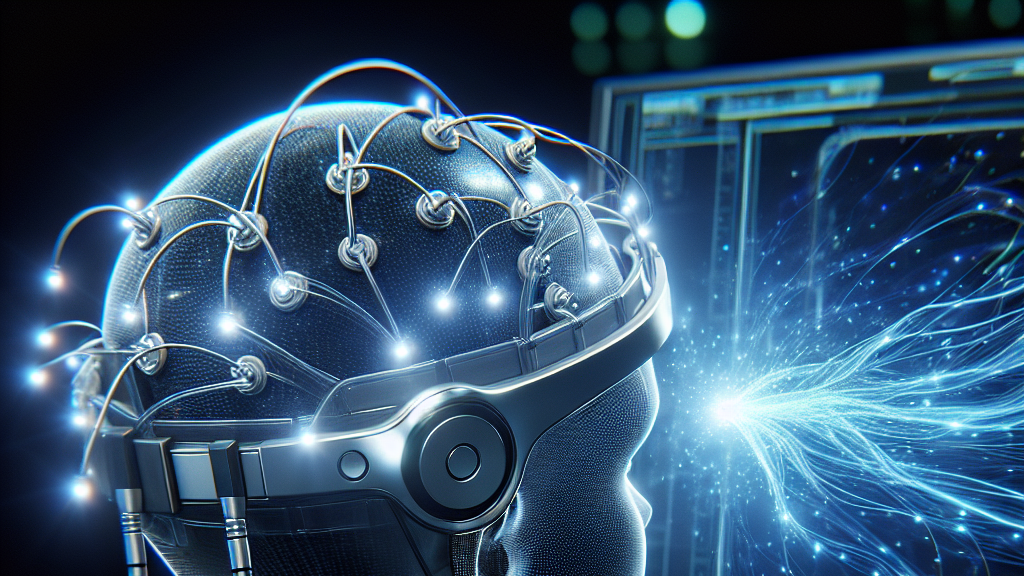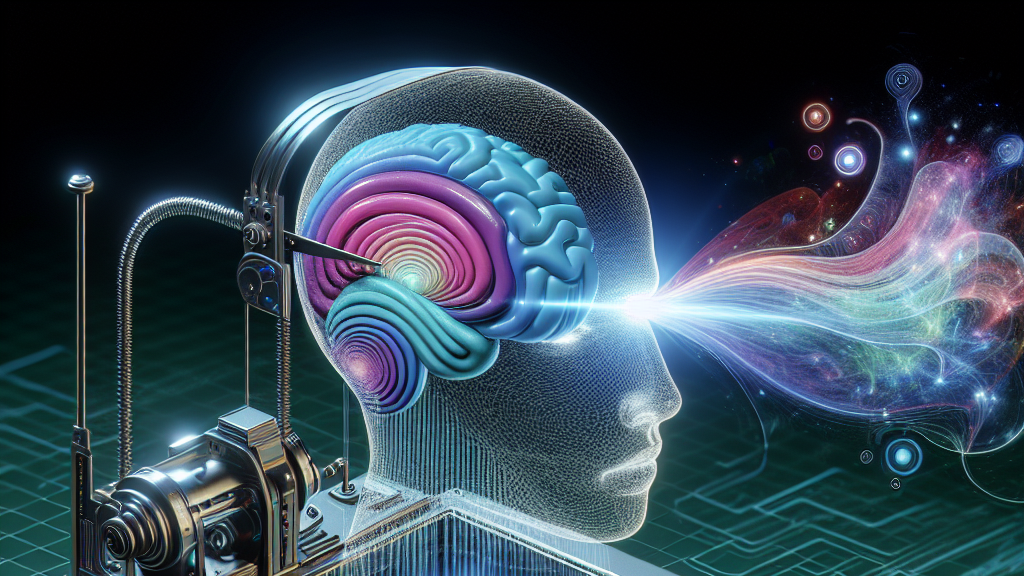
Ever wondered if someone could see the image you’re picturing in your mind? This fascinating concept isn’t just for sci-fi anymore. New research is breaking ground in ‘mind seeing,’ where scientists are working on technology that could reveal the pictures and faces we think of by analyzing brain wave data, all without needing any prior training information.
The key here is an innovative algorithm called CURSOR that doesn’t rely on pre-existing labels or training data. By examining the brain waves generated when we perceive or imagine faces, CURSOR can predict how similar our mental image is to an actual visual one. It creates an amazing bridge between mind and machine, capable of ranking different images based on how closely they match what someone is imagining.
Imagine the potential applications—this technology could help people with communication impairments or even enable artists to bring their mental visuals to life without needing a brush or camera. We might soon live in a world where your private imaginings can be shared with others just by wearing a special headset, expanding our capacity for expression and empathy in ways we never thought possible.
Did you know? Humans can generate mental images in just a fraction of a second, and now, technology might let us ‘see’ them too!
FAQs
What is CURSOR and how does it work in mind reading?
CURSOR is a cutting-edge algorithm developed to decode mental images directly from brain activity data, using only EEG (brain wave) readings and without relying on any labeled training data.
How does CURSOR predict what image someone is imagining?
CURSOR compares the similarity of brain wave patterns when a person imagines an image to known patterns and uses this to predict the image’s likeness, enabling it to rank different visual stimuli in relation to the person’s mental target.
What makes CURSOR different from previous mind-reading technologies?
Unlike previous technologies that required large sets of labeled data to train on, CURSOR operates using a self-calibrating approach, which means it doesn’t need pre-labeled data or pre-trained decoders to function, making it more adaptable and potentially accessible.
Could CURSOR be used for communication aids?
Yes, one of the exciting potential applications of CURSOR is aiding communication, especially for individuals who struggle to express themselves verbally, by providing a way to visualize thoughts directly from brain activity.
What are naturalistic images of faces used in CURSOR experiments?
Naturalistic images are representations of faces that are realistic and resemble real-world images, used in experiments to test CURSOR’s ability to reproduce and rank images based on brain data accurately.
Background
Our brains are like incredibly complex computers, constantly buzzing with electrical signals—our thoughts. EEGs are tools that read these signals non-invasively, providing insight into what’s happening in our minds. By studying these signals, scientists can correlate specific brain wave patterns with certain thoughts or images, offering a glimpse into the activity behind our eyes.
History
In the past, attempts to ‘read’ thoughts or visualize mental images mainly relied on substantial labeled datasets, where each brain wave was linked to a specific known outcome. Advances over the years in brain-computer interfaces have aimed to make this process more intuitive and less dependent on prior training. CURSOR builds on this by using a self-calibrating method, requiring no prior data to function, marking a significant leap forward.
Based on “Self-Calibrating BCIs: Ranking and Recovery of Mental Targets Without Labels” by Jonathan Grizou, Carlos de la Torre-Ortiz, Tuukka Ruotsalo, available on arXiv (arxiv.org/abs/2506.11151), used under CC BY 4.0 (creativecommons.org/licenses/by/4.0/).