TikTok is where we see everything from dance challenges to news updates, but not everything you see is true. Identifying fake news on such platforms is a big challenge, and yet, it’s crucial for keeping our online world honest. Imagine if there was a way to automatically detect questionable content and give us a heads-up before we click ‘share.’ That’s what’s happening here with this cutting-edge research.
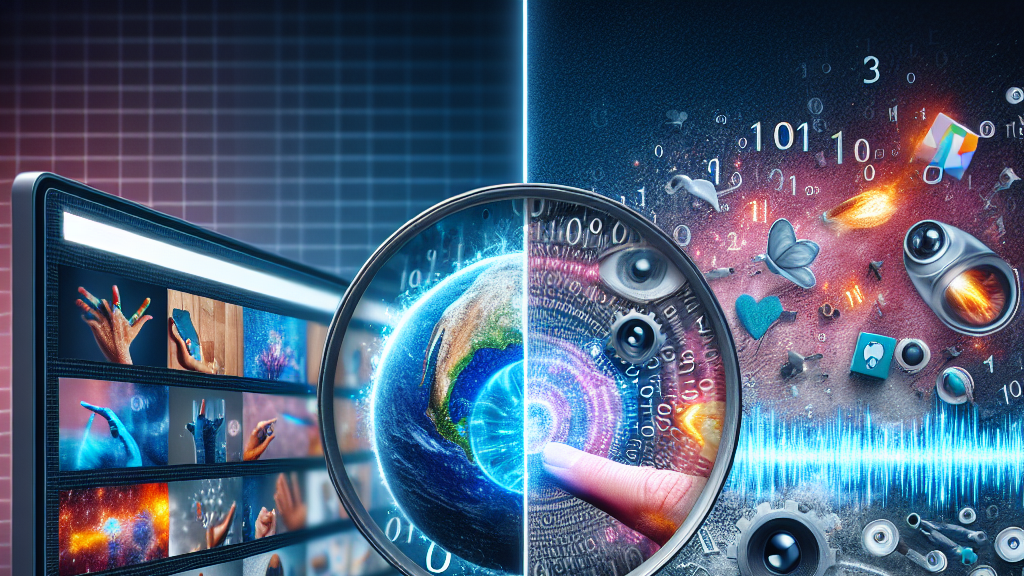
Scientists have come up with a cool system that looks at all the elements of a TikTok video to spot lies. They don’t just listen to what people say but also watch how they say it – everything from their words and gestures to the coherence of text within the video. By combining the power of deep learning, which teaches computers to find patterns in data, and fuzzy logic, which helps make sense of complex human behaviors, they’re hoping to build a trustworthy framework for identifying misinformation effectively.
Think of it as having a super-smart buddy who can read between the lines and help you figure out if what you’re watching is the real deal or not. In the future, this might mean fewer misleading videos tricking audiences and more people getting the truth from their social media scrolls. So next time you’re on TikTok, maybe you’ll have this invisible detective working in the background, making sure what you see is as accurate as possible.
TikTok videos often spread information faster than traditional news outlets, making misinformation detection vital.
FAQs
How does TikTok play a role in disinformation detection?
TikTok is a popular social media platform where information spreads quickly. This research aims to detect fake news on TikTok using advanced technologies like deep learning and fuzzy logic to ensure content accuracy.
What technologies help identify fake news on TikTok?
The study uses a combination of deep learning, which analyzes patterns in data, and fuzzy logic, which interprets complex human behaviors, to detect misinformation on TikTok efficiently.
How can fuzzy logic and deep learning enhance disinformation detection?
Fuzzy logic helps understand and interpret human behaviors like body language and speech patterns, while deep learning identifies data patterns. Together, they form a robust system for spotting misinformation on social media platforms like TikTok.
Why is detecting disinformation on TikTok important for everyday users?
As TikTok often spreads information faster than traditional outlets, ensuring the content is accurate is critical to prevent the spread of misinformation that may affect public perceptions and decisions.
Background
Disinformation on social media refers to false information shared with the intent to mislead. As platforms like TikTok grow, spotting such content becomes essential. Deep learning involves teaching computers to recognize patterns in data, while fuzzy logic deals with reasoning that mimics human decision-making, making them suitable tools for this task.
History
The rapid growth of social media has heightened the urgency of identifying misinformation. Previous research relied heavily on text analysis, but the multimedia nature of platforms like TikTok requires new approaches combining different data forms, like video and audio. This study builds on the evolution from text-only methods to more complex, integrated systems.
Based on “A New Hybrid Intelligent Approach for Multimodal Detection of Suspected Disinformation on TikTok” by Jared D. T. Guerrero-Sosa, Andres Montoro-Montarroso, Francisco P. Romero, Jesus Serrano-Guerrero, Jose A. Olivas, available on arXiv (arxiv.org/abs/2502.06893), used under CC BY 4.0 (creativecommons.org/licenses/by/4.0/).