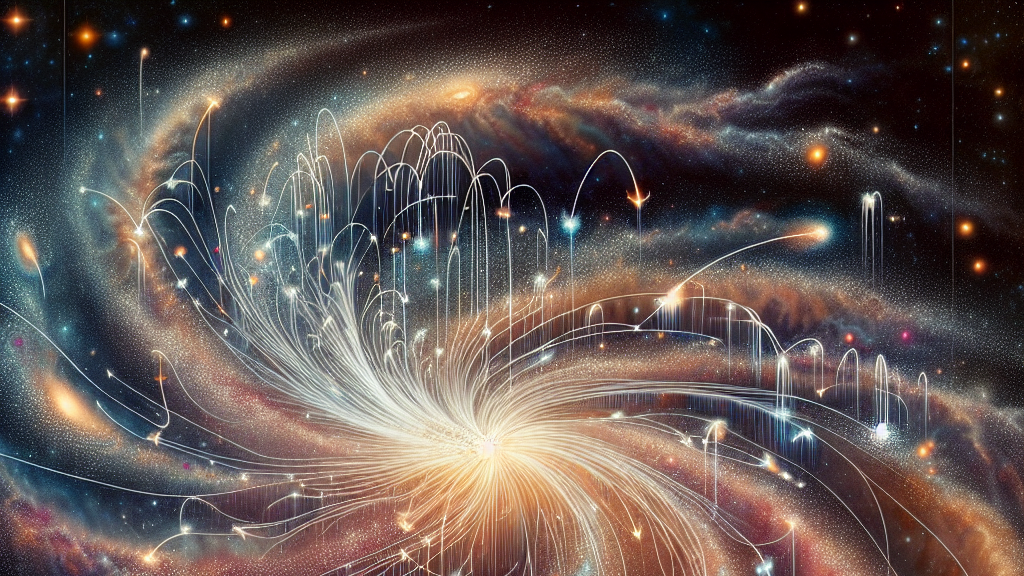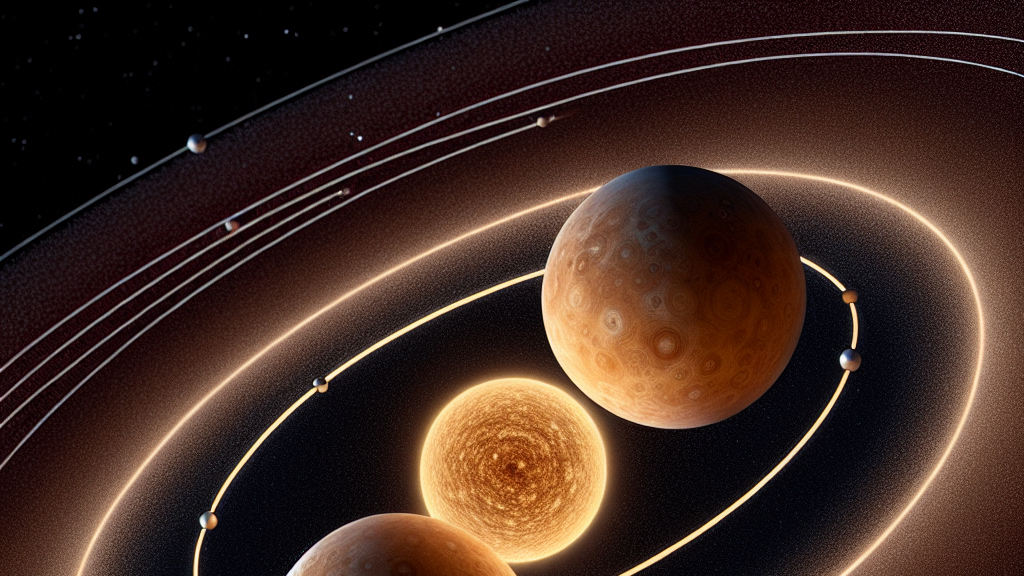
Imagine if tiny particles of dust from our planet could hitch a ride on solar winds and travel across the galaxy. This isn’t just science fiction—it could be the next big breakthrough in understanding how life spreads across the universe. Researchers have looked into how tiny grains of planetary dust might escape a planet’s gravity and journey to far-off stars, thanks to the force of light, known as radiation pressure.
The idea is that these dust particles, once freed from their planet, can be pushed by the light of their star, speeding through space at incredible speeds. Over billions of years, they could reach new star systems, potentially carrying the building blocks of life with them. This process is a part of something called panspermia, a theory that life can spread from one planet to another via space dust. Scientists estimate that over the course of 5 billion years, these grains could travel to around 100,000 different star systems, scattering seeds of life across the galaxy like cosmic dandelions.
Let’s put it into perspective: imagine if Earth’s microbes hitched a ride on space dust and landed on a distant, habitable planet. This could mean that life might not only be restricted to our own planet. As new planets form in other star systems, they could be seeded with life, sparking life in places we never even dreamed could exist. This research opens up exciting possibilities about life beyond Earth, making us rethink how interconnected our universe might be.
Did you know that space dust can travel at speeds of up to 70 kilometers per second when propelled by radiation pressure?
FAQs
How can space dust carry life across the galaxy?
Space dust can theoretically carry tiny organisms or life-building molecules. As it gets propelled by radiation pressure, it can travel vast distances, potentially reaching new star systems and seeding life across the galaxy.
What is the role of radiation pressure in space dust travel?
Radiation pressure, the force exerted by light, can help propel space dust particles through space by pushing them away from the star, allowing them to travel to different star systems.
How many stellar systems can space dust reach over billions of years?
Research suggests that over 5 billion years, space dust can reach up to 100,000 star systems, potentially spreading the building blocks of life across the galaxy.
What is panspermia, and why is it important?
Panspermia is the theory that life can be transferred across planets via space dust, meteoroids, or comets. It is important because it could explain how life might spread beyond our own planet.
What makes the study of space dust fascinating?
Understanding how space dust travels can provide insights into the potential interconnectivity of life across the universe and challenge our perception of life’s uniqueness to Earth.
Background
The concept of radiation pressure is key to understanding this research. Stars emit light, which carries momentum. As this light hits small particles, like dust, it can push them away from the star. This is similar to how wind propels a sailboat. In space, this force can be strong enough to overcome a planet’s gravitational pull, allowing particles to venture into the cosmos.
History
The idea of panspermia dates back to ancient philosophy but was brought into scientific discourse in the 20th century. The hypothesis that life could spread through the universe via space dust has been explored with various space missions and scientific models. This research builds on the idea by providing a mechanism—radiation pressure—that allows dust to escape planetary gravity and travel immense distances.
Based on “The possibility for panspermia in the galaxy by means of planetary dust grains” by Z. N. Osmanov, available on arXiv (arxiv.org/abs/2402.04990), used under CC BY 4.0 (creativecommons.org/licenses/by/4.0/).