Connect with us

Search by keyword

Space

Could These Planets Hide Invisible Atmospheres?

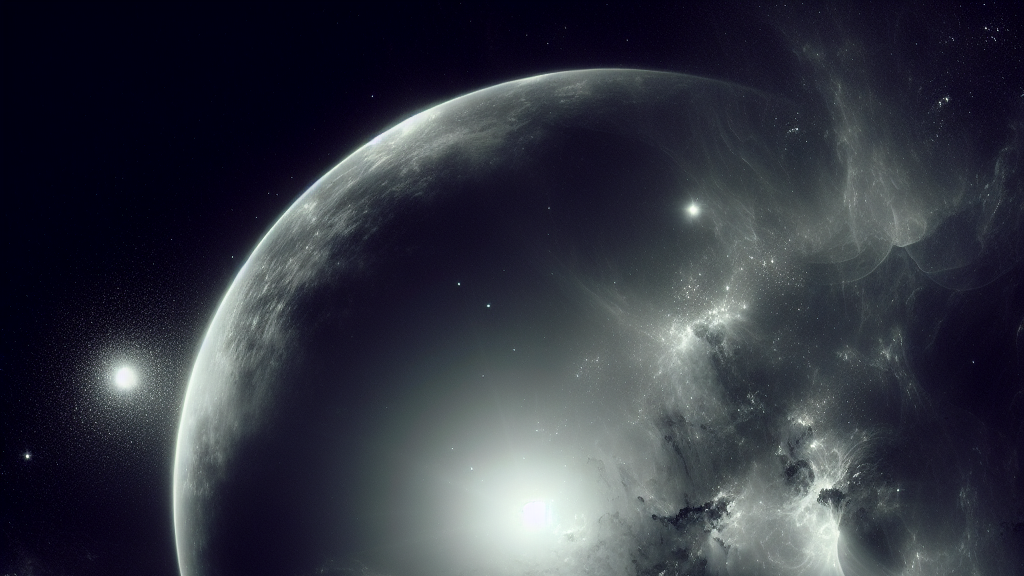
Some planets between the size of Earth and Neptune might have atmospheres invisible to our current tech. This research helps us explore these mysterious worlds to find out if they’re hiding something.

Could These Planets Hide Invisible Atmospheres
✨Researched by humans. Explained by robots. Learn more.

Imagine stumbling upon a planet where the atmosphere seems just out of reach from our detection tools. It sounds like science fiction, but it’s actually happening with planets between Earth’s and Neptune’s size. Scientists are on a quest to unlock the secrets of these celestial bodies that appear to be hiding their atmospheric details from us.

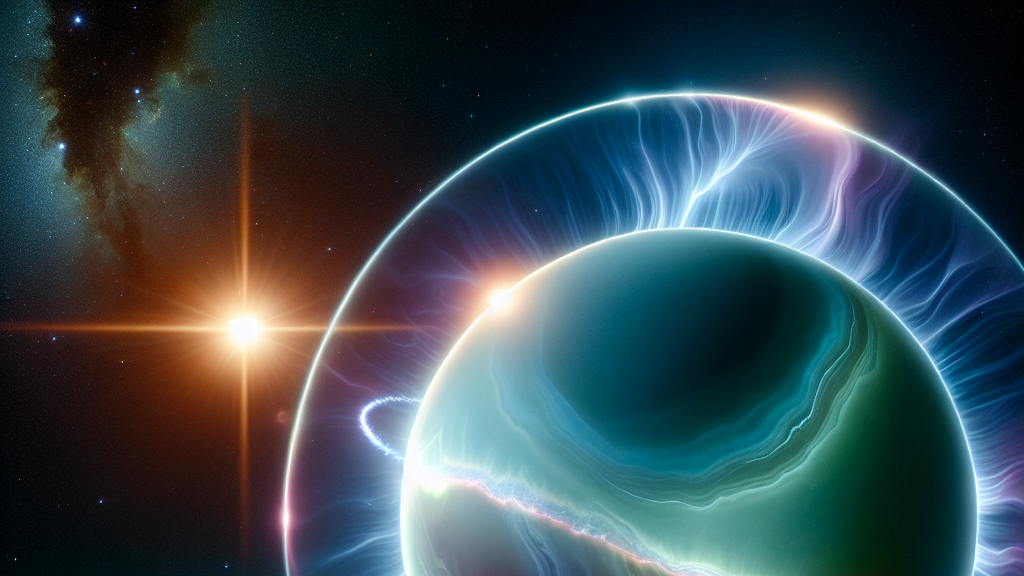
In a recent study, researchers used the powerful James Webb Space Telescope to take a closer look at a planet named TOI-776 c. This planet orbits a cool star and is about twice the size of Earth. Despite using advanced detectors, they found no strong clues of an atmosphere with molecular features. This leads them to think that TOI-776 c might have a very different atmospheric makeup or perhaps none that our current technology can see clearly.

So, why is this study so important? Well, uncovering the mysteries of these

Did you know some planets might have atmospheres that are nearly invisible to our most advanced telescopes?

FAQs

What is the focus of the study on planets like TOI-776 c?

Scientists are focused on understanding whether these planets have atmospheres with detectable molecular features or if they’re eluding our detection methods.

Why is TOI-776 c significant in planetary studies?

TOI-776 c is a stepping stone to identify the limits of our current detection capabilities, helping us understand why some planets appear to lack visible atmospheric features.

How might this research impact our understanding of the universe?

By pushing the boundaries of detection, researchers could discover new insights on planetary compositions, potentially reshaping our search for life and understanding of other worlds.

What role does the James Webb Space Telescope play in this research?

The telescope provides advanced tools to measure planetary atmospheres, helping scientists gather precise data on atmospheric composition, or lack thereof.

What could be a real-world application of understanding planetary atmospheres?

This research can vastly improve our predictive models for planetary weather and support future space exploration and the search for extraterrestrial life.

Background

Scientists use tools like the James Webb Space Telescope to examine planets far out in space. By measuring ‘transmission spectra,’ they can determine if a planet has an atmosphere and what it’s made of. These spectra show how light passes through an atmosphere during a planetary transit, hinting at the molecules present, like water or carbon dioxide.

History

Planetary atmosphere studies have evolved over decades. Initially, scientists could only speculate about other planets’ atmospheres. With the advent of new telescopes and sophisticated tools, we’ve been able to look at planets thousands of light-years away. This recent study builds on past research, focusing on detecting atmospheres of specific planets that orbit closer to their stars, making them intriguing for further exploration.

Based on “JWST COMPASS: NIRSpec/G395H Transmission Observations of TOI-776 c, a 2 Rearth M Dwarf Planet” by Johanna Teske, Natasha E. Batalha, Nicole L. Wallack, James Kirk, Nicholas F. Wogan, Tyler A. Gordon, Munazza K. Alam, Artyom Aguichine, Angie Wolfgang, Hannah R. Wakeford, Nicholas Scarsdale, Jea Adams Redai, Sarah E. Moran, Mercedes López-Morales, Annabella Meech, Peter Gao, Natalie M. Batalha, Lili Alderson, Anna Gagnebin, available on arXiv (arxiv.org/abs/2502.20501), used under CC BY 4.0 (creativecommons.org/licenses/by/4.0/).

Trending

Latest

Can AI Save Water Discover How

Computers

AI is transforming the tech world, but it uses lots of water! A new tool, SCARF, helps us measure and reduce AI's water footprint,...

Whats a Forbush Decrease and Why Should We Care Whats a Forbush Decrease and Why Should We Care

Space

Scientists just observed the biggest solar storm event in years, revealing unexpected cosmic ray patterns. Understanding these changes could help us protect our technology...

Can Cars Spot Danger Faster Than Humans Can Cars Spot Danger Faster Than Humans

Computers

Think about how quickly you react when something unexpected happens on the road. This research brings us closer to creating self-driving cars that can...

Can Fear of the Other Stop Social Harmony Can Fear of the Other Stop Social Harmony

Physics

Fear of the unknown might make it harder for people to agree and get along. This study shows that when people have strong xenophobic...

Can AI Revolutionize Breast Cancer Diagnosis Can AI Revolutionize Breast Cancer Diagnosis

Electricity

This research introduces a groundbreaking AI model that can accurately assess HER2-positive breast cancer using widely accessible staining methods, potentially revolutionizing how we diagnose...

Can AI Transform Your Singing into a Choir Can AI Transform Your Singing into a Choir

Computers

Imagine singing solo and having AI turn you into a choir. This research unveils a groundbreaking AI tool that transforms your voice into rich...

You May Also Like

Space

Scientists have discovered a new way that tiny early-universe structures might grow into massive black holes, potentially changing our understanding of cosmic evolution! This...

Space

Scientists have discovered a stunning jellyfish galaxy far away in space, where intense cosmic forces are stripping away its layers like peeling an onion....

Space

Scientists have discovered a new way to check for volcanic activity on planets outside our solar system, opening the door to understanding how these...

Space

Dark matter around black holes might help us detect subtle cosmic signals, leading to new discoveries about the universe with advanced space technology.

Space

The Mars Reconnaissance Orbiter is rolling in new ways to use its radar to peer deeper into Mars's surface than ever before, potentially uncovering...

Space

By tilting its radar, the Mars Reconnaissance Orbiter can now see deeper into the Martian surface, unveiling secrets buried up to 1500 meters deep!

Space

This research helps us understand how planets and stars line up in space, which can reveal secrets about the universe's past and future. Knowing...

Space

Transformers, the same tech behind smarter chatbots, are now being used to uncover hidden patterns in cosmic rays from galaxies. This means our understanding...

Computers

Imagine robots that can move as easily across rocky landscapes as they do on flat ground. New research shows a cutting-edge method that helps...

Copyright © 2024 8ig8rain.

Disclaimer: The content on 8ig8rain.com consists of AI-generated summaries of scientific abstracts from arXiv. Please note that most arXiv abstracts are preprints and may not have undergone formal peer review. While these summaries aim to convey key ideas and potential applications, they are provided for informational purposes only and should not be interpreted as validated scientific findings or professional advice. The summaries are intended to educate, spark curiosity, and inspire further exploration of science.