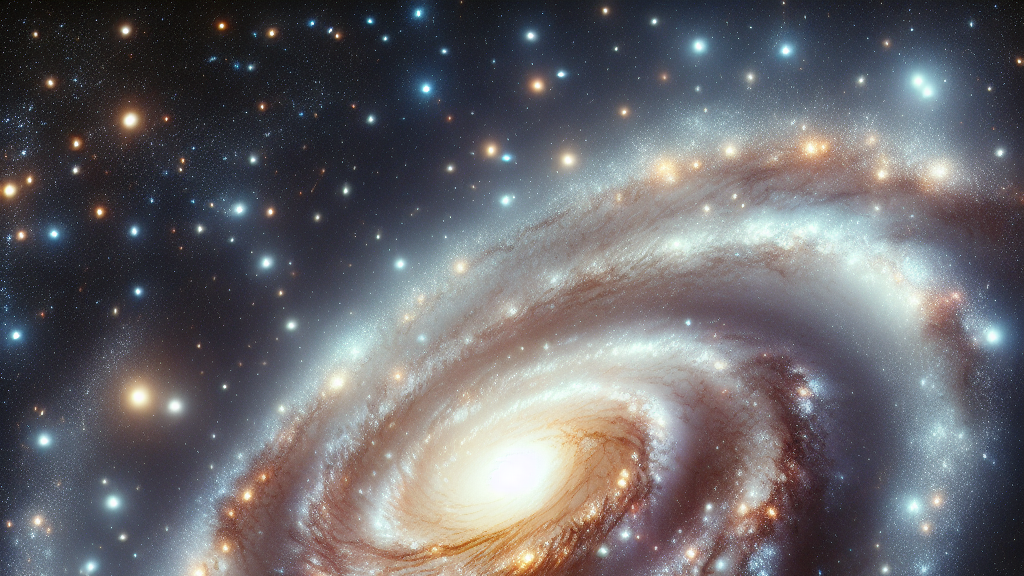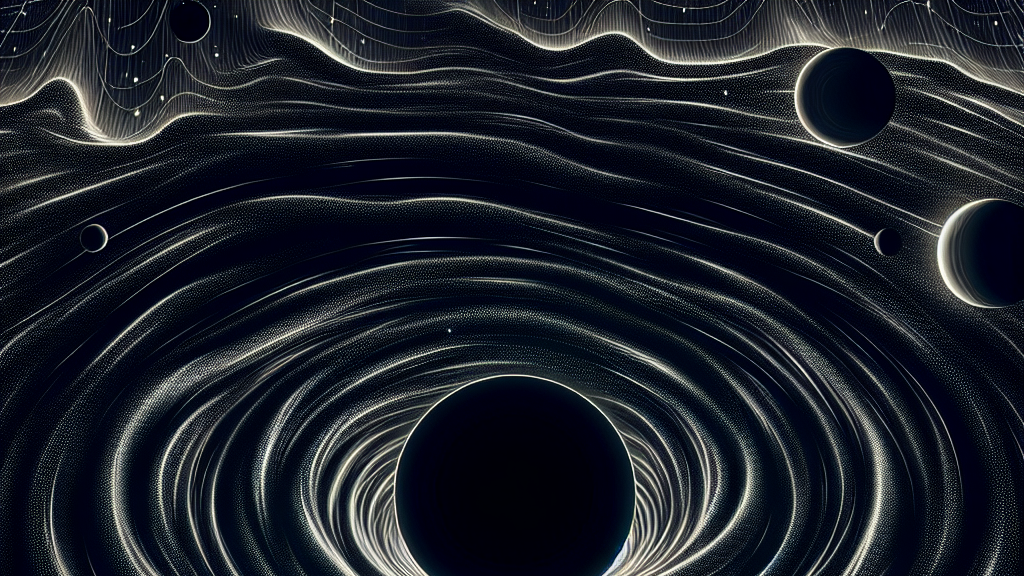
Imagine the very heart of our galaxy, a swirling, mysterious region where gravity flexes its immense power. Scientists are peering into this cosmic center to see if there’s a hidden twist in the gravitational force as we know it. They’re asking if Newton’s laws might need a tiny adjustment when it comes to the immense forces at play near the supermassive black hole at the core of the Milky Way.
This research focuses on a star, S2, which dances around our galaxy’s center. By watching this star very closely using advanced telescopes, scientists tested for an unusual tweak to the gravitational force, known as a Yukawa-like correction. What they found is fascinating: if such a tweak exists, it’s so slight that it has almost negligible strength, setting an upper limit tighter than any before – making us rethink how gravity behaves under extreme conditions.
Why does this matter to you? Well, understanding these gravitational subtleties shapes our grasp of the universe and its underlying laws. Imagine future space missions or new technologies that harness a deeper understanding of these cosmic forces. It’s like re-writing the cosmic rulebook, with implications that might one day spill over into technology we use here on Earth, enhancing everything from GPS accuracy to future space travel.
The center of our galaxy is about 26,000 light-years away, yet scientists can measure star movements there with stunning precision.
FAQs
What is the Yukawa correction in gravity?
The Yukawa correction is a theoretical extension to Newton’s gravitational law, suggesting that gravitational force might have an additional small, exponentially decreasing component. This research searches for any presence of such a modification at the Galactic Center.
Why study gravity at the Galactic Center?
The Galactic Center hosts a supermassive black hole, presenting extreme conditions where gravity is intense. Studying it helps us test gravitational theories and could reveal tweaks or new forces at these massive scales.
How can this research affect future technologies?
Understanding gravity in greater detail could improve technologies like GPS and inform future space travel. The knowledge could lead to innovations in how we navigate and explore both Earth and space.
How does this study improve previous work?
Using advanced instruments, this study provides a more precise upper limit for the Yukawa correction at the Galactic Center, refining our understanding of gravity with the most stringent constraints to date.
What instruments were used in this research?
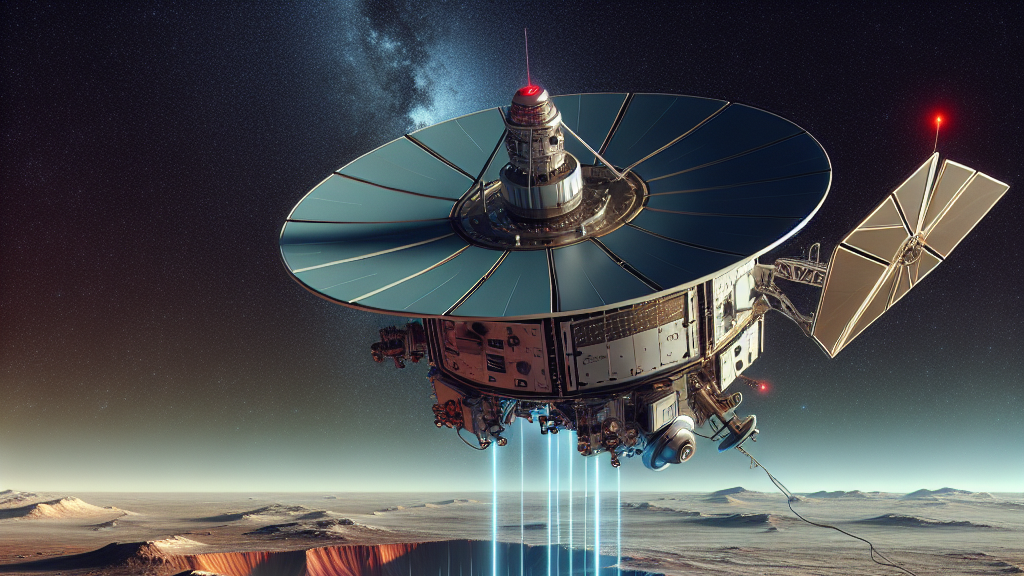
The study used data from the Very Large Telescope’s GRAVITY, NACO, and SINFONI instruments, offering high precision by observing star S2 over three decades.
Background
Gravity, as described by Isaac Newton, pulls objects towards each other. This force operates at every scale in the universe, from apples falling from trees to stars orbiting black holes. However, some theories propose additions to Newton’s gravity, like the Yukawa correction, which suggests an extra, decaying force component that could have noticeable effects in extreme conditions, such as the Galactic Center.
History
Since Newton formulated the law of universal gravitation, scientists have sought to understand how gravity operates under different conditions. Theories expanding on Newtonian gravity, like the Yukawa correction, have been considered when evidence hints at phenomena not fully explained by traditional physics. This study builds on years of prior research, leveraging new technology to explore these ideas in the unforgiving environment near a supermassive black hole.
Based on “On the presence of a fifth force at the Galactic Center” by The GRAVITY Collaboration, K. Abd El Dayem, R. Abuter, N. Aimar, P. Amaro Seoane, A. Amorim, J. P. Berger, H. Bonnet, G. Bourdarot, W. Brandner, V. Cardoso, Y. Clénet, R. Davies, P. T. de Zeeuw, A. Drescher, A. Eckart, F. Eisenhauer, H. Feuchtgruber, G. Finger, N. M. Förster Schreiber, A. Foschi, P. Garcia, E. Gendron, R. Genzel, S. Gillessen, M. Hartl, X. Haubois, F. Haussmann, T. Henning, S. Hippler, M. Horrobin, L. Jochum, L. Jocou, A. Kaufer, P. Kervella, S. Lacour, V. Lapeyrière, J. -B. Le Bouquin, P. Léna, D. Lutz, F. Mang, N. More, J. Osorno, T. Ott, T. Paumard, K. Perraut, G. Perrin, S. Rabien, D. C. Ribeiro, M. Sadun Bordoni, S. Scheithauer, J. Shangguan, T. Shimizu, J. Stadler, O. Straub, C. Straubmeier, E. Sturm, L. J. Tacconi, I. Urso, F. Vincent, S. D. von Fellenberg, E. Wieprecht, J. Woillez, available on arXiv (arxiv.org/abs/2504.02908), used under CC BY 4.0 (creativecommons.org/licenses/by/4.0/).