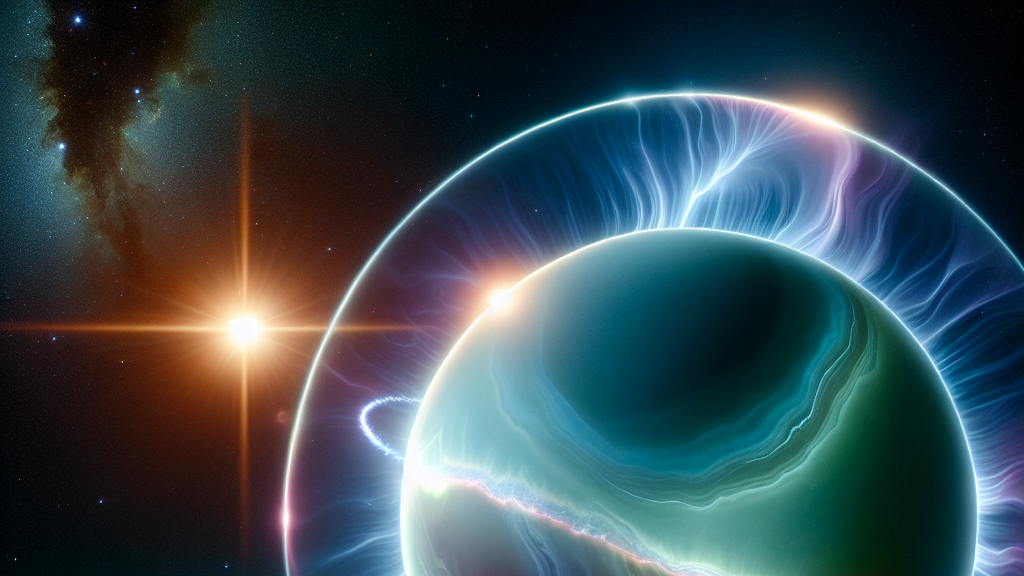
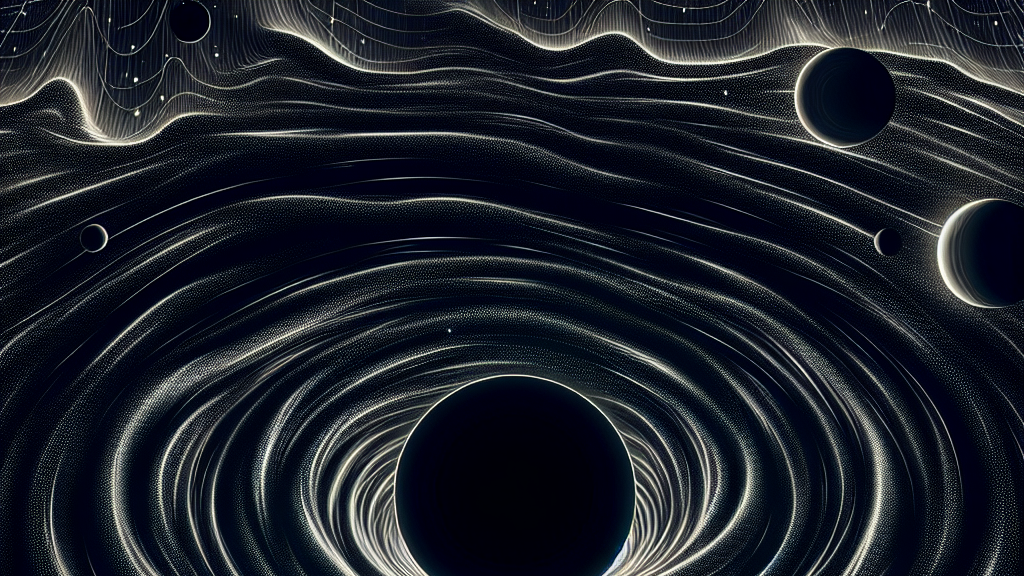
Planetary mysteries are being unlocked with the latest study focusing on the Roman Space Telescope’s potential to detect the decay of planetary orbits. Think of it like watching planets playing a cosmic game of chicken with their stars. Sometimes, they get too close and are eventually pulled in, a drama happening light years away from us.
The research dives into how the Roman Space Telescope might spot planets with orbits shrinking due to tidal forces. Just like how the moon affects Earth’s tides, stars can exert forces on their orbiting planets. With our galactic neighbor crammed full of stars and planets—sitting close to the center of the Milky Way, where they swirl around like dancers in a tightly packed ballroom—this telescope is set to uncover these soon-to-be-destroyed worlds.
Imagine in the future, astronomers could predict when a planet is on its death spiral into its star. This research is not just about academic curiosity; it could illuminate our understanding of how planetary systems evolve over time. Who knows? One day, predicting these events might even help us learn about the future of our solar system or inform the search for other habitable worlds.
Did you know that some planets have orbits so close to their stars that they might spiral into them, just like a tiny whirlpool in space?
FAQs
What is the Roman Space Telescope’s role in detecting planet decay?
The Roman Space Telescope will survey the Galactic Bulge to detect planets with shrinking orbits due to tidal forces, providing insights into the rate of planet engulfment.
How do stars cause tidal decay in planetary orbits?
Just like how the moon affects tides on Earth, a star can exert gravitational forces on its nearby planets, causing their orbits to shrink over time.
Why is understanding orbital decay important for us?
Learning how planets change their orbits helps us understand the dynamics of planetary systems, offering clues about the past, present, and future of our galaxy, and possibly even our own solar system.
How many planetary decay events does the research predict the Roman Telescope will detect?
The study predicts between 5 to 10 detections, highlighting how often these cosmic events might occur in our galaxy.
What insights could detecting these planetary losses give us?
By observing these events, scientists could probe the physics of tidal dissipation in stars, offering a deeper understanding of how planetary systems change over time.
Background
The concept of tidal decay comes from the understanding that stars can have a significant gravitational effect on their orbiting planets, similar to how the moon affects the tides on Earth. This gravitational interaction can lead to changes in a planet’s orbit, causing it to spiral closer to the star over time.
History
The study of planetary orbits and their stability has long intrigued scientists. Earlier research focused on understanding the moon’s effect on Earth’s tides. In recent years, attention shifted towards extrasolar planets (exoplanets) and how their interactions with their stars might lead to orbital decay. The Roman Space Telescope will refine our knowledge by observing these phenomena directly.
Based on “A Short History of (Orbital) Decay: Roman’s Prospects for Detecting Dying Planets” by Kylee Carden, B. Scott Gaudi, Robert F. Wilson, available on arXiv (arxiv.org/abs/2504.15277), used under CC BY 4.0 (creativecommons.org/licenses/by/4.0/).