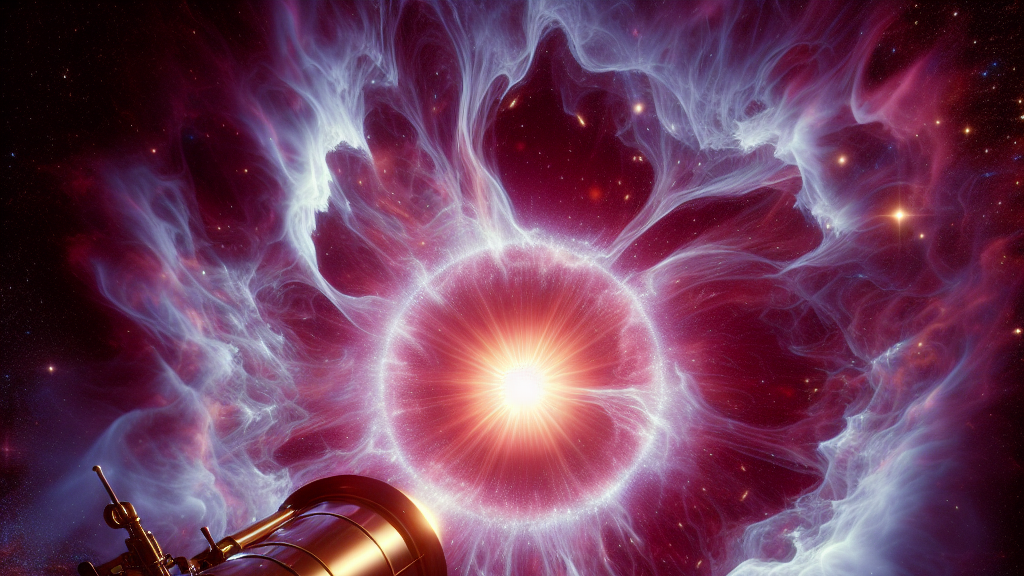
Get ready, because something spooky might be cooling down the universe! Researchers believe that invisible particles from the Big Bang, called relic neutrinos, might be sneaking around and chilling our cosmic neighbors, the neutron stars. These ‘space ghosts’ have been part of the universe since the very beginning and could hold the secret to understanding why some stars are getting unexpectedly cold. Imagine the cool night sky and the hundreds of stars we can’t see with the naked eye slowly losing their heat to these mysterious particles. It’s like a cosmic cold case waiting to be cracked!
The science behind this involves studying neutron stars, which are the dense remnants of massive stars that have exploded. Relic neutrinos interact with these stars through an intricate dance of gravity, quantum physics, and a few other cosmic forces, making them cooler or sometimes even warmer. By understanding how these invisible neutrinos connect with neutron stars, scientists might unlock new secrets of the universe—and maybe even discover new physics!
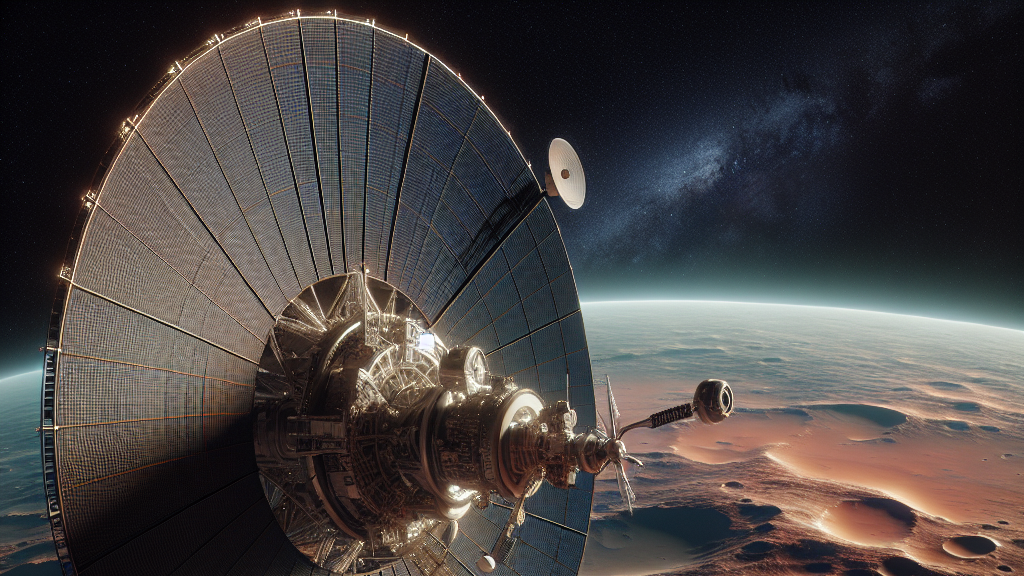
This research is not just about understanding stars; it could impact how we see and study the entire universe. Future telescopes, like the James Webb Space Telescope, will be on the lookout for these temperature changes from afar, offering a peek into a previously hidden part of space. Unraveling this mystery could change what we know about dark matter and potentially reshape our grasp of how the universe works. Imagine a future where we can predict and even manipulate star temperatures—how cool would that be?
If relic neutrinos are indeed cooling neutron stars, it could redefine our understanding of how stars live and die!
FAQs
What are relic neutrinos and why are they important in cooling neutron stars?
Relic neutrinos are ancient particles from the Big Bang. They are important because they might interact with neutron stars through complex forces, cooling them down in ways we haven’t fully understood yet.
How could the James Webb Space Telescope help in detecting these cosmic temperature changes?
The James Webb Space Telescope can measure stars’ temperatures from a distance and might spot unusual patterns caused by relic neutrinos, revealing unexpected cooling or heating of neutron stars.
What is the significance of observing temperature changes in neutron stars?
Observing these changes could unlock new physics, enhance our understanding of dark matter, and overall broaden our knowledge of the universe’s hidden secrets.
Could this research lead to practical applications on Earth?
While primarily focused on cosmic phenomena, insights into dark matter and neutrino interactions could eventually inform new technologies and scientific advancements on Earth.
How do scientists detect something as elusive as ‘space ghosts’ or relic neutrinos?
Scientists look for indirect evidence, such as changes in neutron star temperatures, which might indicate interactions with these ghosts—they are ghosts because they don’t emit light and are incredibly hard to catch!
Background
Neutron stars are incredibly dense objects formed after massive stars explode. They’re like the cores of stars stripped down to the basics, made mostly of neutrons. Relic neutrinos are incredibly light particles born from the very first moments of the universe, and they interact subtly with neutron stars. These interactions could cause significant changes in the temperature of neutron stars, which might be detectable with advanced technology like the James Webb Space Telescope.
History
Before this research, scientists understood neutron stars as stable remnants of supernovae, the explosions that occur at the end of a star’s life. Neutrinos were known as elusive particles, difficult to study because they don’t interact much with ordinary matter. Discovering their potential role in neutron star cooling adds a new twist to how we view both neutrinos and the universe’s life cycle. Past studies have focused on neutrinos in the context of particle physics, but this research uniquely bridges the gap between particle physics and astrophysics.
Based on “Old neutron stars as a new probe of relic neutrinos and sterile neutrino dark matter” by Saurav Das, P. S. Bhupal Dev, Takuya Okawa, Amarjit Soni, available on arXiv (arxiv.org/abs/2408.01484), used under CC BY 4.0 (creativecommons.org/licenses/by/4.0/).