Connect with us

Search by keyword

Physics

Can We Really Stop Social Media Lies?

Ever wonder how social media spreads misinformation so quickly? A new study reveals that the structure of social media networks can amplify falsehoods as they get shared. By understanding this, we can create better rules to stop misinformation in its tracks.

Can We Really Stop Social Media Lies
✨Researched by humans. Explained by robots. Learn more.

In today’s world, social media is a massive force in how we get our news and information. But as we scroll through our feeds, the risk of stumbling upon distorted or false information is higher than ever. A new study uncovers that the very way these networks are built can lead to more misinformation getting passed along.

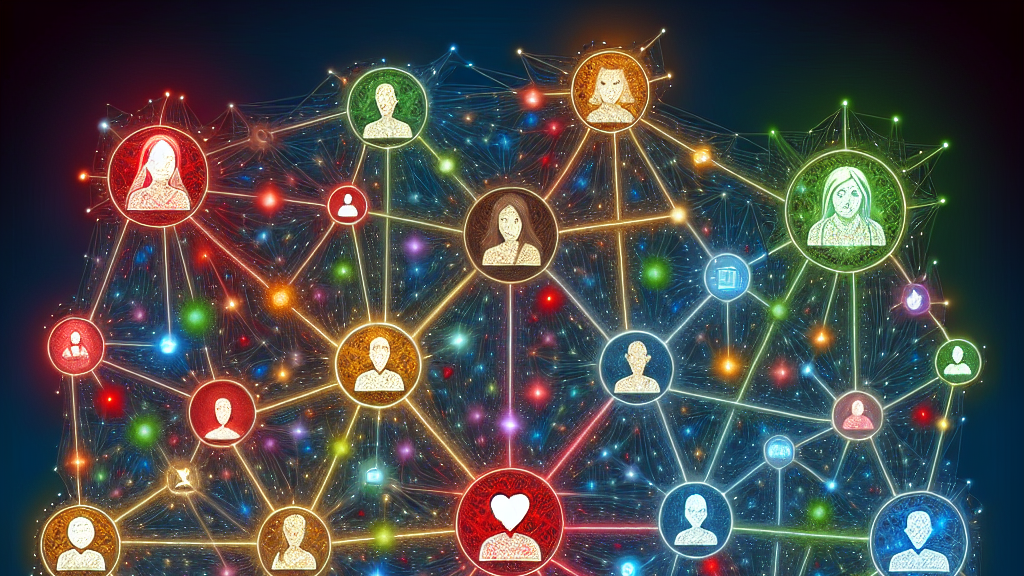
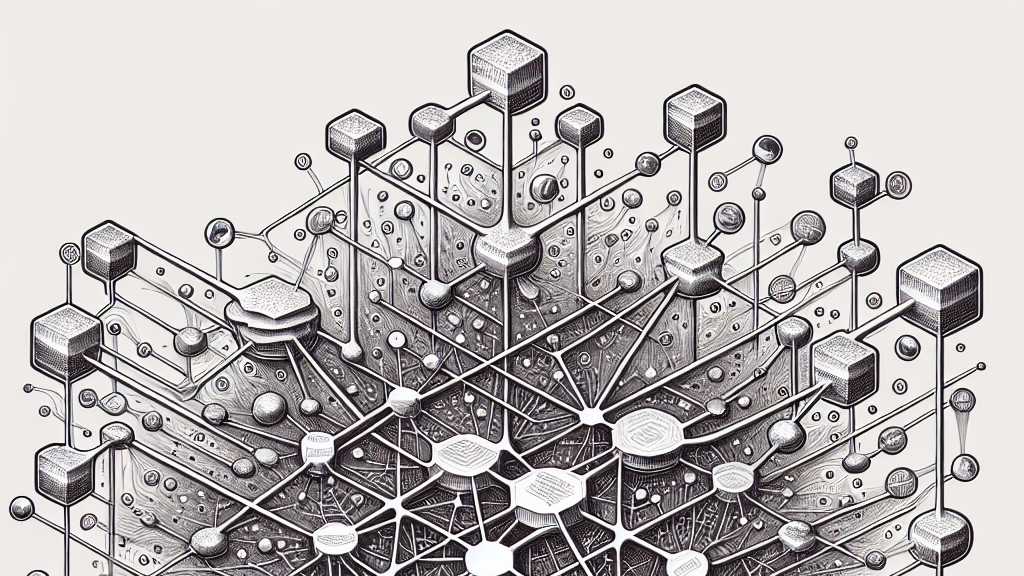
Researchers have created a model that looks at networks like Facebook and Twitter as a kind of ‘fractal’ web, where information hops from one person to the next, changing a little bit each time. The study shows that the deeper you go into these layers of people sharing content, the more mixed-up the original message can become. Even when people aren’t directly connected to each other, they can influence shared beliefs and create groups that think alike without realizing it.

These findings are especially exciting because they don’t just help us understand how misinformation happens, but also suggest ways that platforms and policymakers can step in. Imagine a future where social media platforms are built not only to connect us but also to prevent falsehoods from spreading like wildfire. By tweaking the network structure and understanding how information flows, we might just make this digital world a more truthful place.

Did you know that information shared on social media can become increasingly distorted each time it’s retweeted or shared, creating digital ‘telephone games’?

FAQs

How does social media contribute to information distortion?

Social media platforms often function like complex networks where information gets passed along from one person to another. Each time information is shared, it could be slightly altered, leading to a distortion that grows with each layer of sharing.

What is the NFHK framework mentioned in social media distortion research?

The Noise Frustrated Hegselmann Krause (NFHK) framework is a model used to understand how network structures and the sharing of information contribute to the spread and distortion of information on social media. It combines ideas about network architecture and cognitive noise to explain these phenomena.

Why do the findings about echo chambers and social media matter?

The study challenges the traditional idea of echo chambers by showing that even without direct connections, people can form synchronized belief groups just by sharing distorted information. This insight can help in developing better social media platforms and regulatory policies.

Background

Social media platforms like Facebook and Twitter serve as digital environments where information is shared and reshared among users, often forming complex networks. The idea of these networks being ‘fractal’ means that they have patterns that repeat at different scales, like a snowflake. Cognitive noise refers to the slight changes in information that occur when it’s shared from one person to another, potentially leading to distortion or misinformation.

History

In recent years, researchers have been increasingly focused on how social media can distort the information we consume. Early studies highlighted the existence of echo chambers—like-minded individuals forming tight-knit communities where only similar beliefs are shared. This research builds upon those ideas by introducing models like the NFHK framework to explore the deeper roots of distortion, such as network structures and transmission noise.

Based on “Why is distortion inevitable in opinion propagation on social media? Noise induced layer-wised synchronization in Noise-Frustrated Hegselmann-Krause model” by Kaiming Luo, available on arXiv (arxiv.org/abs/2505.05769), used under CC BY 4.0 (creativecommons.org/licenses/by/4.0/).

Trending

Latest

Can AI Save Water Discover How

Computers

AI is transforming the tech world, but it uses lots of water! A new tool, SCARF, helps us measure and reduce AI's water footprint,...

Whats a Forbush Decrease and Why Should We Care Whats a Forbush Decrease and Why Should We Care

Space

Scientists just observed the biggest solar storm event in years, revealing unexpected cosmic ray patterns. Understanding these changes could help us protect our technology...

Can Cars Spot Danger Faster Than Humans Can Cars Spot Danger Faster Than Humans

Computers

Think about how quickly you react when something unexpected happens on the road. This research brings us closer to creating self-driving cars that can...

Can Fear of the Other Stop Social Harmony Can Fear of the Other Stop Social Harmony

Physics

Fear of the unknown might make it harder for people to agree and get along. This study shows that when people have strong xenophobic...

Can AI Revolutionize Breast Cancer Diagnosis Can AI Revolutionize Breast Cancer Diagnosis

Electricity

This research introduces a groundbreaking AI model that can accurately assess HER2-positive breast cancer using widely accessible staining methods, potentially revolutionizing how we diagnose...

Can AI Transform Your Singing into a Choir Can AI Transform Your Singing into a Choir

Computers

Imagine singing solo and having AI turn you into a choir. This research unveils a groundbreaking AI tool that transforms your voice into rich...

You May Also Like

Economics

Social media might not always be the villain when it comes to spreading fake news. In regions with strong public engagement, social media can...

Computers

Did you know that Google might be hiding info from you? This research shows that Google's algorithms can suppress certain online content, like conspiracy...

Computers

Imagine AI systems helping businesses plan and carry out tasks—but they're relying on potentially fake online reviews. Sound risky? This research dives into how...

Computers

This study uncovers how a 'conspiratorial mindset' exists in some social media users before they become part of conspiracy groups. It highlights the need...

Computers

This study introduces a new dataset to better identify violent threats on social media. This can lead to more effective tools to keep online...

Physics

This research unveils how social media can spotlight political divides, showing that including negative interactions helps reveal the most extreme political views and behaviors...

Physics

This research explores using quantum networks as a novel way to detect elusive dark matter, potentially unlocking secrets of the universe. Imagine tiny quantum...

Computers

Discover how social media could transform disaster response by giving emergency workers real-time, life-saving insights during floods and other extreme events.

Computers

Countries worldwide are making new laws to tackle fake news and misinformation online. With diverse strategies and global reach, these laws aim to protect...

Copyright © 2024 8ig8rain.

Disclaimer: The content on 8ig8rain.com consists of AI-generated summaries of scientific abstracts from arXiv. Please note that most arXiv abstracts are preprints and may not have undergone formal peer review. While these summaries aim to convey key ideas and potential applications, they are provided for informational purposes only and should not be interpreted as validated scientific findings or professional advice. The summaries are intended to educate, spark curiosity, and inspire further exploration of science.