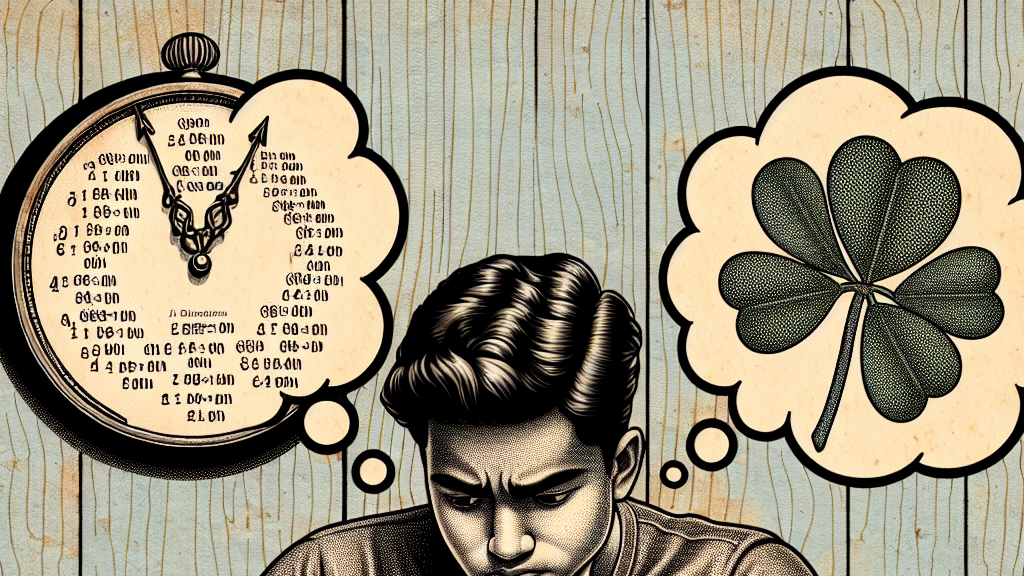
Ever wondered why we sometimes blame students’ lack of effort for failing an exam instead of considering if the test was just too hard? How we assign blame can change perceptions, reinforce stereotypes, and even affect our decisions about people. This process is known as attribution, and it’s not just about humans—it’s becoming increasingly relevant in how artificial intelligence makes decisions too.
The study explores Attribution Theory from social psychology, which explains how people decide why things happen by weighing internal reasons like effort and ability, against external factors like luck or task difficulty. Researchers have found these patterns aren’t just for people—they show up in Large Language Models (LLMs), the AI systems that power chatbots and virtual assistants. These AI tools might ‘think’ in ways that reflect our biases, especially regarding demographics, which could influence how fair they are in providing information or making decisions.
Imagine a future where AI systems help teachers better understand students’ struggles by considering both effort and test difficulty, rather than jumping to conclusions. This could lead to more personalized and fair education, where every student gets the help they need, based on a balanced evaluation of their challenges. This research is paving the way for AI that’s not just smart, but fair and understanding.
Did you know the way we blame effort or luck can affect how we see someone’s entire personality? It’s called attribution bias, and it influences everything from personal interactions to artificial intelligence models!
FAQs
How does Attribution Theory affect our daily decisions?
Attribution Theory shapes how we view others by assigning reasons to their actions or outcomes, like assuming someone did poorly because they didn’t try, not because the situation was tough. This can reinforce stereotypes and influence decisions in education, work, and social settings.
What is the role of LLMs in understanding attribution bias?
Large Language Models, used in AI, can exhibit attribution biases by reflecting human-like reasoning patterns. This research explores how these models might unfairly channel biases towards certain demographics, impacting fairness in AI-generated content and decisions.
Why is fairness in AI important when evaluating student performance?
Fair AI ensures that evaluations take into account diverse student backgrounds and challenges, rather than relying on biased assumptions about effort or ability. This can lead to more equitable opportunities and support in educational settings.
Background
Attribution Theory in social psychology is about how people assign causes to events, which can be either internal factors like effort or ability, or external factors like luck or task difficulty. Implicit cognition refers to the unconscious ways our mind processes these attributions. This theory is crucial in understanding human behavior and how judgments are formed, often leading to biases that can influence larger systems, including AI.
History
The study of attribution began in the mid-20th century with the work of psychologists like Fritz Heider, and has evolved to reveal the complexities of how humans perceive and reason about actions and events. In recent years, this concept has been applied to artificial intelligence, highlighting how technology can replicate human biases, prompting researchers to develop frameworks to identify and mitigate these biases for fairer AI systems.
Based on “Talent or Luck? Evaluating Attribution Bias in Large Language Models” by Chahat Raj, Mahika Banerjee, Aylin Caliskan, Antonios Anastasopoulos, Ziwei Zhu, available on arXiv (arxiv.org/abs/2505.22910), used under CC BY 4.0 (creativecommons.org/licenses/by/4.0/).